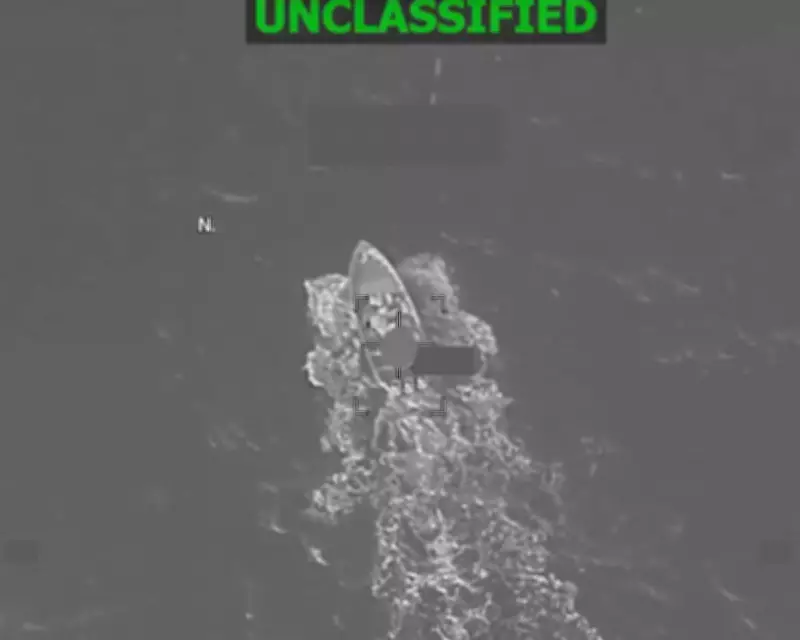
The United States military has intensified its campaign against alleged drug-trafficking operations in the Pacific Ocean, with a fifth lethal strike in just one week resulting in three fatalities. According to an official announcement from the US Southern Command, the latest kinetic action targeted a vessel purportedly operated by designated terrorist organizations in the eastern Pacific region.
Escalating Military Operations in the Pacific
In a post on the social media platform X, the US Southern Command confirmed the strike, stating that three male individuals described as narco-terrorists were killed during the operation. This incident follows a series of similar attacks earlier in the week, including Monday's strikes that destroyed two boats and killed five people, and Tuesday's action that claimed four more lives. A tally compiled by the Agence France-Presse news agency indicates that these military engagements have now resulted in at least 177 deaths overall.
Legal and Ethical Controversies Surrounding the Strikes
The Trump administration has consistently defended these operations, framing them as a critical component of the war against narco-terrorism in Latin America. However, the administration has not provided conclusive evidence linking the targeted vessels to drug trafficking activities, sparking significant debate over the legality and justification of the strikes.
International legal experts and human rights organizations have raised serious concerns, arguing that these actions likely constitute extrajudicial killings. Critics point out that the strikes appear to target civilians who do not pose an immediate threat to US national security, violating international law principles.
Growing Scrutiny from Advocacy Groups and Lawmakers
In January, a federal lawsuit was filed against the United States on behalf of families from a Trinidad fishing village, where two men were killed in an October strike on a small boat in the Caribbean. The lawsuit alleges that the killings were premeditated and lacked any plausible legal justification.
The American Civil Liberties Union has also weighed in, accusing the administration of pushing unsubstantiated claims about the victims' identities. In December, the organization highlighted investigations suggesting that some of those killed were merely fishermen trying to support their families.
Furthermore, Democratic representatives Joaquin Castro and Sara Jacobs have taken action by writing to the Inter-American Commission on Human Rights last month. Their letter expressed alarm over the killings and noted that the names and nationalities of most victims remain unknown, underscoring the opacity of these military operations.
Broader Context of US Military Focus
These strikes in Latin America continue unabated even as the US military shifts significant attention to the Middle East, where tensions with Iran have escalated into weeks of conflict. This dual focus highlights the expansive scope of US military engagements across different regions, raising questions about resource allocation and strategic priorities.
The ongoing operations have ignited a heated discourse on the balance between national security imperatives and adherence to international human rights standards. As the death toll rises, the calls for transparency and accountability grow louder, with advocates demanding thorough investigations and clearer legal frameworks to govern such military actions.