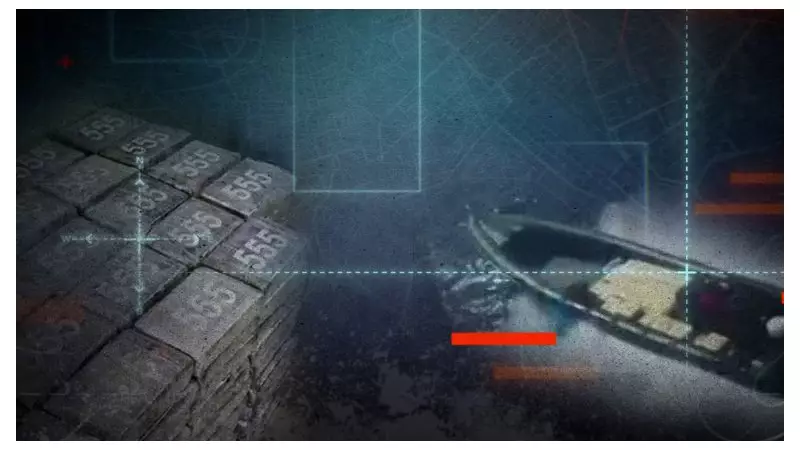
It is midnight, and the Mediterranean is pitch black. Aboard a Spanish police vessel, an officer peers into the darkness. "They're making lots of waves… I think it's a smuggler's boat," he says, before his tone sharpens. "That's a narco-boat! They're going faster." This is the frontline of Europe's relentless war on drugs, playing out nightly in the narrow Strait of Gibraltar.
The Midnight Chase in the Strait
We are embedded with Vigilancia Aduanera, an elite anti-drugs unit of the Spanish police, as they surge from the port of Algeciras. A helicopter has identified five suspicious vessels circling in Moroccan waters just miles away. The target is quickly locked: a high-speed inflatable boat, barely twelve feet long, powered by enormous outboard motors.
The crew, a four-person team, hastily dons helmets and body armour, shouldering weapons as the boat swings around and the engines roar. "Hold on," comes the warning. These pursuits can hit speeds of 100mph, a deadly game of cat and mouse where both police and smugglers have been killed in recent collisions.
The smugglers, increasingly armed to deter capture, take extreme risks. As we bounce violently over the waves, radio messages crackle from a shore-based control centre. The shadow of a vast container ship looms out of the dark. To our north, a second police boat appears, racing in tandem like predators closing in on their prey.
An Uneven Battle Against Wealthy Gangs
Despite the coordination, the police are often outgunned. The smuggling boats, costing around €100,000 (£88,000), are faster and more agile. Their crews use sophisticated tracking devices, making a desperate dash for the safety of Moroccan territorial waters, where Spanish authorities must retreat.
Without warning, our chase ends abruptly. The narco-boat deliberately creates a massive wake. In the darkness, we plough straight into it. Alarms blare, we are thrown from our seats, and unsecured equipment flies through the cabin. On the infrared camera, the smuggler's trail disappears. They have escaped, to wait for another opportunity under cover of night.
This nightly conflict is fuelled by an unprecedented surge in cocaine production in Latin America, which has driven down street prices across Europe and created a vast, globalised narcotics network. Recorded seizures of cocaine in the EU have risen annually for almost a decade. In 2023 alone, there were 95,000 separate seizures. A landmark bust in 2024 saw Spanish authorities find 13 tonnes of cocaine hidden in a banana shipment from Ecuador—the largest in Spain's history.
Narco-Subs and a Cartel Boss Speaks
The methods of infiltration are evolving. Smugglers now use drones, corrupt seaports, and cramped, manned "narco-submarines" that make perilous, weeks-long transatlantic journeys. In one interception off Portugal, a sub was found carrying 1.7 tonnes of cocaine with a potential street value exceeding £100 million.
To understand the scale of the operation, we met a man claiming to be a kingpin in Andalusia, Spain's busiest smuggling region. Concealed behind a balaclava and sunglasses, and calling himself "Incognito", he spoke on a beach near Cadiz. "Even as I'm speaking with you, there are narco-boats full of drugs going in that sea," he stated matter-of-factly.
He justified his trade by citing a lack of jobs and the need to provide for family, describing a life of constant paranoia. "This is like a game," he said. "One day you win, one you lose. Sometimes the police win, other times we win." The stakes are ultimate: loss of family, imprisonment, or death.
The violence is escalating. Two weeks before our meeting, five police officers were shot during a raid nearby. A Spanish police union has warned the area is being "colonised by traffickers," with officers outmatched by gangs that are richer and better equipped. It is a non-stop war, fought in the shadows of Spain's famous tourist beaches, and as the authorities concede, it is a battle Europe is struggling to control.