A court in Ecuador has sentenced eleven soldiers to more than 34 years in prison for their role in the enforced disappearance and subsequent murder of four boys in the city of Guayaquil.
A Fatal Disappearance During Military Patrols
The tragic case stems from December last year, when the four children, aged between 11 and 15, vanished from the Las Malvinas neighbourhood of Guayaquil. According to their families, the boys had simply left home to play football on the day they disappeared.
Their disappearance occurred during a major military offensive against organised crime groups, ordered by President Daniel Noboa. The president had decreed states of emergency and deployed soldiers to patrol the streets in response to the country's severe security crisis.
The Brutal Sequence of Events
Prosecutors established that soldiers detained the boys during a night patrol. The court heard how the minors were then beaten, forced to remove their clothes, and abandoned naked in a remote area known as Taura, roughly 19 miles south of Guayaquil.
Judge Jovanny Suarez stated in the ruling that "the patrol abandoned the minors in that area, knowing it was dangerous, desolate, and abandoned." Shockingly, one of the children managed to call his father from Taura. However, when the father arrived to rescue them, he found no trace of his son or the other boys.
Days later, the charred remains of four bodies were discovered and later identified as the missing children. Autopsies commissioned by the families' lawyers revealed the victims had sustained injuries and bruises prior to their deaths.
Sentences Handed Down Amid Calls for Justice
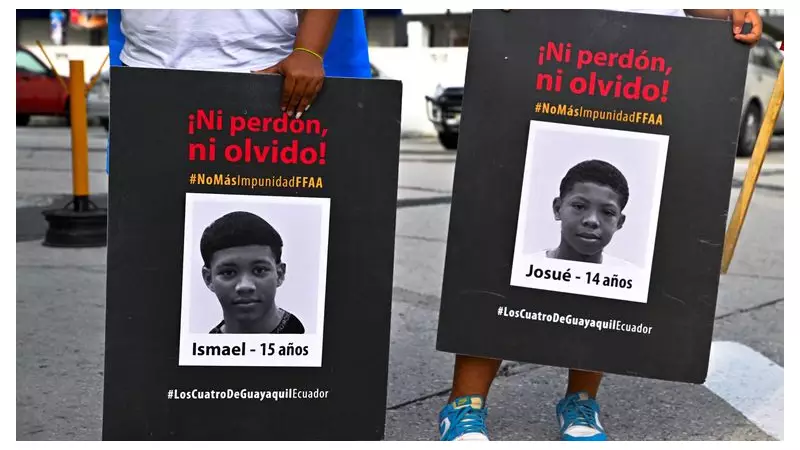
The sentencing on Monday 22 December 2025 concluded a weeks-long trial. As the verdict was read, protesters in Guayaquil held signs with messages such as "we are still waiting for justice" and "never forgive, never forget," marking over 379 days since the boys vanished.
In addition to the eleven main defendants, five other soldiers who assisted prosecutors received sentences of two and a half years. A lieutenant colonel accused of complicity was declared innocent by the court.
Defence lawyers for the convicted soldiers had argued the prosecution's evidence was not conclusive. They claimed the soldiers were sent on patrol without proper training and had left the boys alive in Taura.
This case highlights the extreme tensions and alleged human rights abuses occurring within Ecuador's struggle against powerful drug cartels. Despite the sentences, the families' quest for full accountability and justice continues.