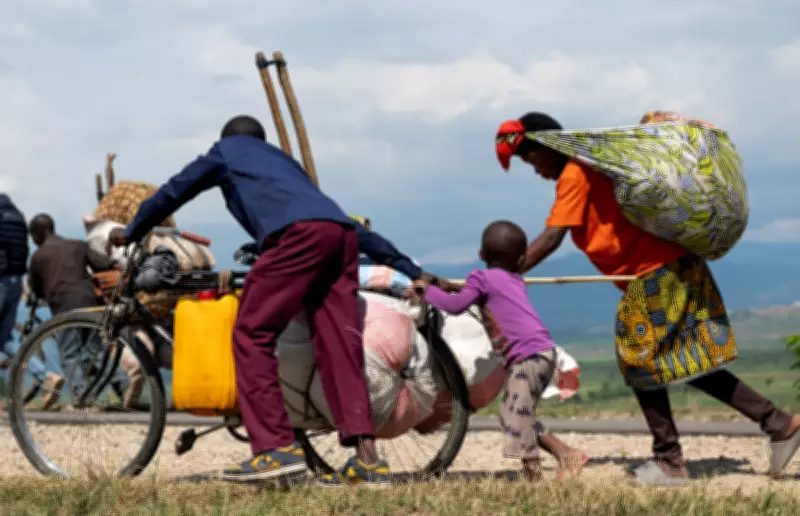
In a stark depiction of the ongoing humanitarian crisis in the Democratic Republic of the Congo, families displaced by fierce fighting between the M23 rebel group and Congolese armed forces have recounted their harrowing journeys to safety. Thousands have fled their homes in South Kivu province, only to confront severe challenges in overcrowded refugee camps in neighbouring Burundi, where threats of disease and resource shortages loom large.
The Desperate Flight from Luvungi
Diudonné Muka, a 35-year-old farmer, vividly recalls the surreal sight of a seemingly endless line of people stretching into the forest as he fled Luvungi in December. This river of humanity, adorned in multicoloured clothing, included women balancing goods on their heads with babies strapped to their backs, and men and children carrying whatever belongings they could salvage—chairs, rugs, blankets, and sacks of food. "When war begins, you take what you can in your hands and run," Muka explains over the phone, describing the two-day, 21-mile trek to Sange.
The journey was punctuated by the relentless sound of bombing, as both sides exchanged shellfire. Muka remembers passing destroyed houses and seeing dead bodies, a grim reminder of the peril they faced. "They bomb, and the others bomb back. Over and over again," he says, adding that the fear of meeting a similar fate drove them forward. Initially, livestock like cows, goats, and chickens accompanied the fleeing masses, but these gradually disappeared along the way.
Escalating Conflict and Regional Impact
The renewed conflict in eastern DRC, fueled by the Rwanda-backed M23 rebel group, has intensified over the past three years. In early 2025, M23 captured Goma, the capital of North Kivu, and later advanced to seize Bukavu, South Kivu's capital. A new offensive in December 2025, just days after a US-brokered peace deal between Rwanda and the DRC was signed, saw M23 push farther south, capturing Uvira on the border with Burundi.
This escalation has triggered a massive displacement crisis. A Médecins Sans Frontières report from January estimates that nearly 65,000 refugees are living in the Busuma refugee camp in Ruyigi, Burundi, while the UNHCR reports about 200,000 Congolese refugees seeking asylum in Burundi overall. Aimable Hakizimana, field coordinator at the International Rescue Committee in Ruyigi, notes that the scale of arrivals is "unprecedented," placing enormous pressure on existing services.
Personal Losses and Struggles in Exile
For Muka and his wife, Noella Zawadi, the journey was particularly gruelling. Zawadi, eight months pregnant and caring for two toddlers, pushed through the hardship despite the challenges. "It was very difficult for me," she says, "because I was late into pregnancy, I was looking after the two little ones and I was carrying some things. But I pushed through it." The children faced hunger and the trauma of witnessing dead bodies, leaving them deeply shocked.
Before the conflict, the family enjoyed a stable life in Luvungi, with Muka farming his land and owning livestock, including nine cows and four goats. However, the bombing of Sange forced them to flee again, eventually crossing into Burundi. There, they grappled with the full extent of their losses—livestock left behind, a motorcycle lost, and cherished possessions stolen. "As soon as the fighting began, I left without my cows. We raised them, and we used to milk them but, you know, that's war," Muka laments.
To survive, the family made painful decisions, such as selling some of their remaining goats for cash and eating those that died on the journey. Zawadi mourns the smaller joys, like her son's beloved bicycle and a collection of family photos that held precious memories. "We had a pretty large collection of family photos that we used to keep, they were very important to us," she says. Even after giving birth in Busuma, new blankets from Healthnet TPO were stolen, leaving her newborn exposed to the cold nights.
Conditions in Busuma Refugee Camp
Life in Busuma camp is fraught with hardship. Hakizimana warns that resources are "far below what is needed to meet basic needs," with a significant risk of disease outbreaks due to overcrowding. The camp, already housing about 70,000 people, is expected to swell towards 100,000 in the coming weeks, exacerbating the crisis.
Despite M23's announcement of withdrawal from Uvira in January, Muka has no intention of returning home. "There is absolutely no desire to go back," he asserts. "I have grieved for the people and things I lost. I'm not going back." Yet, Busuma offers no long-term solution, with health risks remaining high and infrastructure stretched thin.
Glimmers of Hope Amidst Despair
Amidst the loss, Muka finds solace in his family's safety. "I have my family," he says, as his children play in the background. They managed to keep two sets of clothes for the children and some cash from selling goats. However, pangs of homesickness persist, with every reminder of their former life deepening the sense of loss. "Everything I have reminds me of home," Muka reflects. "It reminds us of everything we lost."
This crisis underscores the urgent need for international support and sustainable solutions for displaced Congolese families, as they navigate the dual threats of conflict and inadequate refuge in Burundi's overwhelmed camps.