Fresh doubts have been raised over whether the alleged perpetrators of the Bondi Junction terror attack could have met with Islamic State (IS) operatives during a trip to the Philippines weeks before the shooting. A former jihadi with knowledge of the group's activities in the region has described the suspects' travel as looking "very haphazard".
Haphazard Travel to Davao City
Philippine and Australian authorities have confirmed that the father-and-son suspects, Naveed and Sajid Akram, entered the Philippines on 1 November and departed on 28 November. They flew to Davao City in the country's south, a region with a history of militant activity. The purpose of their visit remains a core focus of the ongoing international probe.
A former jihadi, who has renounced extremism and spoke to Guardian Australia anonymously, expressed scepticism. He stated that anyone seriously intending to connect with IS-linked militants "would not likely go to Davao itself" and would avoid leaving a clear identification trail by booking commercial flights.
"To be honest, everything about it looks very haphazard," he said. "If they didn't have any links … it would have made it very, very difficult." His assessment suggests that without pre-existing contacts, it would be near-impossible for two Australians to locate IS representatives, whom the Philippine government itself struggles to find.
Investigating Motives: Authorisation or 'Bonding Trip'?
One line of inquiry is whether the pair sought formal authorisation, known as an ijāzah, from an IS-approved cleric to carry out an attack. The former jihadi noted that while the Philippines has had an official IS representative since 2016, Australia has not.
However, terrorism expert Professor Rohan Gunaratna offered an alternative theory. He suggested the trip could also have been a "bonding trip" for the duo. Analysing old videos of Naveed Akram preaching in Sydney, Gunaratna said he was promoting "Salafi jihadism" rather than mainstream Islam.
Philippine National Security Adviser Eduardo Año has stated that investigations so far indicate the Akrams never left Davao City and did not receive any military-style training during their stay.
Painstaking Reconstruction of Movements
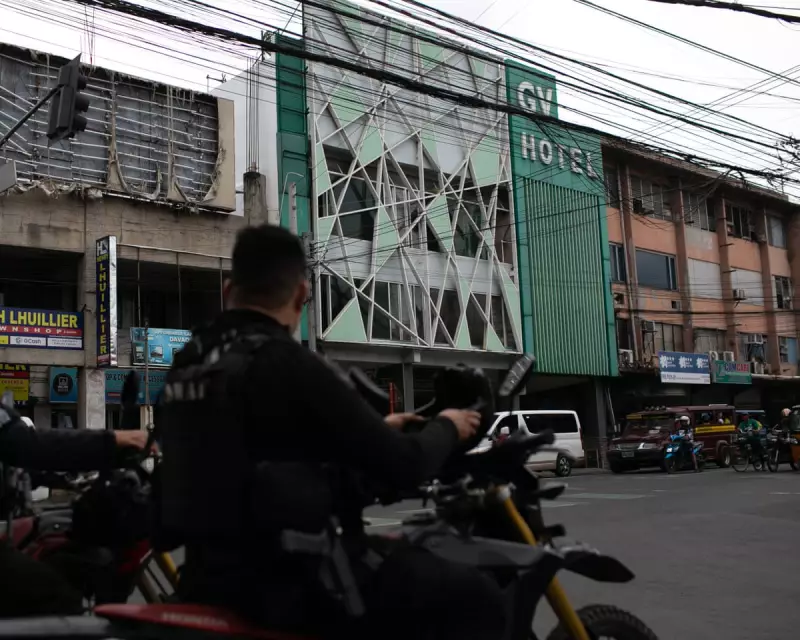
Investigators are now engaged in a meticulous effort to trace the suspects' movements during their four-week stay. They are known to have stayed at the budget GV Hotel and frequently ate at a nearby Jollibee fast-food restaurant.
Police are reviewing CCTV footage from dozens of establishments in the area and tracing taxi journeys to build a complete picture. "All possibilities are being entertained," officials said.
Professor Gunaratna warned that IS's subsequent praise for the Bondi attack was a deliberate tactic to inspire further violence. He described the incident as an intelligence failure and a "wake-up call, not only for Australia." Meanwhile, Australian National University academic Clarke Jones noted that unregistered religious schools in the Philippines could have provided spiritual preparation, if not tactical training, for the attack.