Federal Appeals Court Temporarily Lifts Restrictions on ICE Protest Tactics in Minnesota
In a significant legal development, the eighth US circuit court of appeals has granted a temporary administrative stay, allowing Immigration and Customs Enforcement (ICE) agents to resume certain controversial tactics during protests in Minnesota. This decision, issued on Wednesday, temporarily overturns a preliminary injunction imposed last Friday by federal judge Katherine Menendez.
Details of the Overturned Injunction and Court Proceedings
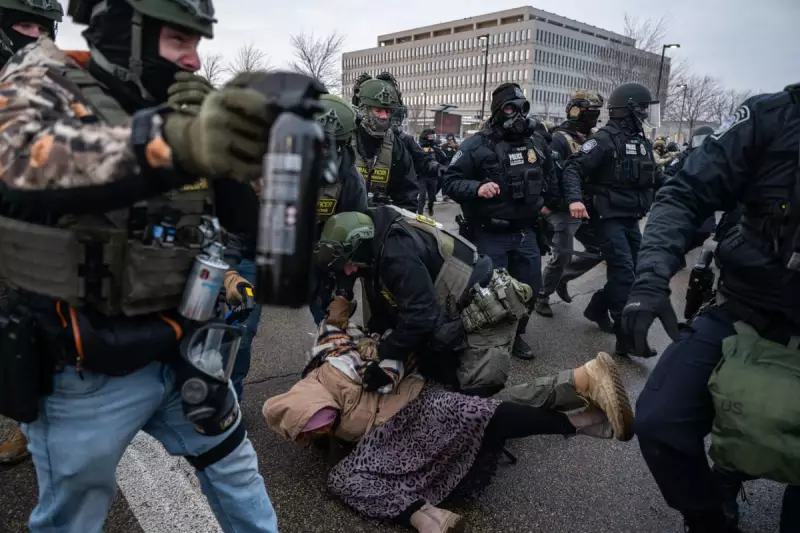
Judge Menendez's preliminary injunction had specifically prohibited ICE agents from several actions during peaceful protests. These included retaliating against protesters, arresting or detaining individuals participating in peaceful demonstrations, using pepper spray or similar non-lethal munitions and crowd dispersal tools, and stopping or detaining drivers without reasonable cause. In her ruling, Menendez argued that federal immigration agents' actions created a chilling effect on protesters' first amendment rights, potentially suppressing free speech and assembly.
The justice department, representing the Trump administration, requested the stay, which the appeals court granted. This move is viewed as a victory for the administration, allowing ICE to operate with fewer restrictions while legal challenges continue. The stay is temporary, pending further review by the court, meaning the injunction could be reinstated or modified in future proceedings.
Context of Rising Tensions and Political Responses
This court decision comes amid heightened tensions in Minnesota, where ICE activity has faced mounting criticism in recent weeks. The situation intensified following the killing of Renee Good, a 37-year-old woman and mother of three, by a federal agent. Her death has sparked large-scale protests not only statewide but across the country, with demonstrators calling for accountability and reform.
In response, the Department of Homeland Security (DHS) has defended ICE's tactics. Spokesperson Tricia McLaughlin stated, DHS is taking appropriate and constitutional measures to uphold the rule of law and protect our officers and the public from dangerous rioters. However, state leaders strongly reject this characterization. Governor Tim Walz and local officials have condemned the deployment of thousands of federal agents as an unconstitutional and destructive federal invasion, describing it as a retaliatory campaign that has spread fear, undermined civil liberties, and violated the rights of Minnesota residents.
Political Implications and Ongoing Investigations
The timing of the court's decision is notable, as vice-president JD Vance is scheduled to visit Minneapolis on Thursday. According to the White House, Vance will hold a roundtable with local leaders and community members and will deliver remarks focused on restoring law and order in Minneapolis. This visit underscores the political significance of the protests and the federal response, with the administration framing it as a matter of public safety and order.
In a related development, the justice department has subpoenaed several prominent Minnesota Democrats, including Governor Walz and Minneapolis mayor Jacob Frey. The department accuses them of conspiring to impede ICE operations, adding a layer of legal and political conflict to the already volatile situation. These subpoenas suggest an escalating standoff between federal and state authorities over immigration enforcement and protest management.
As the legal battle unfolds, the temporary stay allows ICE to continue its operations under less restrictive conditions, while protesters and civil liberties advocates express concern over potential abuses. The outcome of this case could have broader implications for protest rights and federal law enforcement tactics across the United States.