Under the cover of a thunderous night sky, a heavily armed and masked Colombian troop commander issues a hushed warning: "The only thing I ask for is quiet. They have drones, it's dangerous." This was the tense start to a night mission with Sky News into the heart of cartel territory, right on the volatile border between Colombia and Venezuela.
A Perilous Night Mission in Cucuta
The operation unfolded in the city of Cucuta, a critical transit hub for both legal goods and illegal commodities like weapons and cocaine. The soldiers, from the Mechanised Cavalry Regiment of the Colombian Army, were acting on intelligence that a shipment of arms and drugs was moving between the two nations.
Moving on foot through abandoned slums, illuminated only by occasional streetlights, the squad fanned out. The only signs of life were barking dogs, spooked by their presence. The troops warned against getting too close to buildings, as cartel gunmen often use them for ambushes. Any movement in this ghost town was immediately assumed to be gang-related.
The mission led the team towards the river dividing the two countries. At one point, torchlights were spotted roughly 50 metres away, prompting everyone to take cover. After several tense minutes, the lights vanished. Following a tip from an informant who had crossed into Venezuela and back, the team found no activity and were forced to withdraw empty-handed.
The Industrial Scale of the Cocaine Trade
While this specific raid yielded nothing, the unit's commander explained the unpredictable nature of their work. "Sometimes we go to find weapons and maybe find drugs or explosives... in Colombia the war has changed," he told Sky News. This unit has been highly successful, having seized six tonnes of cocaine so far this year.
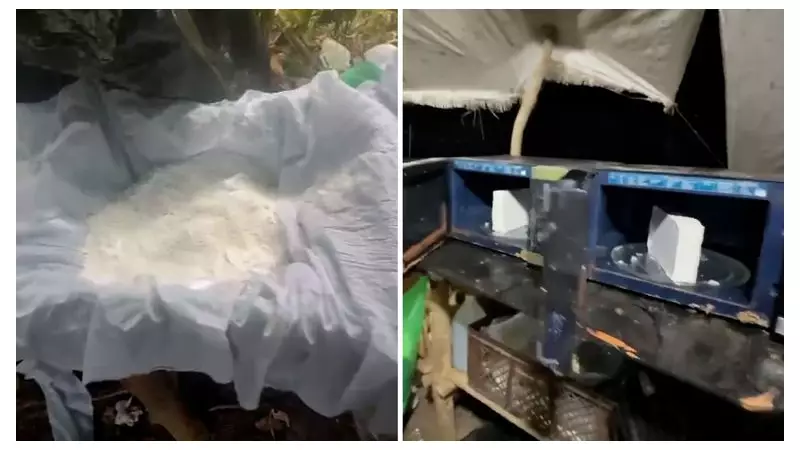
Videos shared with the crew revealed the staggering, industrial scale of the operations they disrupt. One showed a massive jungle cocaine lab, abandoned just before the army's arrival. The facility contained huge drums of precursor chemicals and microwaves still holding "bricks" of processed cocaine. Hundreds of thousands of dollars' worth of the drug was left behind, alongside shovel-loads of product ready to be pressed into kilo blocks for the global market, notably the lucrative United States.
The Daunting Challenge of a Porous Border
Lieutenant Colonel Juan Camilo Mazo, commander of Cavalry Group 5, is tasked with securing this sector. He highlighted the immense difficulty of policing the long, open, and largely unfenced border. Intelligence is paramount, as without it, finding traffickers in the vast terrain is nearly impossible.
The flow of people and vehicles is constant, both at official crossings and numerous informal points. Lt. Col. Mazo stated there are at least 50 illegal crossing points in his sector alone, making the interception of drug shipments extremely challenging. The threat is compounded by well-organised cartels and the growing involvement of terror groups collaborating with the narcos.
At a tense spot along the borderline, which appears as nothing more than an open field, Mazo revealed he had been involved in a shootout there previously. "It's very dangerous, we can only stay a few minutes," he said. The operation in Cucuta sits at the heart of a broader Latin American drug war initiative, with the region's role as a major producer and transit point for cocaine coming under intense international scrutiny.