
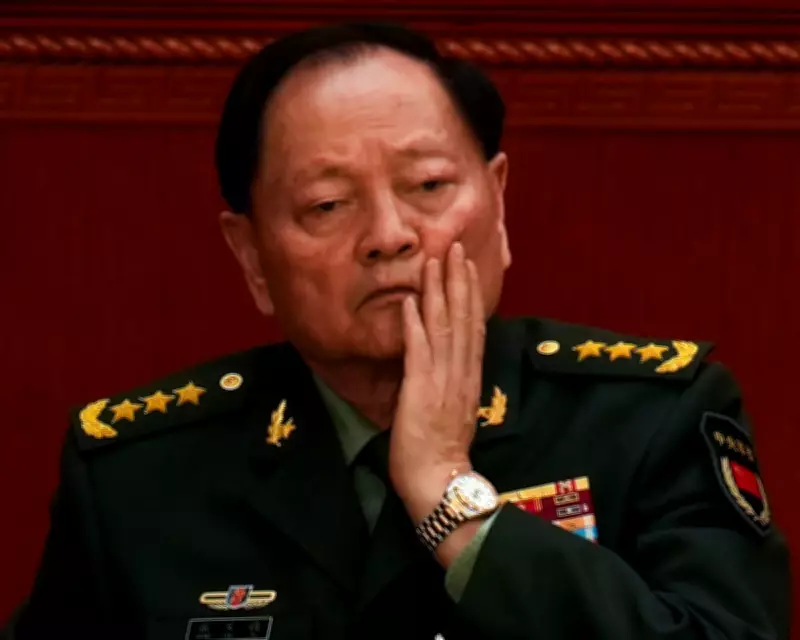
China's most senior general, Zhang Youxia, has been placed under investigation in a significant development that underscores the ongoing concentration of power within the country's political and military structures. This move represents the latest in a series of purges initiated by President Xi Jinping, who has systematically consolidated authority across all levels of government and the armed forces.
The Broader Context of Military Restructuring
This investigation occurs against a backdrop of extensive military reforms that have transformed China's People's Liberation Army. President Xi Jinping's campaign has dramatically reshaped the Central Military Commission, reducing its membership from seven prominent figures to just two: Xi himself and the armed forces' anti-corruption chief. This restructuring follows years of systematic efforts to eliminate potential rivals, disregard term limits, and cultivate a personality cult around the Chinese leader.
Historical Patterns of Political Purges
Xi Jinping's approach to governance has involved removing officials at every level of the Communist Party, including those once considered potential successors. The investigation into General Zhang Youxia follows a similar pattern seen in 2023, when commanders overseeing China's nuclear and conventional missile forces were abruptly removed from their positions. Chinese state media has indicated that Zhang and another senior military leader, Liu Zhenli, "seriously trampled on and undermined the system of ultimate responsibility resting with the CMC chairman" – a clear reference to Xi Jinping's authority.
While corruption within the PLA has been widely documented, including practices such as paying for promotions and skimming procurement funds, the political dimension of these purges appears paramount. The real offence often seems to be political rather than purely financial, with officials falling from grace not necessarily for opposing Xi directly, but for misinterpreting his intentions or demonstrating insufficient zeal in implementing his directives.
International Implications and Concerns
The timing of this military purge coincides with renewed diplomatic engagement between China and Western nations. Sir Keir Starmer's recent visit to Beijing represents part of a broader trend of middle-power leaders seeking to reestablish relationships with China. This diplomatic outreach occurs despite ongoing concerns about China's international assertiveness, its pandemic response, and its relationship with Russia during the Ukraine conflict.
International observers express particular concern about how military instability might affect China's external relations. Basic communication and understanding between the PLA and US military have become increasingly difficult since China severed direct military-to-military channels in 2022. While discussions about restoring these channels continue, the absence of reliable communication mechanisms raises the risk of unintended escalation during crises.
Expertise Drain and Operational Risks
One significant consequence of these purges is the loss of institutional knowledge and operational experience. General Zhang Youxia brought rare combat experience to his position, having fought in Vietnam, and had impressed American counterparts during previous engagements. His removal raises concerns about whether China's military leadership is becoming increasingly populated by officials chosen for political loyalty rather than professional expertise.
Some analysts fear that this trend toward political conformity within military leadership could foster overconfidence and increase the likelihood of misunderstandings during international incidents. The 2001 crisis, when a US spy plane collided with a Chinese fighter jet, serves as a reminder of how quickly tensions can escalate without proper deconfliction mechanisms and experienced leadership on both sides.
The Global Strongman Phenomenon
China's political developments occur within a broader global context where democratic norms face significant challenges. While leaders like Donald Trump operate within systems featuring legislative checks, judicial oversight, and media accountability, they increasingly attack these constraints and surround themselves with loyalists rather than independent advisors. The contrast between these systems highlights different approaches to governance, but both raise questions about how decisions are made when leaders are insulated from dissenting voices.
The investigation into General Zhang Youxia sends a powerful message throughout China's political and military establishments: no position is secure, and no individual is too powerful to face consequences. This environment naturally discourages initiative and independent thinking, as officials become increasingly reluctant to present unwelcome information or challenge prevailing assumptions. When experienced, well-connected figures like Zhang can fall so dramatically, the incentive structure strongly favors conformity over constructive disagreement.
As China continues its military modernization and international engagement, the implications of these internal purges extend far beyond its borders. The concentration of power in fewer hands, combined with reduced institutional expertise and increased political conformity, creates uncertainties that affect global stability and international relations in an increasingly interconnected world.




