
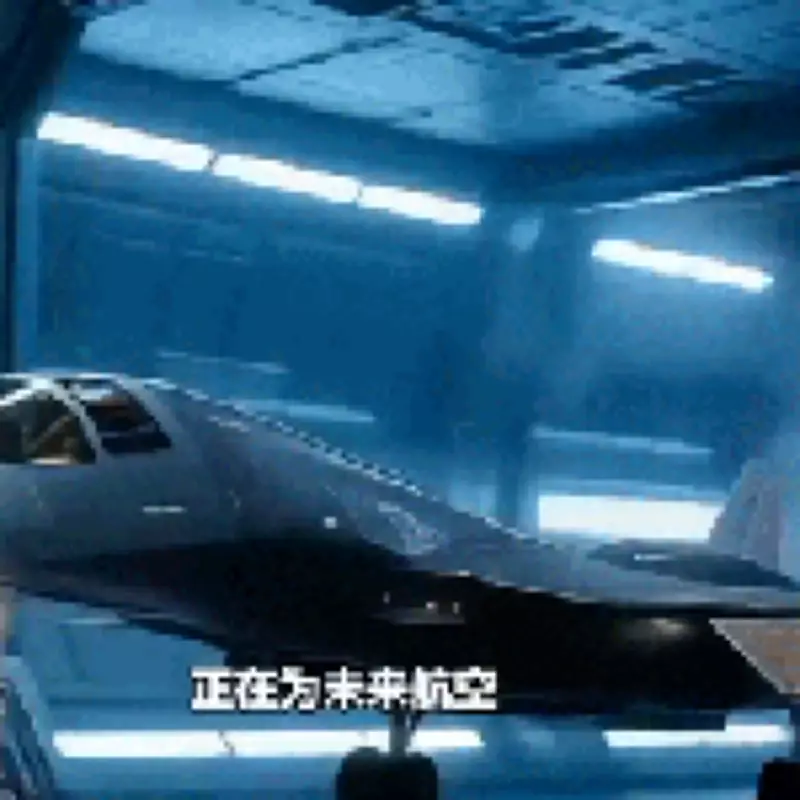
China Reveals Conceptual Star Wars-Style Spacecraft with Advanced Weaponry
China has unveiled a series of futuristic spacecraft designs that appear to be straight out of a Star Wars film, featuring massive motherships and unmanned jets equipped with particle accelerator cannons. The conceptual vessels, developed under the Nantianmen Project, represent a bold vision for cosmic warfare, though experts remain divided on their feasibility.
The Luanniao Mothership: A Colossal Cosmic Carrier
At the heart of these revelations is the Luanniao, a conceptual 100,000-tonne mothership designed to operate within and above Earth's atmosphere. With a wingspan of 684 metres and a length of 242 metres, this mammoth spacecraft could carry up to 88 fighter space planes. From its deck, unmanned space fighters armed with particle accelerator cannons and hypersonic missiles could launch to engage targets, potentially staying well out of range of traditional aerial threats like weather systems or defensive measures.
Unmanned Space Fighters and Futuristic Designs
Another craft under consideration is the White Emperor space fighter, which state broadcaster CCTV compared to the Transformers. Computer-generated footage depicts these sleek jets tearing through skies and taking down enemy aircraft. A 1:1 scale model of this sci-jet, also known as Bai Di, was displayed at the 2024 China Air Show, though it remains non-operational.
Additionally, a mock-up of the Purple Fire craft was showcased last year at the Helicopter China Expo in Tianjin. This innovative plane features a bladeless tail and can travel at speeds up to 88km per hour, designed for rescue operations and supply delivery.
Expert Analysis and Skepticism
Despite the impressive visuals, space defence experts express significant doubts about the practicality of these concepts. Chinese military analyst Wang Mingzhi recently stated that these weapons are still very much in a conceptual stage, noting that the challenge lies in determining which cutting-edge technologies will be realised first and when.
International defence experts are particularly sceptical. Peter Layton told the Telegraph that while the Luanniao would outclass pretty much everyone, it would require incalculable amounts of fuel, suggesting the project might be more of a stunt to showcase Beijing's military prowess. He added that it paints a picture of technology that other regions cannot aspire to, describing it as literally Star Wars stuff.
Space analyst Heinrich Kreft highlighted the geopolitical implications, suggesting China may have released these concepts with Taiwan in mind, aiming to leave a strategic marker. He noted that China has long been second to the US in space advancements but is rapidly closing the gap.
China's Space Ambitions and the US Rivalry
China's space programme is advancing rapidly, backed by increasing government funding. The country has successfully brought back moon samples, developed giant rockets, and completed the Tiangong space station. Meanwhile, NASA faces budget cuts and delays in its lunar missions.
The Commercial Space Federation reported last year that it is only a matter of time before China overtakes the US in space capabilities, describing China as living its Apollo, ISS, and commercial space eras all at once. This race includes efforts to return humans to the moon and potentially establish lunar bases.
However, significant technological hurdles remain. Experts point out that hovering a craft in low Earth orbit, let alone beyond, presents immense challenges, with even flecks of paint posing risks to modern spacecraft. China's historical limitations, such as a lack of reusable rocket launchpads, are gradually being addressed, but the path to realising these Star Wars-style concepts is fraught with obstacles.
As Beijing continues to push the boundaries of military and space technology, these unveilings underscore a growing ambition to dominate the final frontier, blending science fiction with strategic deterrence in a high-stakes cosmic competition.




