Authorities have confirmed that the alleged gunmen in the recent Bondi beach terror attack, Sajid and Naveed Akram, travelled to the southern Philippines just weeks before the incident. This revelation has prompted urgent questions for investigators about the purpose of their journey and any potential links to violent Islamist extremism in the region.
Why Did the Suspects Travel to Mindanao?
According to Philippine authorities, the father and son arrived in Manila on 1 November. Their itinerary included a visit to the city of Davao, located on the island of Mindanao. The specifics of their activities in the country's volatile south are now under intense scrutiny. They returned to Sydney on 28 November, shortly before the attack unfolded.
While it is too early to draw definitive conclusions, the destination is significant. The southern Mindanao region has been a long-standing hotspot for jihadist activity, providing fertile ground for groups affiliated with al-Qaida, Jemaah Islamiyah, and, more recently, Islamic State (IS).
A History of Conflict in the Southern Philippines
For decades, Mindanao has been roiled by a complex mix of Islamist separatists, communist rebels, and warlords. Driven by historical grievances and political aims, Muslim separatists have long sought to create an Islamic state in the region, which is home to the country's most significant Muslim minority.
The area's dense forests, rugged mountains, and porous maritime borders have proven conducive to guerrilla warfare. This geography has enabled the flow of arms and foreign fighters from neighbouring Indonesia and Malaysia, as well as from the Middle East.
The most major recent conflict was the five-month siege of Marawi city in 2017 by IS-aligned militants. The battle, which the Philippine military eventually won, attracted foreign fighters and funding, resulting in widespread destruction, dozens of deaths, and the displacement of tens of thousands.
Which Militant Groups Remain Active?
Analysts note that while extremist activity has declined from its peak, it has not disappeared. Remnants of IS in the Philippines are largely based in and around Marawi, which remains a "hotbed of jihadist support," according to security risk analyst Todd Elliott.
Several groups, though weakened, persist:
- Abu Sayyaf, once notorious for kidnappings and bombings, has been largely neutralised, with most members having surrendered.
- The Bangsamoro Islamic Freedom Fighters (BIFF) still operates in Maguindanao but has been diminished by surrenders and military raids.
- The Maute Group, also known as Daulah Islamiyah, has been reduced to what authorities call a "manageable" number.
- Isis-East Asia, a loose network pledging allegiance to IS, consists of an estimated 300-500 mostly Filipino fighters who carry out sporadic attacks.
In a significant blow to one faction, authorities killed alleged high-ranking leader and bomb expert Mohammad Usman Solaiman of Daulah Islamiyah in December. His group was blamed for several terror attacks, including bus bombings in Mindanao in 2022.
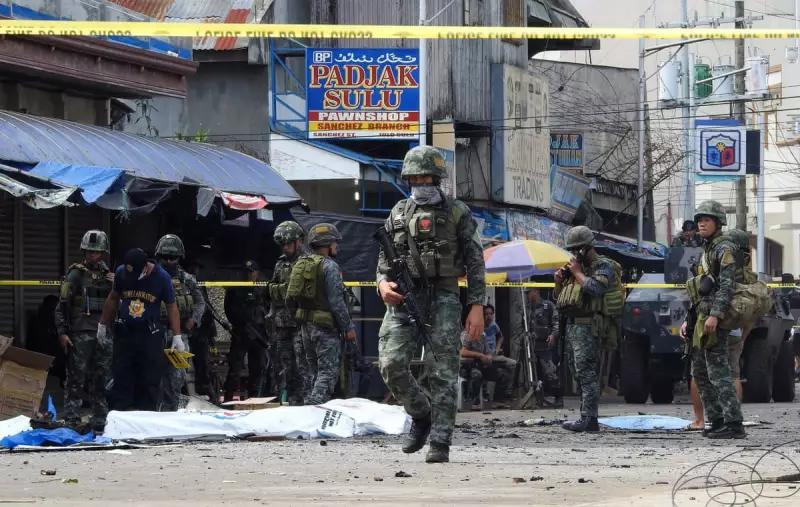
Despite a general decrease in attacks since the fall of IS and the Covid-19 pandemic, isolated incidents continue. The deadliest recent attack was the 2019 twin bombings of a Catholic church in Jolo, Sulu, which killed 20 people and injured 100 more. Other attacks followed, including a 2020 bombing in Jolo that killed 14 and a 2023 university mass bombing that killed four.
The Philippine government has intensified its crackdown, enacting a stringent 2020 anti-terror law to bolster its powers. Military operations have led to the death, arrest, or surrender of key extremists in recent years, severely fragmenting remaining groups and limiting their operational reach.
The investigation into the Akrams' travels continues, highlighting the enduring international connections and local challenges in countering terrorism in the Philippines.