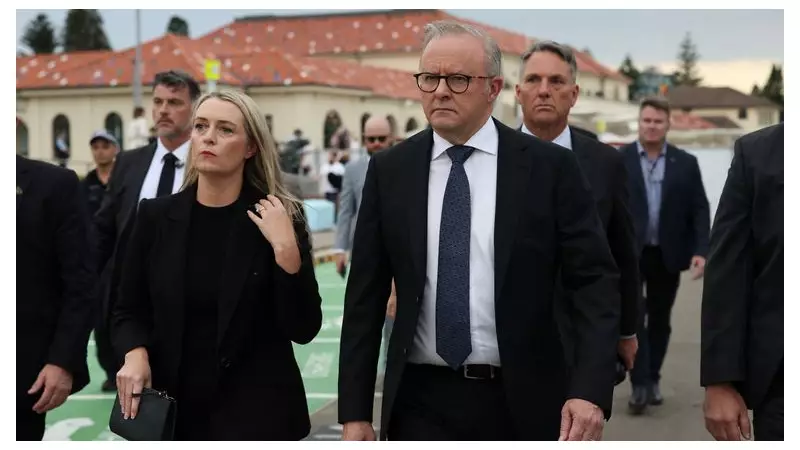
Australia's Prime Minister Anthony Albanese has announced a sweeping review of the country's police and intelligence agencies, one week after a deadly gun attack at Sydney's Bondi Beach. The move comes as the nation held a day of reflection to honour those killed and injured.
National Review and Day of Mourning
Prime Minister Albanese confirmed the review would be led by a former chief of Australia's spy agency. It will investigate whether federal police and intelligence bodies possess the "right powers, structures, processes and sharing arrangements" required to protect the public. The Prime Minister stated the review, prompted by what he called an "ISIS-inspired atrocity," must conclude by the end of April 2026.
On Sunday 21st December 2025, authorities invited Australians to light a candle at sunset, coinciding with the start of the final day of Hanukkah, as a quiet act of remembrance. A heavily policed evening vigil was held at Bondi Beach, where a minute's silence was observed at 6:47pm local time (7:47am UK time). This follows earlier tributes, including a formation of around 700 paddle boarders and surfers on the water at Bondi earlier in the week.
Addressing Systemic Gaps and Legal Loopholes
The shocking attack has exposed significant flaws in Australia's security apparatus. Politicians have acknowledged failures in gun-license assessments and information-sharing between agencies, vowing to close these gaps. In response, Albanese has announced a nationwide gun buyback scheme.
Despite Australia being known for some of the world's strictest firearm regulations, gun safety experts insist the laws are riddled with loopholes. The government of New South Wales has also committed to introducing legislation to ban the public display of symbols and flags linked to proscribed terrorist organisations, including Islamic State, Hamas, and Hezbollah. Authorities revealed that Islamic State flags were discovered in the vehicle used by the attackers.
Aftermath and Ongoing Investigations
The Prime Minister has faced criticism over his government's handling of a surge in antisemitism since the outbreak of the Gaza war, and has since pledged to strengthen hate crime laws. The alleged attackers, identified as 50-year-old Sajid Akram and his 24-year-old son Naveed Akram, were both shot by police at the scene. Sajid Akram died, while his son emerged from a coma on Tuesday 16th December and has since been charged with 59 offences, including murder and terrorism-related crimes. He remains under police guard in hospital.
This profound national tragedy has forced a critical re-evaluation of Australia's security, intelligence coordination, and firearm controls, as the country seeks to prevent future violence.