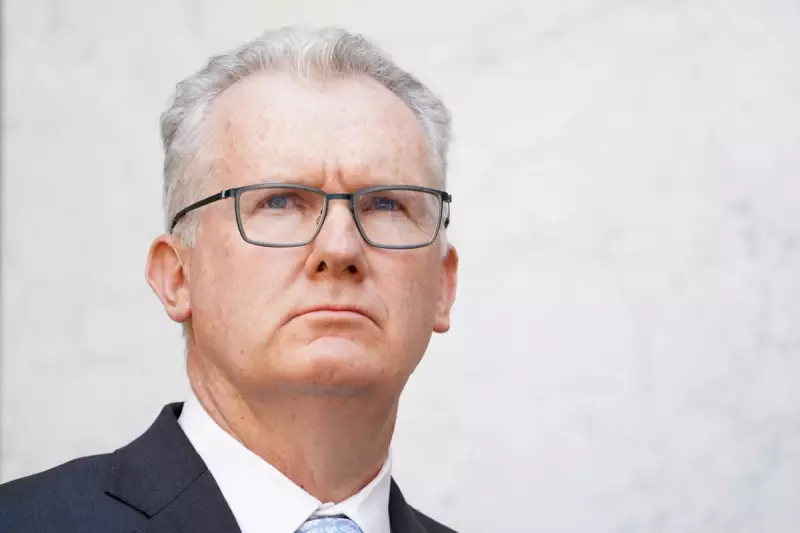
The Australian federal government is set to introduce a powerful new legal mechanism to crack down on extremist organisations, creating a formal listing for hate groups that will operate almost identically to the existing terror listing scheme.
Closing the Legal Loophole on Extremism
The proposed changes, announced by Home Affairs Minister Tony Burke, are designed to target groups that deliberately operate just inside the boundaries of current laws. These organisations, which include the Islamist group Hizb ut-Tahrir and the neo-Nazi National Socialist Network (NSN), spread hateful ideology but have so far avoided being proscribed as terrorist entities.
"We want those organisations to not operate. They hate Australia. We don't see why they should be operating in Australia," Minister Burke stated emphatically on Tuesday. The legislation is being developed in the wake of the recent Bondi antisemitic terror attack, with the government conceding more could have been done earlier.
How the New Hate Group Listing Will Work
The new regime will form part of a broader government plan to toughen hate speech laws, announced by Prime Minister Anthony Albanese last week. The consequences for a group listed under the new hate category will be severe and closely mirror those for listed terror organisations.
Burke confirmed that the consequences of listing "would effectively be a very close to exact match" to the terror listing, which prohibits activities such as directing a group's activities, recruiting, membership, training, and providing funds or support. He has specifically instructed his department to draft the laws with the past behaviour of Hizb ut-Tahrir and the NSN in mind.
This move addresses a significant gap identified by security experts. Dr Josh Roose, an associate professor and extremism expert at Deakin University, noted that current laws possess a "significant blind spot" allowing such groups to continue. "These are groups that deliberately avoid crossing that threshold into violent action. It's implied in the language but not necessarily overt," he explained.
Expert Warnings and Constitutional Limits
The concerns about these groups have been echoed at the highest levels of national security. Asio director general Mike Burgess has previously highlighted the "insidious strategy" of both Hizb ut-Tahrir and the NSN, accusing them of testing and stretching legal boundaries without explicitly breaking them.
While welcoming the government's action, Dr Roose issued a note of caution. He stressed that the threshold for listing a group must remain high to prevent future governments from abusing the power to silence political critics. "Australia has historically exhibited a high level of restraint in proscribing certain groups," he said, adding that the current climate of rising antisemitism is a key driver for the change.
Roose also warned that the laws must account for extremist "influencers" operating online outside of formal group structures, who may pop up if established organisations are banned.
The government acknowledges there are constitutional limits to the legislation, but Minister Burke affirmed Labor's commitment to lowering the legal threshold required to take action against hateful conduct. The broader legislative package also includes plans for an aggravated hate speech offence for leaders who promote violence, increased penalties, and making hate an aggravating factor in sentencing for certain crimes.