
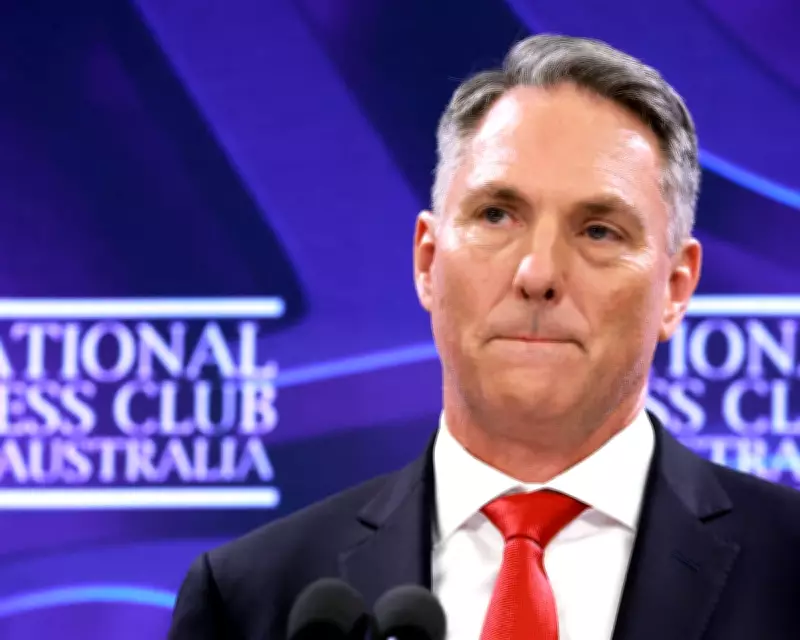
In a significant address to the National Press Club, Australian Defense Minister Richard Marles unveiled a major boost to the nation's military budget, committing an additional $14 billion over the next four years and a staggering $53 billion over the coming decade. This announcement comes as Australia faces mounting pressure from former U.S. President Donald Trump to elevate its defense expenditures.
Trump's Influence on Australian Defense Policy
The defense minister's statement follows a clear message delivered during a meeting with U.S. counterpart Pete Hegseth in Singapore nearly a year ago. Trump, known for his zero-sum approach to international alliances, has been vocal in demanding that allies like Australia increase their defense spending to 3.5% of GDP, arguing that many nations rely too heavily on American security provisions.
Initially, Marles and Prime Minister Anthony Albanese downplayed these demands, emphasizing that spending decisions would be based on strategic needs rather than arbitrary targets. However, the latest national defense strategy reveals a shift, with Marles now highlighting that Australia's defense spending will reach 3% of GDP by 2033, surpassing the NATO threshold.
Breaking Down the Defense Budget Increase
According to Marles, the Labor government has increased defense spending by approximately $117 billion over ten years compared to the previous Coalition administration. This includes $5 billion in "reprioritisations," such as the cancellation of 10 Spartan C-27J small transport planes, to free up funds for other priorities.
Marles defended the figures, stating they allow for a fair comparison "apples with apples." Yet, the transparency of these numbers has been questioned, as NATO accounting methods differ from Australia's federal budget practices. For instance, while Australia spreads costs over the lifespan of assets like warships, NATO countries report spending when payments are made.
AUKUS Submarine Agreement and Cost Concerns
The AUKUS nuclear submarine pact remains a cornerstone of Australia's defense strategy, with its cost estimates under scrutiny. Marles argued that the best way to understand the $368 billion project's price tag is to view it as 0.15% of GDP over its lifetime, claiming no significant cost increases have occurred.
However, spending on AUKUS over the next decade has risen from the $53 billion to $63 billion range projected two years ago to between $71 billion and $96 billion today. The government attributes this increase to progress on infrastructure, including the Osborne shipyard in South Australia and the Henderson base in Western Australia.
Timeline and Implementation of Defense Plans
Under the AUKUS agreement, the first Virginia Class submarine from the United States is scheduled to arrive in Australia by 2032, with subsequent deliveries every four years. The bespoke Australian-built submarines are expected to come online starting in 2042, marking a long-term commitment to enhancing naval capabilities.
Marles, perhaps frustrated by criticism from opposition parties, media, and defense analysts, was emphatic in his speech, insisting that the spending increases were not influenced by think tanks, retired generals, or "washed-up bureaucrats." Instead, he framed them as necessary for national security.
Analysis and Broader Implications
Despite Marles's assertions, the defense spending figures have been described as "as clear as mud" by some observers. The inclusion of costs outside the traditional defense portfolio, such as intelligence activities and superannuation for service members, further complicates comparisons with NATO standards.
This move positions Australia to strengthen its military posture amid growing geopolitical tensions, particularly in the Indo-Pacific region. The increased budget reflects a balancing act between domestic strategic needs and international pressures, notably from the United States under Trump's influence.
As Australia navigates these complex defense priorities, the transparency and accountability of spending decisions will remain critical for taxpayers and policymakers alike. The debate over whether Marles has bowed to Trump's wishes or acted independently continues to shape the political landscape.




