Arizona Guns Fuel Mexico's Cartel War as Sinaloa Conflict Rages On
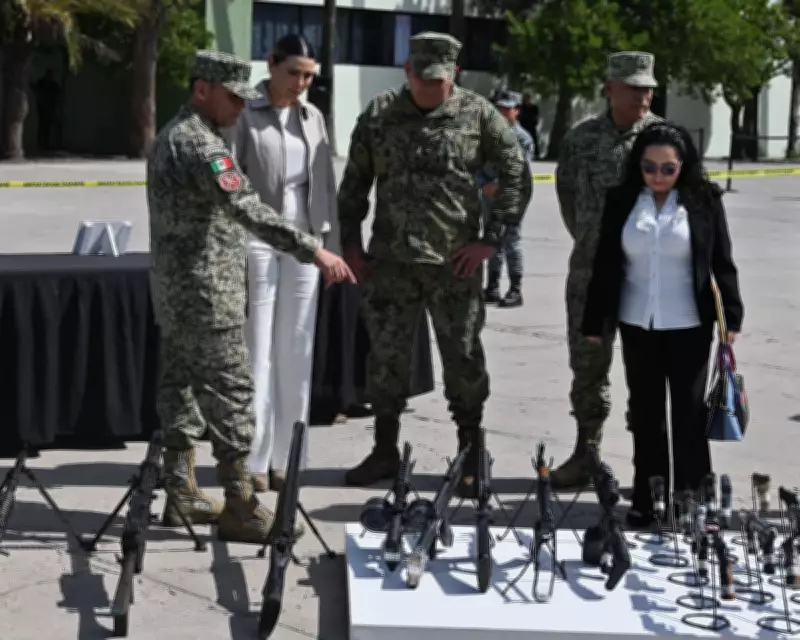
Mexican military officers presented confiscated firearms to Baja California Governor Marina del Pilar in Tijuana on March 17, 2026, underscoring a critical issue: Arizona has become the leading source of guns seized in Mexico and traced to recent US purchases. This surge in weapon trafficking is intensifying the bloody conflict within the Sinaloa cartel, one of Mexico's most powerful criminal organizations.
Escalating Violence and US Firearms
When war erupted within the Sinaloa cartel over a year and a half ago, many hoped it would be short-lived. However, the conflict persists, driven by a steady flow of firearms from the United States. According to recent data, 62% of guns seized in Mexico in 2024 and traced to a US purchase made less than a year earlier originated from Arizona, surpassing Texas as the top source. This trend coincides with the detention of Ismael "El Mayo" Zambada, co-founder of the cartel with Joaquín "El Chapo" Guzmán, in July 2024, which sparked accusations of betrayal and ignited a factional war.
Miguel Calderón, coordinator of Sinaloa's state council on public security, noted in December 2024, "We don't know what their inventory of guns, ammunition, men, and vehicles is. I imagine they're pulling together everything they have. This is the mother of all battles." The conflict has resulted in approximately 5,000 deaths or disappearances, with no signs of abating as factions continue to arm themselves.
Arizona's Role in Gun Trafficking
Arizona Attorney General Kris Mayes emphasized the severity of the problem, stating, "We have an enormous problem with gun trafficking by the Mexican drug cartels from Arizona down into Mexico. There is no doubt in my mind about that." Mexican authorities recover guns and submit serial numbers for tracing by US counterparts, revealing that most traced firearms with a short "time to crime"—indicating they were likely purchased for trafficking—are concentrated in Phoenix and Tucson areas.
This shift is reflected in seizure patterns: Sonora, which borders Arizona, recorded the second-highest number of gun seizures in Mexico in 2025, after Sinaloa. John Lindsay-Poland, coordinator of the Stop US Arms to Mexico project, explained, "This is a change, because for many years, Tamaulipas on the Gulf coast was by far the state with most guns recovered. And Texas was also dominant in the number of guns sold and then found in Mexico with a short time to crime."
Mechanisms and Legal Challenges
In Arizona, where firearm purchases are relatively easy, cartel associates often recruit Americans as "straw purchasers" to buy guns in exchange for commissions before trafficking them south. Mayes recently announced the indictment of a gun-trafficking ring involving 20 people who bought over 330 firearms, many ending up in Mexico, but suspects "this is just the tip of the iceberg." The markup for trafficked guns, especially rifles like AR-15s and AK-47s, has spiked in Mexico, increasing commissions for straw purchasers and reflecting demand from cartel infighting.
Mexico's strict gun laws, with only two legal gun shops operated by the military, force criminal groups to seek firepower abroad, primarily from the US. The Mexican government has filed a lawsuit against five Arizona gun shops accused of facilitating trafficking, and President Claudia Sheinbaum has called on Donald Trump to help stem the flow of illegal firearms. Meanwhile, the Arizona-Sonora border remains a focal point for both gun and fentanyl trafficking, with Mayes noting, "Arizona is the fentanyl funnel for the rest of the [US], and it's also where firearms are being funnelled down into Mexico. So this is a twin problem."