
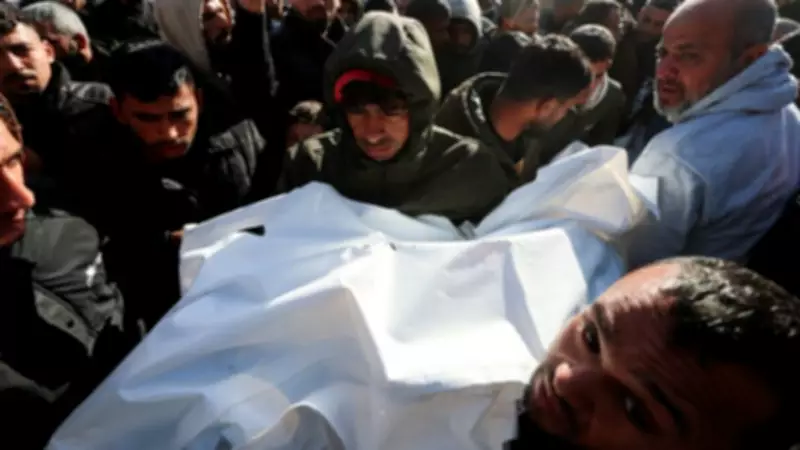
Hospital authorities in Gaza have reported that Israeli military strikes on Saturday resulted in the deaths of at least twenty-nine Palestinians, with casualties including women and children from multiple families. This incident represents one of the most lethal days in the region since a ceasefire agreement was established in October, according to medical officials.
Details of the Casualties and Strikes
The fatalities comprised two women and six children from two separate family groups, as confirmed by staff at Gaza hospitals that received the bodies. In Gaza City, a strike early in the morning killed a mother, three of her children, and one relative, according to Shifa Hospital. Simultaneously, Nasser Hospital reported that a strike in a tent camp in Khan Younis ignited a fire, resulting in seven deaths, including a father, his three children, and three grandchildren.
Escalation of Violence
Later in the day, Shifa Hospital director Mohamed Abu Selmiya stated that an additional airstrike targeted a police station in Gaza City, killing at least eleven more individuals and injuring others. The Gaza health ministry, which operates under the Hamas-led government, has documented over five hundred Palestinian deaths from Israeli attacks since the ceasefire commenced on 10 October.
Israel's military did not provide an immediate response to inquiries about these strikes. This violence follows accusations from Israeli officials the previous day, alleging new ceasefire violations by Hamas. Both sides have consistently blamed each other for breaches since the ceasefire was agreed upon after two years of conflict.
Context of Recent Attacks and Border Issues
These latest strikes occurred just one day before the scheduled reopening of the Rafah crossing, which borders Egypt and serves as the primary entry and exit point for nearly all of Gaza's two million residents. All of Gaza's borders have been sealed since the war began, though Rafah was briefly opened in early 2025 to evacuate sick and wounded Palestinians for treatment as part of the prior ceasefire agreement.
Palestinians view the Rafah crossing as a critical lifeline for those requiring medical care, as most healthcare infrastructure within Gaza has been destroyed. The World Health Organization estimates that nearly twenty thousand people may need treatment. Israel has maintained the closure of the Rafah crossing in both directions since October, insisting that Hamas must comply with the agreement to return all remaining hostages, both living and deceased.
Political and Humanitarian Implications
Israeli officials have indicated that the "limited reopening" of the crossing on Sunday aligns with US President Donald Trump's twenty-point peace plan. According to reports, Israel will not restrict the number of people permitted to leave Gaza via the crossing but will limit re-entry from Egypt to one hundred fifty individuals per day. Palestinian officials estimate that approximately one hundred thousand people have fled Gaza since the conflict's inception.
This surge in violence underscores the fragile nature of the ceasefire and the ongoing humanitarian crisis in Gaza, with international attention focused on border access and the escalating death toll.




