
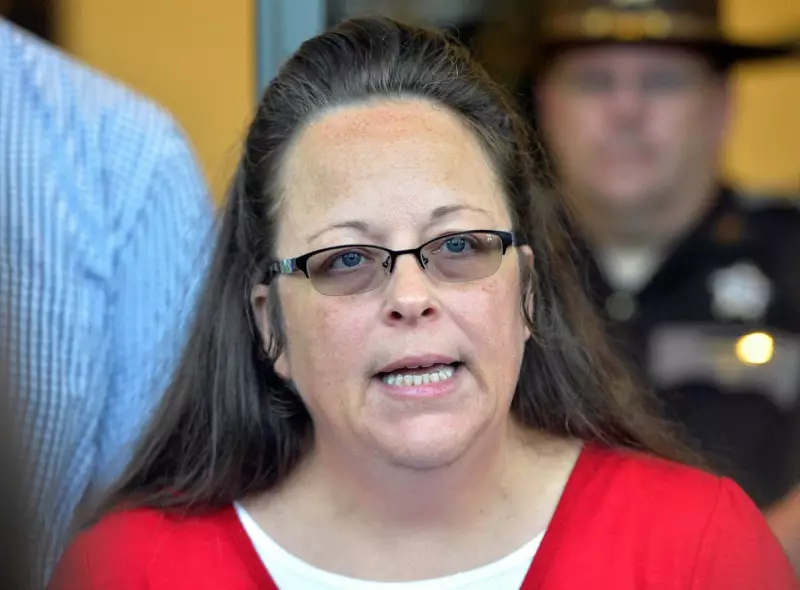
The United States Supreme Court is now formally considering whether to take up a highly contentious case that could pose a significant challenge to the legality of same-sex marriage across the nation.
The Case and Its Origins
This pivotal development occurred on Friday, just hours after the court ruled that the Trump administration could prevent transgender and non-binary individuals from selecting passport sex markers aligning with their gender identity. The justices held their first conference to deliberate on Davis v Ermold, a case involving Kim Davis, a former county clerk from Rowan County, Kentucky.
Davis rose to national prominence in 2015 as a figurehead for religious opposition to same-sex marriage. This was immediately following the landmark Supreme Court decision in Obergefell v Hodges, which legalised the practice nationwide. Citing her personal religious beliefs, Davis repeatedly refused to issue marriage licenses to same-sex couples. Her defiance was so steadfast that she was briefly jailed for contempt of court at the height of the controversy.
Legal Battles and a $100,000 Damages Award
The specific case now before the Supreme Court was initiated by David Ermold and David Moore, two men whom Davis denied a marriage license. After a trial, a jury found in their favour and awarded the couple $100,000 in damages.
Davis appealed the verdict, arguing that her actions were protected by the First Amendment's guarantee of free religious exercise. However, in March of this year, the US Court of Appeals for the Sixth Circuit rejected this argument. The judges ruled that because Davis was acting in her official capacity as a government employee, she was not entitled to such protections.
"When an official’s discharge of her duties according to her conscience violates the constitutional rights of citizens, the constitution must win out," the judges wrote in their decision, adding that the Bill of Rights would be meaningless if officials could ignore it based on personal conscience.
A Potential Threat to Marriage Equality
Davis, represented by the conservative legal group Liberty Counsel, is now asking the Supreme Court, with its 6-3 conservative majority, to overturn the appeals court ruling. Her petition not only seeks protection from liability but also urges the justices to overturn the Obergefell decision entirely.
In a strategic move, her attorneys praised the court's 2022 decision to overturn Roe v Wade and argued that Obergefell is similarly "not grounded in the nation’s history or traditions." This parallel has raised alarms among LGBTQ+ advocates.
Legal experts caution that the court may not necessarily revisit the broader issue of marriage equality, as many of Davis's arguments focus on the narrower question of her personal liability. The Supreme Court receives thousands of petitions each term but only hears a tiny fraction. Four justices must agree for the case to proceed to oral arguments.
If the court were to use this case to undermine Obergefell, the consequences would be profound. A brief from Ermold and Moore warned that it could disrupt the lives of nearly 800,000 married same-sex couples in the US and encourage other officials to flout laws they disagree with.




