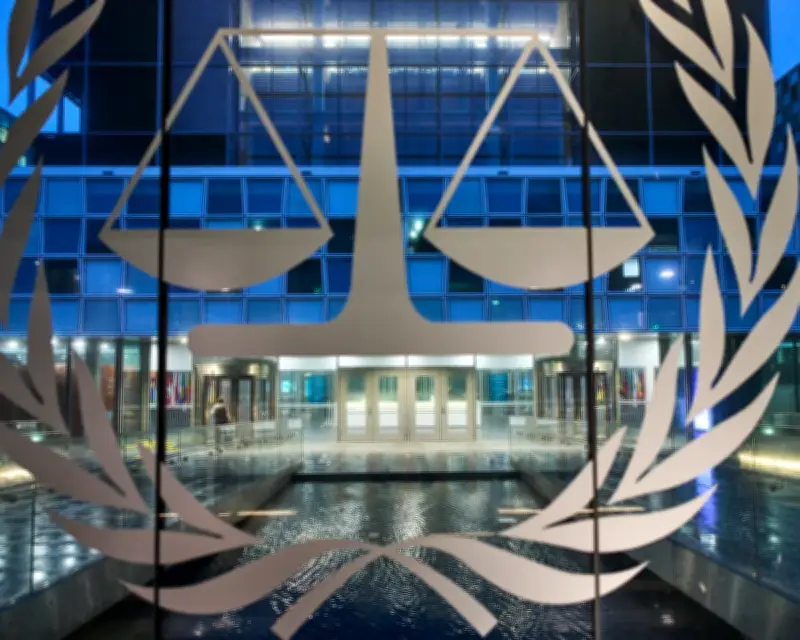
Anouar El Anouni, an EU spokesperson, stated on Tuesday: 'We stand firm in our support for the international criminal court (ICC). Attacks or threats against the court, elected officials, personnel or those cooperating with the court are simply not acceptable.'
EU Defends ICC's Role
El Anouni emphasized the court's role in prosecuting perpetrators of grave crimes, including genocide and war crimes. He said: 'Let's also recall that the ICC does not target sovereign states, nor does it constitute a threat to their sovereignty.' The court, he added, 'exercises jurisdiction over individuals, perpetrators of the most serious crimes of concern to the international community.'
US Escalates Campaign Against ICC
Since Donald Trump returned to power, his administration has steadily worked to hobble The Hague-based court. So far, 11 officials—including the chief prosecutor and eight judges—have been placed under US sanctions, affecting their credit cards, Amazon and Google accounts, and subjecting them to US travel bans.

Monday's announcement marked a dramatic escalation. In a video, US Secretary of State Marco Rubio claimed the court 'threatens every aspect of our political and legal system.' In an op-ed, he invoked images of US border patrol agents and elected leaders being 'dragged before an international court.'
Legal Experts Criticize Mischaracterization
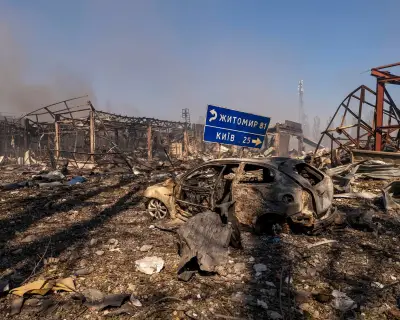
The US State Department stated the campaign would take a 'wide range of actions,' including pressuring nations to withdraw from the ICC and increasing scrutiny of countries that refuse while relying on US assistance. Countries like Ukraine, where the ICC launched an investigation into possible war crimes following Russia's invasion, could be affected.
Legal experts described Rubio's remarks as a mischaracterization of the tribunal's powers. The ICC can investigate crimes committed in signatory countries or by their citizens, cases referred by the UN Security Council, or when a non-signatory agrees. It only steps in when a country cannot or will not investigate. The US is not a signatory, and about 100 countries have agreements with the US to refrain from surrendering Americans to the ICC.
Kenneth Roth, former executive director of Human Rights Watch, said: 'The ICC is not claiming jurisdiction over conduct in the United States. Rubio is dressing up his quest for impunity for American war crimes under the label of national sovereignty.' A former senior US sanctions official suggested the administration aims to pre-empt investigations into actions like those in Venezuela.
Roth added: 'Trump wants to be able to commit war crimes on the territory of countries that have accepted the court’s jurisdiction – that’s what this is about.'