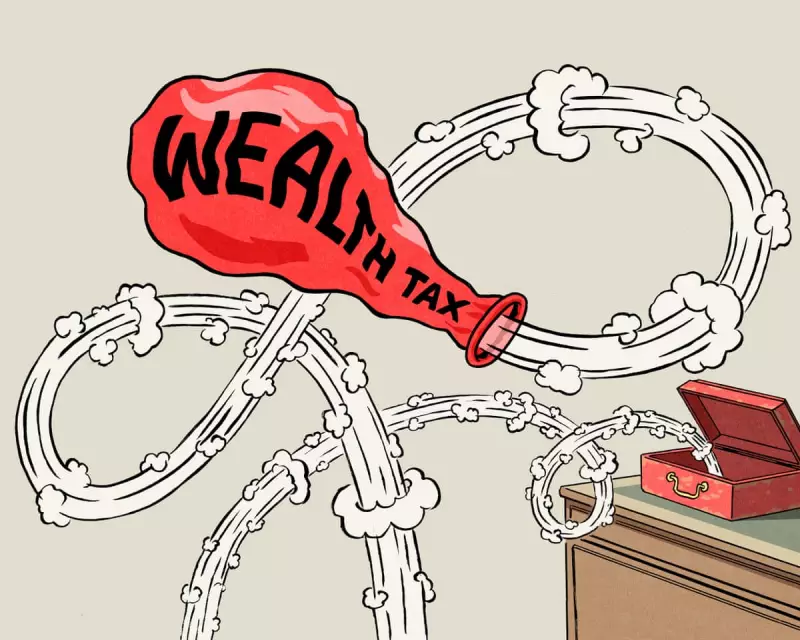
As Britain prepares for next week's budget announcement, a growing consensus on the left advocates for a wealth tax as the solution to economic inequality. However, this seemingly straightforward approach may deliver far less than promised.
The Wealth Tax Proposal: Popular but Problematic
Across political circles from Labour backbenchers to Green Party members, calls echo for imposing a wealth tax on the super-rich. The proposal typically involves a 1% annual levy on assets exceeding £10 million, with supporters arguing this would generate substantial revenue for public services like schools and hospitals.
According to the Wealth Tax Commission's 2020 comprehensive study, which gathered evidence from over 50 experts including economists and former HMRC officials, such a tax would raise approximately £10 billion annually. While this sounds significant, it represents only about 1% of annual government spending - hardly transformative in Whitehall terms.

Beyond Simple Solutions: The Need for Structural Change
The fundamental limitation of the wealth tax approach lies in its failure to address the underlying structures perpetuating inequality. Experts note that similar revenue could be generated through adjustments to existing tax systems rather than creating an entirely new mechanism.
True economic reform requires more ambitious measures: changes to labour laws to strengthen union organisation, corporate reforms giving workers greater stakes in businesses, and substantially increased social housing provision. These structural adjustments would redistribute power and resources more effectively than a surface-level wealth tax.
The Political Convenience of Targeting Billionaires
The wealth tax debate often focuses narrowly on extreme wealth while ignoring broader wealth distribution issues. The conversation conveniently avoids addressing the significant housing wealth accumulated by older, middle-class households through property value increases since the late 1990s.
This selective targeting makes for effective political theatre but fails to acknowledge that in cities like London, ordinary terrace houses now approach £1 million valuations - over three times the England average. The real challenge involves addressing wealth concentration across multiple segments of society, not just the super-rich.
A More Radical Legacy Than Current Proposals
Ironically, previous Labour leadership under Ed Miliband advocated for more economically radical concepts than current wealth tax proponents. Miliband's "predistribution" concept focused on ensuring citizens received a fairer share of assets before taxation through wage increases and worker ownership.
The 2015 Labour manifesto contained more substantial economic reforms than what many current left-wing voices propose. This historical perspective reveals how the economic debate has narrowed rather than expanded in recent years.
While the wealth tax conversation acknowledges the crucial political reality that Britain's future arguments will centre on resource distribution rather than growth miracles, the proposed solution remains inadequate. As next week's budget approaches, the limitations of this approach become increasingly apparent to those seeking genuine economic transformation.