
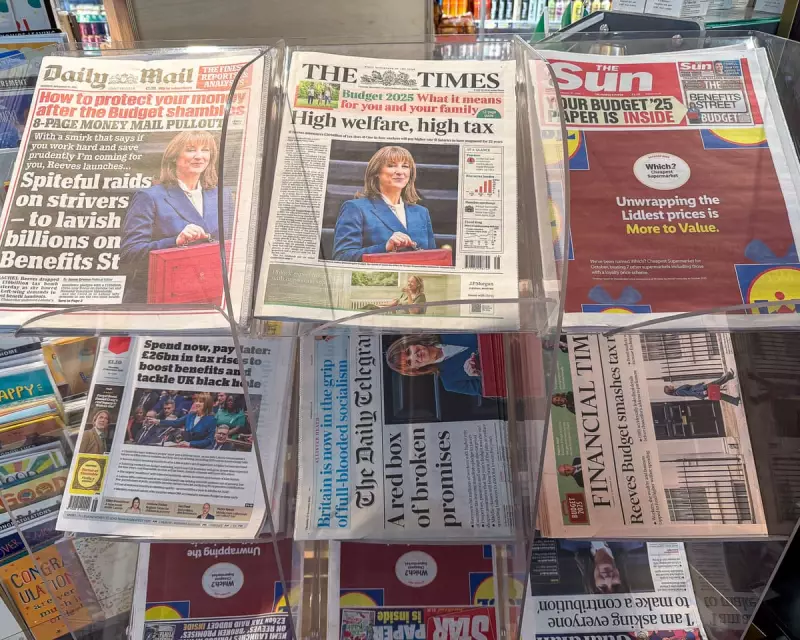
Across Britain, households are assessing the potential impact of the government's recent autumn budget announcement, with many expressing disappointment at what they perceive as insufficient measures to address the ongoing cost of living crisis.
Frustration Among Former Tory Voters
Research organisation More in Common conducted revealing focus groups with voters in Aldershot, a traditional Conservative stronghold that switched to Labour in the last general election. These voters, who should represent Labour's core new support base, expressed significant disappointment with the government's recent budget measures.
A record 57% of Britons now doubt the cost of living crisis will ever end, according to recent polling. The focus group participants, all in relatively high-paying professions and homeowners, described feeling financially insecure despite their apparently comfortable circumstances.
Hayley, an assistant headteacher, captured the mood perfectly: "It's all sort of stacked against you... The people that are working hard and earning a decent wage, trying to get childcare costs under control... you sort of question why you're doing what you're doing."
The 'Double Squeeze' on Middle Britain
Martin, a product manager in the automotive industry, noted the paradox of their situation: "On paper, we should be feeling really well-off." Instead, participants described a growing sense that traditional markers of financial security - good wages and savings - no longer guarantee stability.
Annette, an executive assistant, voiced a common concern about constantly moving goalposts, suggesting that "doing the right thing, being sensible" no longer provides adequate financial protection. Many described being caught in a "double squeeze" - supporting ageing parents while their adult children remain living at home.
Aldershot represents an archetypal "blue wall" constituency that had elected Conservative MPs for over a century before switching to Labour in last year's election. The voters speaking to researchers had been part of that political shift.
Chaotic Pre-Budget Messaging Damages Perception
Luke Tryl, UK director of More in Common, observed that the budget's impact was significantly undermined by the extensive pre-announcement briefing and subsequent U-turns. Rebecca, a lecturer, summarised the damaging effect: "For a party that was kind of campaigning on ending the chaos, I would say the lead-up to the budget felt quite chaotic... it's just like a comedy of errors constantly."
This unprecedented level of speculation meant many participants viewed the actual budget as Martin described it: a "damp squib." He elaborated: "It wasn't a bad budget because they haven't made things significantly worse. But it wasn't a good one. It was just... meh."
Specific measures attracted particular criticism. Annette felt that reducing the tax-free cash ISA allowance penalised hard-working savers, while Sarah compared the new road tax on electric vehicles to previous policy reversals on diesel vehicles.
The decision to freeze income tax bands left a particularly bitter taste, with Hayley describing it as "sneaky" and "a little bit underhanded." Many viewed this as a breach of Labour's manifesto commitment not to raise taxes on working people.
Tinkering at the Edges
While some participants expressed sympathy for the challenging economic situation the government inherited, there was clear impatience with what they perceived as timid measures. Annette captured this sentiment: "It's all about playing safe, not rocking the boat, just doing the bare minimum rather than really tackling some of the really big issues."
Traditionally, voters like these focus group participants would represent satisfied supporters of the status quo. Instead, they expressed frustration with the government's pace of change and concern that a comfortable, stable life is becoming increasingly unattainable.
The budget may have avoided further damaging the government's standing with this crucial voter group, but it failed to rebuild their shattered expectations. More significantly, the chaotic pre-budget messaging reinforced perceptions that despite promises of more stable governance, this administration may be no less chaotic than its predecessor.




