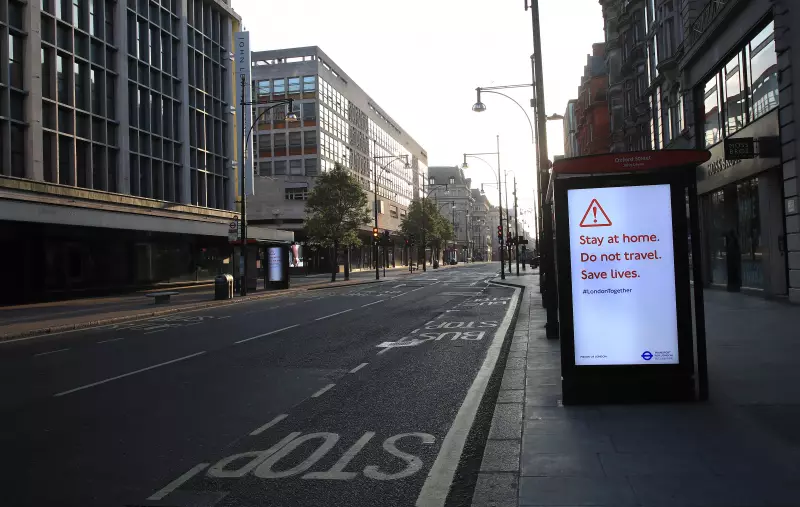
Britain's public finances remain trapped by the colossal costs of pandemic lockdowns, casting a long shadow over Chancellor Rachel Reeves' first Budget announcement today.
The Spectre of Lockdown Debt
Regardless of the specific measures unveiled by the Labour Chancellor, the UK continues to grapple with the financial aftermath of Covid-19 restrictions. Government borrowing skyrocketed from approximately £50bn annually in the pre-pandemic years of 2017-19 to a staggering £273bn in 2020, followed by £166bn in 2021.
This dramatic £439bn surge in public debt continues to dominate policy discussions, determining what schemes the nation can realistically afford. The situation presents a particular challenge for the Labour Party, which had advocated for longer and stricter lockdowns during the pandemic.

Questioning the Economic Trade-Offs
Last week's publication of the second Covid inquiry report, chaired by Baroness Hallett, focused almost exclusively on whether lockdowns saved lives. However, the report failed to quantify the enormous costs involved in preserving those lives.
Economics fundamentally revolves around trade-offs, much like society accepts approximately 1,800 road deaths annually against the benefits of vehicle use. Standard economic analysis assigns value to saving a quality-adjusted life year, enabling meaningful cost-benefit assessments of policy decisions.
While the Hallett report acknowledged that governments didn't sufficiently scrutinise lockdown's wider impacts, it took the necessity of restrictions as given without attempting to quantify their substantial costs.
Economists Warned of Excessive Costs
During the spring and summer of 2020, economists actively quantified the trade-offs involved in restrictions. On 8 April 2020, Paul Ormerod highlighted the £2bn daily economic loss and worrying increases in domestic abuse and mental health issues.
Substantial research emerged from top economists including Bob Rowthorn, former head of Cambridge's economics department, and David Miles of Imperial College and the Office for Budget Responsibility. These studies consistently found that lockdown couldn't be justified using standard government cost-benefit analysis.
The Miles research deliberately used the most generous estimates of lives saved to avoid underestimating lockdown benefits. Even so, the authors concluded that "having extended the lockdown for as long as three months consistently generates costs that are greater – and often dramatically greater – than likely benefits".
As the Labour government now confronts the fiscal consequences of policies it once enthusiastically supported, today's Budget will demonstrate how lockdown's financial spectre continues to constrain Britain's economic future.