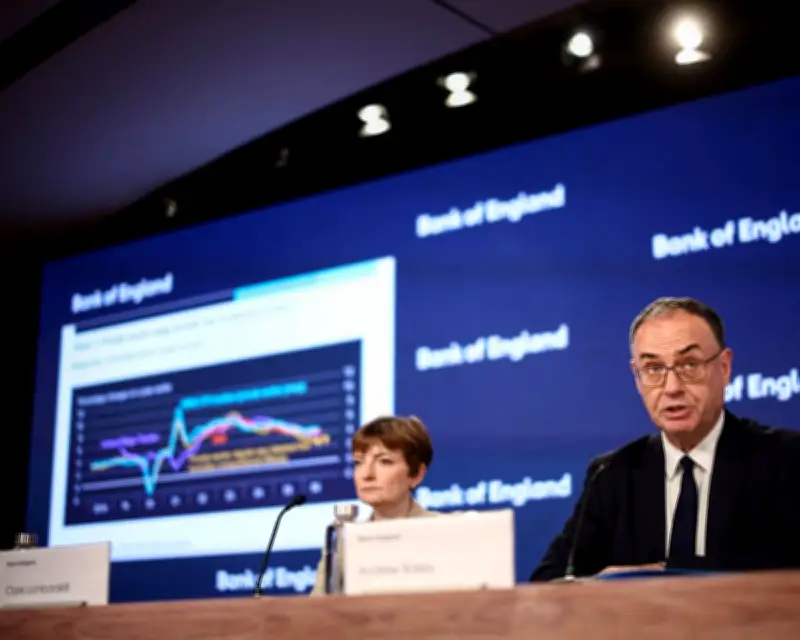
The Bank of England held bank rate steady at 3.75% on Thursday, defying calls from three of its nine rate-setting members who argued for tighter monetary policy to combat inflation stemming from the Iran war. Despite what some economists termed a “hawkish hold,” market-implied probabilities indicate a reduced likelihood of a rate hike at the next meeting in September. The implied probability of no change rose sharply from 53.6% just before the meeting to 73% by mid-afternoon.
Governor Bailey Downplays Rate Hike Expectations
Governor Andrew Bailey repeatedly told reporters at a press conference in London that the Bank was not preparing investors for a future rate increase. He expressed comfort that there was little evidence of inflationary pressures from oil prices feeding through to other goods and services in the economy. The conflict initiated by the US and Israel continues to cast a shadow over economic outlooks, with Iran shutting the Strait of Hormuz in response to the bombing campaign, effectively shutting in millions of barrels of oil production daily. Central bankers globally are grappling with the implications for inflation.
MPC Split: Three Members Vote for Hike
Catherine Mann, an independent member of the Monetary Policy Committee, joined colleagues Huw Pill and Megan Greene in voting for a rate hike. Mann argued that the collapse of a temporary truce between the US and Iran likely made higher prices unavoidable, necessitating higher rates to counteract that. Bailey characterized the disagreement as a reasonable divergence of judgments but reiterated that the majority believed evidence of second-order effects was lacking—even though inflation may rise later in the year due to higher oil prices.

Other Business and Economics News
In other developments, US GDP grew at an annualized rate of 1.5%, slower than expected. US borrowing costs rose to their highest since the global financial crisis. Lloyds Banking Group announced plans to cut an additional £2 billion in costs as part of a four-year strategy leveraging new technology and AI for growth. Eurozone GDP grew faster than anticipated in the second quarter despite Iran war concerns. London’s FTSE 100 hit a new high, buoyed by gains in mining companies and Rolls-Royce. Shell doubled its profits in the second quarter due to the Iran-related oil price surge. BAE Systems and Rolls-Royce upgraded profit forecasts amid surging defence spending. Airbus was fined £6.4 million in the UK for breaching rules on sensitive goods like military hardware. Authorities seized laptops, phones, and documents in a crackdown on companies allegedly plaguing consumers with spam texts about car finance mis-selling.