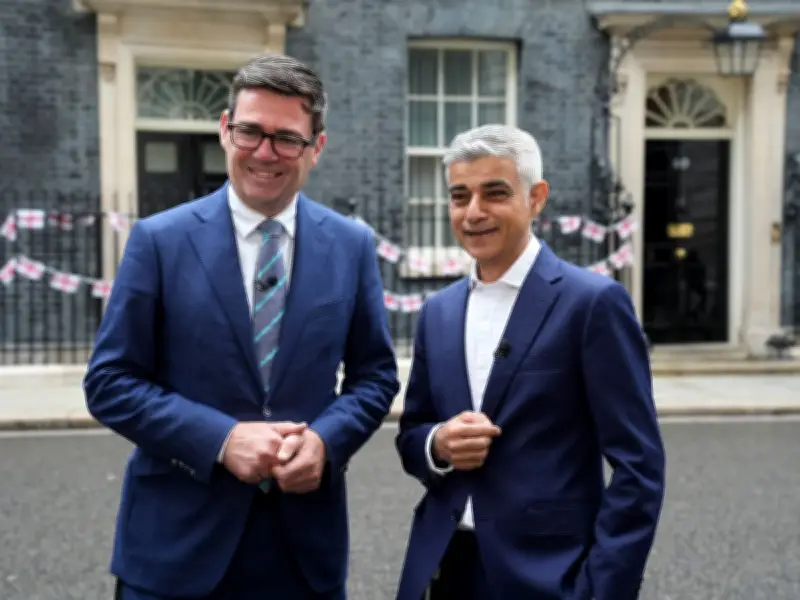
Prime Minister Andy Burnham has announced that English mayors will be allowed to keep a share of the income tax and business rates collected in their areas, in a significant shift of fiscal power from Westminster to local communities.
Details of the tax devolution plan
The policy, expected to be detailed in a white paper published alongside Chancellor John Healey's first budget in the autumn, aims to give local leaders more control over revenues. Currently, 95% of all tax revenues raised in England go directly to central government, leaving local authorities with just 5%. Analysis shows London retains barely 6% of the tax raised in the capital, compared to 50% in New York and 70% in Tokyo.
Burnham said: “I said we’d take power out of Westminster and carry it into every postcode in the country. Today, we make good on that promise. Under our plans, more of the taxes raised in a community will stay in that community. Soon, every local leader will have the power and resources to improve public transport, build homes and create jobs.”

Support from London Mayor and others
London Mayor Sir Sadiq Khan backed the move, stating that Burnham is “walking the walk” after years of local leaders having to beg Whitehall for funding. The government emphasized that the rate of income tax billpayers face will not change as a direct result of the reforms, and an equalisation system will remain to support areas where less tax is collected.
Regional leaders and future elections
Several parts of England already have mayors, including Greater Manchester, the Liverpool City Region, Cambridgeshire and Peterborough, and South Yorkshire. Voters in areas like Greater Essex and Hampshire and the Solent will elect mayors for the first time in the coming years. Burnham hosted local leaders at his inaugural No 10 North meeting in Manchester, telling them: “What I’m trying to do here is make the UK one team where we’re all pulling behind you because your place is where growth happens or it doesn’t happen.”
Reactions from government and opposition
Chancellor John Healey said: “The people who best understand what skills employers want, what transport an area needs and where investment can make the biggest difference are those who live there. For the first time we’re giving mayors a share of income tax so communities directly benefit when their economy grows.” Housing, Communities and Local Government Secretary Angela Rayner said the announcement would put “an end to the begging-bowl culture of the past”.
However, the Conservatives expressed doubt. Shadow local government secretary Sir James Cleverly said: “Andy Burnham is right to want to encourage growth in all communities. But his top-down Manchesterism will lead to higher taxes, with no guarantee of better outcomes for local people. Devolution cannot be imposed from above.” Reform UK home affairs spokesman Zia Yusuf urged Burnham to “fully devolve the power to stop the housing of illegal migrants in local communities”.
Think tank reaction
Think tank IPPR welcomed the announcement, describing it as “extraordinarily bold” and “the most significant shift in how England is funded in a generation”. Mirte Boot, head of IPPR North, said: “Local leaders know what their places need to drive ‘growth in every postcode’ – but until now they didn’t have the powers to make it happen. Fiscal devolution must pass two tests: mayors need the freedom to borrow against future revenues to fund long-term infrastructure, as London did with the Elizabeth line, and some of the proceeds must also be shared with slower-growing places.”