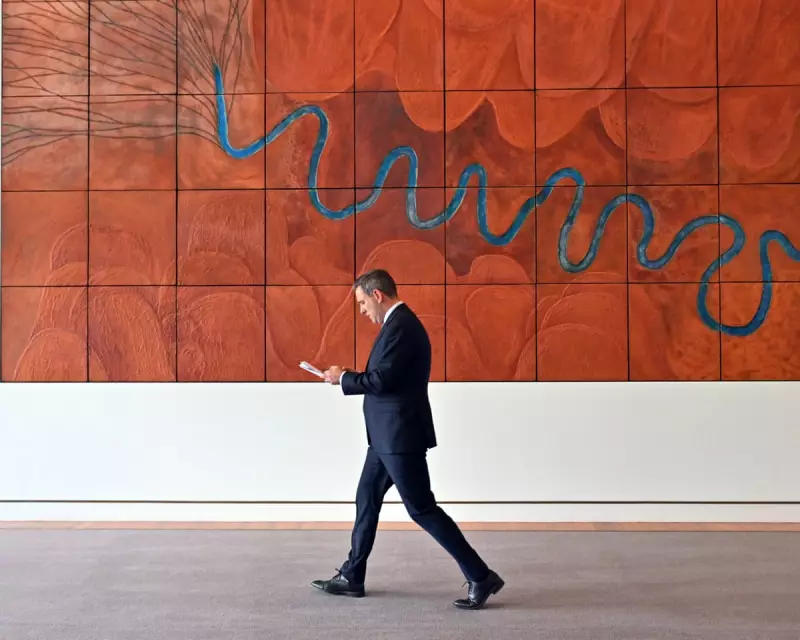
Treasurer Jim Chalmers has presented the Australian government's Mid-Year Economic and Fiscal Outlook (Myefo), framing it as a responsible update amidst global economic turbulence. The statement, delivered in Canberra, reveals a slightly improved budget position but underscores significant challenges from persistent inflation and looming interest rate decisions.
A Closer Look at the Fiscal Bottom Line
The core of the update shows a modest tightening of the nation's finances. The projected deficit for the current financial year now stands at $36.8 billion Australian dollars, which marks an improvement of $5.4 billion compared to forecasts made prior to the election.
Over the forward estimates period spanning four years, the combined deficits are projected to be $8.4 billion better than previously thought. Treasurer Chalmers emphasised that this is the first mid-year update on record to show a better bottom line and lower debt in every year of the forecast.

However, the improvement comes with major caveats. Significant cost blow-outs, including an additional $6.3 billion for disaster relief, have pressured the budget. Despite the upgrades, deficits are projected to continue for the foreseeable future, with this year's shortfall substantially larger than the $10 billion recorded in 2024-25.
Winners and Strategic Spending Announcements
While the update focused on fiscal restraint, several key funding announcements were made. The government has committed an extra $233 million for the CSIRO, Australia's premier scientific research agency, following recent job cuts within the organisation.
In a move with parallels to UK skills shortages, $98 million has been allocated to fast-track qualifications for 6,000 tradespeople and establish a national training centre for new energy skills. This aims to address anticipated worker shortfalls in the green energy transition.
Furthermore, the government is delivering on an election pledge with a $1.1 billion investment to expand free mental health services and create additional training places for practitioners.
The Shadow of Inflation and Economic Headwinds
The most sobering part of the Myefo relates to the inflation outlook, which holds lessons for global economies including the UK. Treasury officials now expect inflation to remain around 3.75% by mid-2026, well above the Reserve Bank of Australia's target range of 2-3%.
This persistent price growth is not forecast to return to the midpoint of the target band for at least another year. The high inflation environment is predicted to erode real wages, with wage growth for this financial year estimated at 3.25%.
The budget papers notably omit any assumption on the future path of the cash rate, leaving open the possibility of further interest rate hikes. Economists warn the Reserve Bank could raise rates as soon as its next meeting in February.
The labour market outlook has also softened, with the unemployment rate now expected to peak at 4.5%, albeit with slower employment growth than previously anticipated.
For UK observers, Australia's fiscal update provides a case study in balancing modest fiscal improvement against stubborn inflationary pressures and global economic uncertainty—a challenge familiar to policymakers on this side of the world.