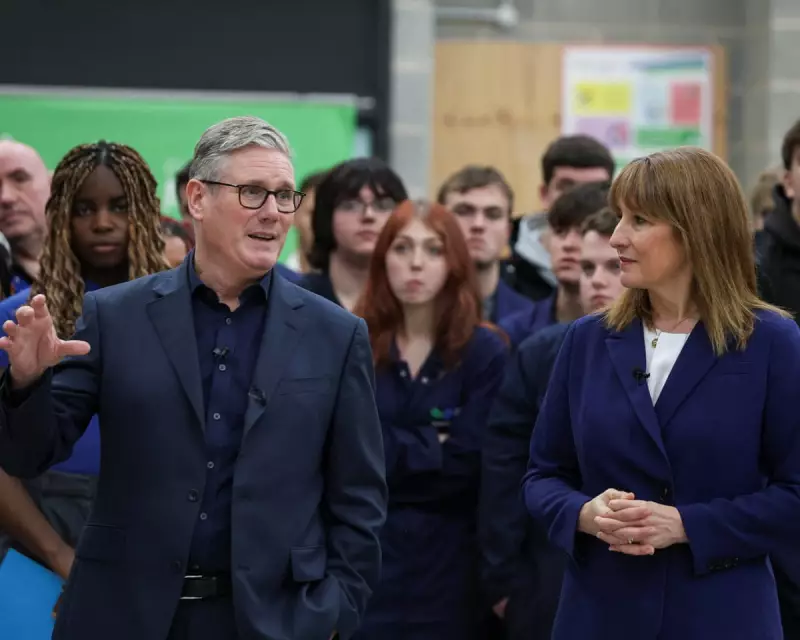
Prime Minister Keir Starmer has stated that Labour's comprehensive economic strategy will require several years to fully deliver results, as he attempts to regain control of the political narrative following a turbulent response to last week's budget announcement.
Defending the Budget Decisions
In an exclusive article for the Guardian, the Prime Minister strongly defended his Chancellor, Rachel Reeves, against mounting criticism, insisting she was absolutely right to implement £26 billion worth of tax increases in what has become the largest tax-raising budget on record. Starmer promised voters a substantial long-term plan that he said should be properly judged at the end of the parliamentary term rather than through immediate reactions.
This intervention forms part of a broader strategy to bolster both his and Reeves's positions after several days of intense political arguments about whether the Chancellor genuinely needed to raise taxes to their highest levels in recorded history. The Conservative opposition has demanded Reeves resign over allegations she misled voters regarding the impact of growth forecasts from the Office for Budget Responsibility.

Monday's Crucial Speech and Future Plans
On Monday, Starmer will deliver a significant speech directly rebutting these claims while outlining a multiyear economic plan centred around three key pillars: deregulation, further welfare reform, and closer European ties. The Prime Minister has already tasked Business Secretary Peter Kyle with identifying ways to streamline large infrastructure projects, signalling a commitment to cutting red tape.
In his Guardian article, Starmer wrote: "By delivering a big, bold long-term plan, not a set of quick fixes, we will renew Britain. We must become again a serious people, with a serious government, capable together of doing difficult things to regain control of our future."
He added a strong rebuttal to political opponents from both sides: "We will take on those on the left and right who only offer grievance and whose approach would lead to further decline. Because let me be clear – turning on the borrowing taps or returning us to austerity – that is the politics of decline and I will not accept it."
Welfare Reform and Disability Benefits Review
The Prime Minister also committed to another attempt at overhauling the welfare system, despite facing rebellion from his own backbenchers during summer attempts to cut disability benefits. Starmer has asked former Health Secretary Alan Milburn to examine the role of mental health issues and disability in youth unemployment, while Welfare Minister Stephen Timms continues his broader review of disability payments.
In his upcoming speech, Starmer will emphasise: "We must also reform the welfare state itself – that is what renewal demands. If you're not given the support you need to overcome your mental health issues, or if you are simply written off because you're neurodivergent or disabled, then it can trap you in a cycle of worklessness and dependency for decades."
The political atmosphere has remained tense since Reeves delivered her second budget, which included multiple tax increases and extended the freeze on income tax and national insurance thresholds. These measures were designed to fund increased welfare spending and build a larger buffer against the government's fiscal rules.
While the budget package has been well received by financial markets, with UK borrowing costs falling to their lowest levels this year, and Labour MPs celebrating the removal of the two-child benefit cap, the Chancellor faces ongoing accusations of misleading voters about her reasons for raising taxes.
The controversy centres on Reeves' pre-budget warnings that she would need to act due to expected downgrades in economic productivity forecasts. However, these were ultimately offset by upgrades to expected wage growth and tax receipts, leaving the Chancellor with a small surplus.

Reeves defended her position on BBC One's Sunday with Laura Kuenssberg, stating: "I know that some people are suggesting that there was a small surplus that the OBR published on Friday. But if I was on this programme today and I was saying £4bn surplus is fine, there was no economic repair job to be done, I think you would rightly be saying that's not good enough."
Conservative leader Kemi Badenoch maintained her call for Reeves' resignation, telling the same programme: "The chancellor called an emergency press conference, telling everyone about how terrible the state of the finances were, and now we have seen that the OBR had told her the complete opposite. Because of that, I believe she should resign."
Badenoch also defended her personal criticism of Reeves, having previously accused the Chancellor of "wallowing in self-pity and whining about misogyny and mansplaining." While Reeves expressed discomfort with the personal nature of these attacks, Badenoch refused to apologise, stating: "My job is to hold the government to account, not to provide emotional support for the chancellor."
As the Conservatives seek to force Reeves to Parliament to provide a "full and honest account of her actions," Labour aides remain concerned that the tax rise controversy has overshadowed popular budget measures designed to alleviate cost of living pressures, including removing green levies from energy bills.
Post-budget polling by More in Common indicates the budget has done little to shift public perception of Reeves' economic competence, with 60% of voters still rating her performance on the economy as bad or very bad—virtually unchanged from pre-budget figures.