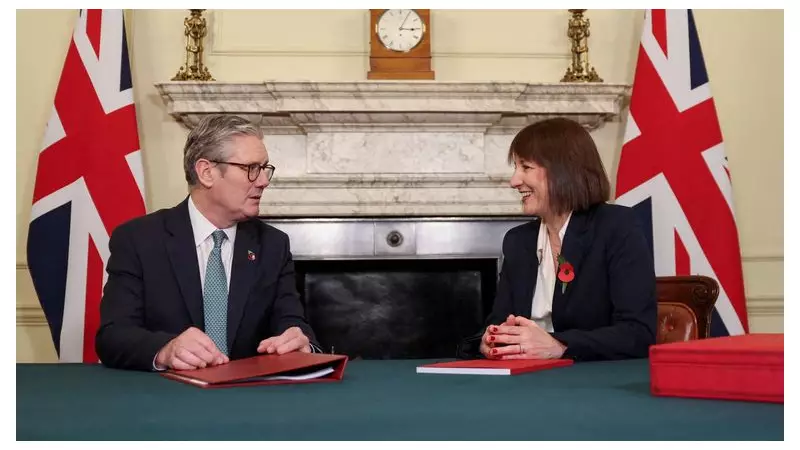
Prime Minister Sir Keir Starmer is set to deliver a major speech on Monday, mounting a robust defence of last week's contentious budget. This comes amidst a fierce political storm, with the Conservative opposition accusing Chancellor Rachel Reeves of having lied about the state of the public finances to justify sweeping tax rises.
Defending the Budget and Accusations of Deceit
The government's financial plan, unveiled on 26 November 2025, imposed £26bn of tax increases across the economy. Downing Street states that Sir Keir will argue the budget "moves forward the government's programme of national renewal" and sets "the right economic course" for Britain.
However, the budget's foundation has been thrown into question. The controversy stems from a speech by Chancellor Reeves on 4 November, where she cited a £16bn downgrade in productivity forecasts from the Office for Budget Responsibility (OBR), claiming it created a fiscal black hole necessitating tax hikes.

This narrative collapsed when the OBR revealed on Friday that it had informed the Treasury days earlier that the government's finances were, in fact, in a surplus of £4.2bn. This led to outrage and direct accusations from Tory figures, including leader Kemi Badenoch, that the chancellor had "told lies" and should resign.
When asked directly by Sky's Trevor Phillips if she had lied, Rachel Reeves responded, "Of course I didn't." She defended her actions, stating that £4bn of headroom "would not have been enough" to provide the Bank of England with space to cut interest rates and that the context of the productivity downgrade demanded a honest approach to taxation.
A Second Attempt at Welfare System Overhaul
In his upcoming address, the Prime Minister will also confirm that the government is preparing a fresh attempt to reform the welfare system, which he describes as "broken". This follows a significant setback earlier this year when Labour MPs forced a government U-turn on plans to narrow eligibility for Personal Independence Payments (PIP).
"We have to confront the reality that our welfare state is trapping people, not just in poverty, but out of work - young people especially. And that is a poverty of ambition," Sir Keir is expected to say.
He will frame the reforms as a matter of unlocking potential, arguing that the current system can trap people in "a cycle of worklessness and dependency for decades." The government has tasked Alan Milburn to examine the issue of youth inactivity and work.
This renewed focus on welfare comes after the Conservatives labelled the budget one for "Benefits Street," criticising the chancellor's decision to lift the two-child benefit cap from April at a cost of £3bn.
Broader Economic Defence and Deregulation Push
Beyond the immediate controversies, Sir Keir's speech will launch a staunch defence of the budget's overall direction. He is expected to highlight measures designed to ease the cost of living, such as money off energy bills and frozen rail fares, and to protect investment in public services.
The Prime Minister will argue that while "economic growth is beating the forecasts," the government must go "further and faster" to encourage it. A key part of this strategy involves a significant push to scrap regulations across the economy.
He will confirm specific reforms to accelerate the building of nuclear power plants, following a government taskforce finding that Britain is the most expensive place in the world to build nuclear power due to excessive red tape. Business Secretary Peter Kyle will be tasked with applying a similar deregulatory approach to other major infrastructure projects.
In response, Tory shadow chancellor Sir Mel Stride dismissed the Prime Minister's stance as "frankly laughable," accusing the government of penalising hard-working people to pay for a "welfare splurge."
Adding to the budget's tumultuous backdrop, an investigation is due on Monday into the OBR's unprecedented breach of protocol, where it accidentally published its budget assessment 45 minutes before the chancellor's speech began.