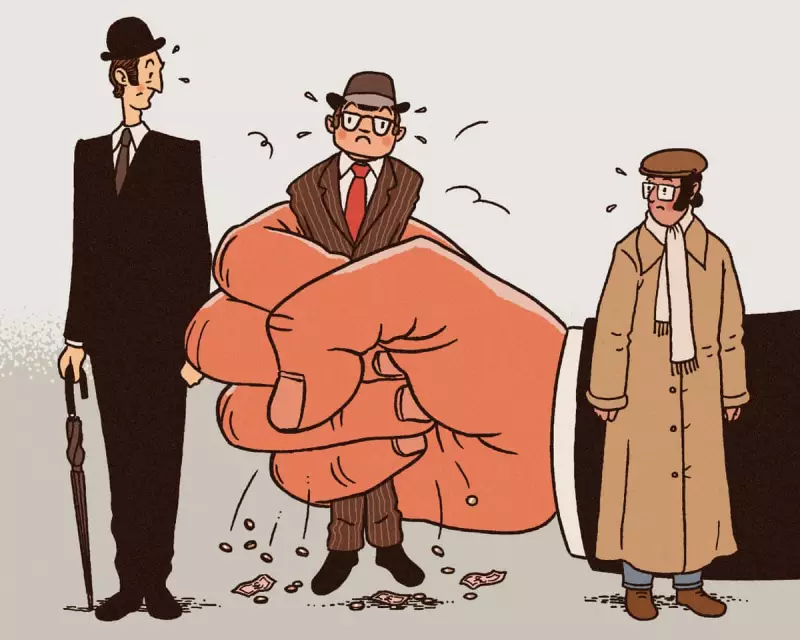
The Return of Britain's Squeezed Middle
Fifteen years after Gordon Brown first identified the "squeezed middle" during the 2008 financial crisis, this demographic is experiencing even greater pressure under the current economic climate. The concept of outwardly comfortable households feeling significant financial strain has become more relevant than ever, creating serious political challenges for the Labour government.
Budget Fallout and Tax Threshold Freezes
Last week's budget has left middle-income families increasingly anxious and angry, with Chancellor Rachel Reeves's decision to extend the freeze on tax thresholds hitting particularly hard. According to the Office for Budget Responsibility, households' average disposable income is projected to grow by just 0.5% annually until 2030, barely keeping pace with inflation.
The impact is being felt across daily life: supermarket checkouts trigger sudden worry, summer holidays are spent at home, and family restaurant visits exceeding £100 have become prohibitive expenses. Parents increasingly recognise their children face an even more competitive economic environment than they experienced.

Ruth Curtice, chief executive of the Resolution Foundation, delivers a stark assessment: "All but the top 10% of the income distribution are worse off" due to the choice of threshold freezes over income tax rate increases. By 2031, nearly one in four taxpayers will find some of their earnings taxed at the higher 40% rate.
Beyond Personal Finances: The Crumbling Public Realm
The financial squeeze extends beyond household budgets to encompass the deteriorating state of public services. Local council budgets remain stretched to breaking point, with cuts to grassroots services continuing to affect communities nationwide.
As Oxford historian Ross McKibbin noted 25 years ago, the middle classes disproportionately use public services including the NHS, public transport, libraries, swimming pools and parks. Yet when they seek political solutions, they often encounter debates focused on immigration rather than addressing these fundamental service issues.
The government appears increasingly fragile and confused, fixated on so-called "hero voters" in red wall constituencies while displaying what some perceive as contempt for the professional classes. Labour peer Maurice Glasman's dismissal of the "lanyard class" exemplifies this tension, potentially alienating commuters who form the backbone of Britain's workforce.
Special Educational Needs: A Case Study in Middle-Class Anxiety
The crisis in England's special educational needs system illustrates the government's challenging relationship with middle-class voters. The Office for Budget Responsibility suggests the system faces a £6 billion funding gap, with no clear plan from the education department to address this shortfall.
Ministers are reportedly considering limiting families' rights of redress, amid political rhetoric about "unfair advantages" and suggestions that the current system "inherently favours better-off parents with know-how of the system." This approach risks creating equality through the elimination of meaningful rights for all families.
The government must consider whether its policies reflect the values of historical Labour figures like Herbert Morrison, who understood the party needed to represent suburban Britain - including clerks, civil servants, teachers, technicians and small business owners.
As these modern heirs of Morrison's constituency grow increasingly anxious about their financial security and public services, Labour faces a critical question: will the party ever truly understand them, or risk losing their support entirely?