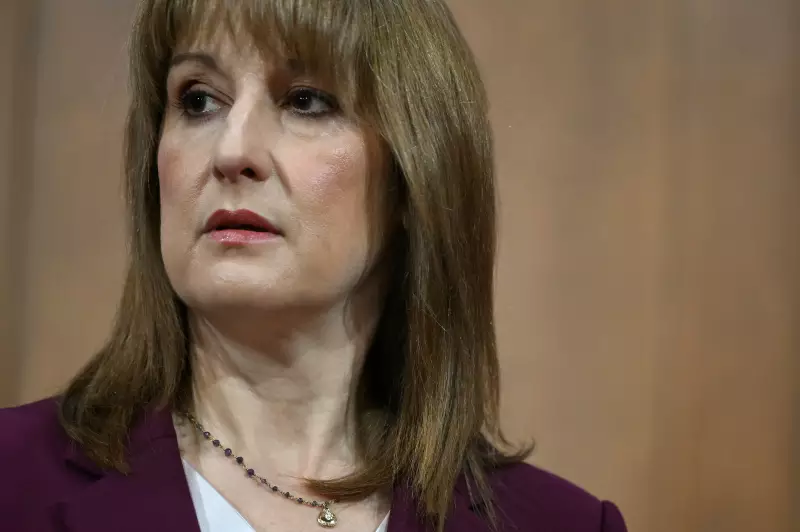
Chancellor Rachel Reeves was explicitly warned about impending and costly productivity downgrades and should have established a larger financial buffer for the UK economy, according to former senior figures from the Office for Budget Responsibility (OBR).
Warnings Ignored on Fiscal Headroom
Speaking to City AM, a group of leading economists challenged the Chancellor's narrative that an OBR review of productivity trends had forced her hand into considering tax increases and spending reductions in this year's Budget.
Sir Charlie Bean, a former member of the OBR's Budget Responsibility Committee and ex-chief economist at the Bank of England, stated that the expected productivity downgrades, estimated to cost the Treasury around £20bn, were not a surprise. He emphasised that repeated warnings had been issued about the uncertainty surrounding previous forecasts.

"The government cannot claim that this is something that's come out of the blue," Bean said. "The real issue here is that Rachel Reeves was unwise to leave herself such a small amount of fiscal headroom, knowing the substantial range of uncertainty around the forecast. You're asking for trouble if you leave yourself a small margin of error."
A 'Tiny' Buffer and Its Consequences
This criticism directly contradicts statements made by the Chancellor and other government ministers, who have questioned the OBR's decision to conduct its supply-side review.
Just hours after this year's Spring Statement, OBR chair Richard Hughes publicly highlighted extra "risks" attached to its central productivity forecasts. He outlined scenarios that could completely erase Reeves's £9.9bn headroom, noted as the third smallest buffer left by any Chancellor since the OBR was founded in 2010.
Andy King, another former OBR committee official, acknowledged it was "challenging" for the Chancellor to face these downgrades after departmental budgets were fixed for the next four years. However, he added there was "no good time" for such revisions and that the timing was logical given recent economic shocks and the General Election.
Calls for a Holistic Fiscal Approach
The debate has sparked wider discussions about the UK's fiscal rules. Sir Charlie Bean suggested the current framework, which forces Chancellors to fine-tune measures to specific numbers, is "patently absurd."
He advocated for a "much more holistic assessment of whether the public finances were on a sustainable track," potentially drawing more heavily on the OBR's long-term sustainability reports which highlight future pressures from an ageing population and the transition to net zero.
Meanwhile, former Bank of England rate-setter Jonathan Haskel called this year's OBR review "fair" and urged the government to focus on boosting public sector output, citing falling productivity in healthcare as a major drag on the national figure.
An anonymous former civil service figure offered a blunt assessment, comparing protests against the timing of the revision to "sailors complaining about waves in the sea," indicating the Chancellor had little excuse for her budgetary choices.