Chancellor's High-Stakes Budget Balancing Act
Chancellor Rachel Reeves faces one of the most challenging moments of her political career today as she prepares to deliver a budget that must simultaneously satisfy Labour MPs, voters, businesses, and the volatile bond markets. The Treasury chief is walking a fiscal tightrope with just £9.9bn of headroom to maintain within her self-imposed fiscal rules, a figure that has been significantly eroded by higher borrowing costs and welfare policy reversals.
The Fiscal Challenge Deepens
Reeves confronts a perfect storm of economic pressures as she prepares her statement. The Office for Budget Responsibility is expected to deliver a downgraded productivity forecast, adding further complexity to her central mission of balancing the current budget by 2029-30. According to Treasury analysis, the Chancellor ideally needs to double her fiscal headroom to approximately £20bn to properly insulate the UK economy against potential bond market turbulence.
EY UK's chief economist Peter Arnold highlights the scale of the challenge: "The Government is expected to need to find between £25-30bn in order to keep within its fiscal rules, presenting challenging tax and spending decisions, and it may seek to go even further to create additional fiscal headroom."

Three Paths to Fiscal Stability
The Chancellor has three primary options to achieve her objectives, each carrying significant political and economic consequences:
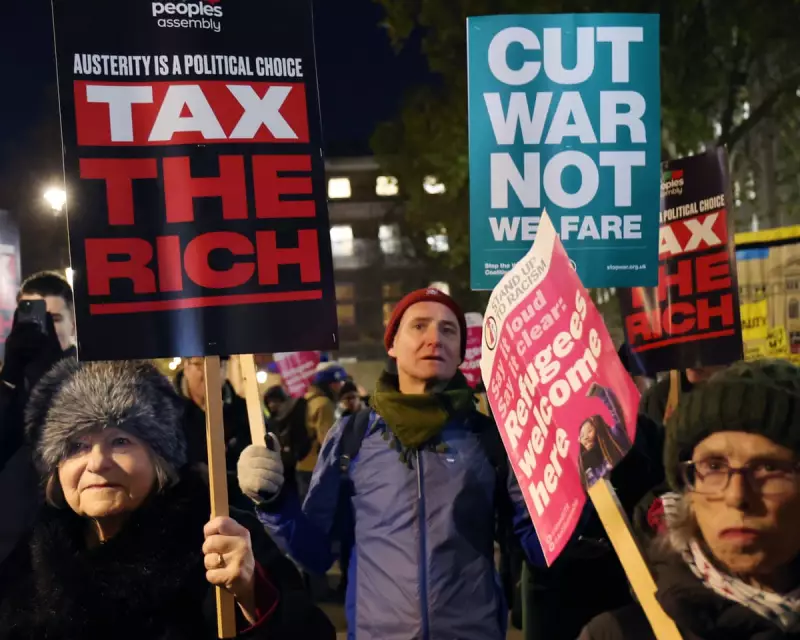
Spending reductions face fierce opposition from Labour backbenchers, who recently demonstrated their willingness to revolt over welfare reforms. Reeves attempted to placate her party earlier this week, describing the budget as "a package not a pick and mix" while hinting at popular measures such as ending the two-child benefit cap and providing energy bill support.
Tax increases appear to be the preferred route, though Reeves has reportedly abandoned plans for manifesto-breaking income tax rises. Instead, markets anticipate a smorgasbord of smaller tax measures including potential increases for gambling firms and a freeze on income tax thresholds that would effectively operate as a stealth tax.
Additional borrowing remains theoretically possible but practically constrained by the government's fiscal rules. This option carries particular danger, as bond traders could demand higher returns on new debt and potentially trigger a sell-off in existing gilts if they perceive fiscal discipline slipping.
Market Jitters and Political Risks
Neil Wilson, UK investment strategist at Saxo Bank, warns of potential market disruption if the budget fails to impress: "If we see a sharp move up in gilt yields – say because the market doesn't believe that spending restraint pencilled in for the end of the parliament is possible – this could precipitate a negative feedback to sterling."
The stakes couldn't be higher for Reeves, who has staked her credibility on maintaining bond market confidence. Wilson suggests that failure could trigger "a currency-toxic combination of fiscal tightening, sharp contraction in growth, deeper monetary easing and political crisis."
Today's events will unfold according to a tightly scheduled agenda, with Reeves presenting her budget at 12.30pm GMT, followed by the OBR's economic and fiscal outlook at approximately 1.30pm GMT. The financial world will be watching closely to see whether the Chancellor can thread the needle between political necessity and economic reality.