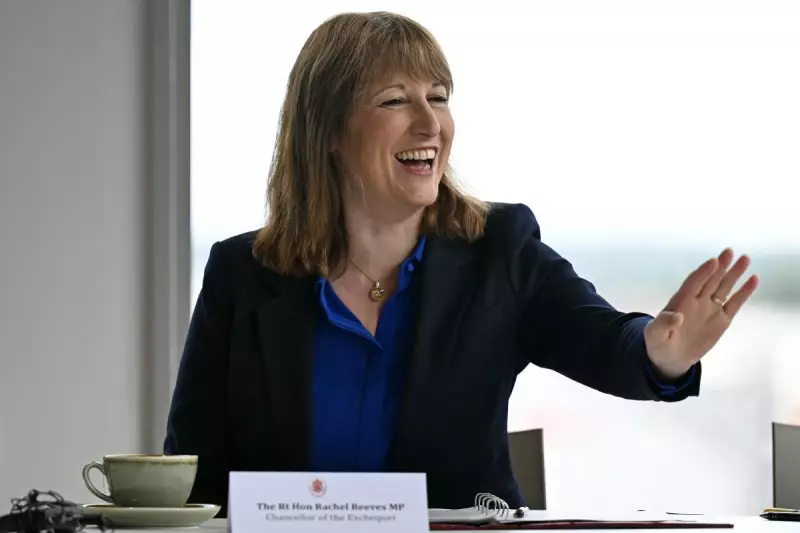
Chancellor Rachel Reeves has indicated she may abandon key Labour manifesto commitments in the upcoming Budget, citing a significantly worse economic situation than anticipated.
Economic Reality Bites
In a frank interview with the BBC, the Chancellor revealed that the economic inheritance left by the previous government was "significantly worse" than expected when Labour drafted its manifesto. Reeves pointed to two major challenges: the black hole in public finances she addressed last year and the more recent downgrading of growth forecasts by the Office for Budget Responsibility.
"When we put together the manifesto, it had in it our spending commitments and the tax changes that would be needed to pay for those. The truth is what we inherited is significantly worse," Reeves stated, striking a cautious tone about sticking to previous promises.

Infrastructure Over Tax Cuts
The Chancellor made clear her preference for increasing government spending on infrastructure rather than cutting taxes for Britons. She argued that past governments had damaged UK productivity by consistently cutting investment in critical projects.
"The reason why our productivity and our growth has been so poor in these last few years is because governments have always taken the easy option to cut investment in road and rail projects, in energy projects, [and] in digital infrastructure," Reeves explained.
Additional economic pressures include trade disruption and damage to UK growth prospects from global conflicts, with the Chancellor noting that nobody "could have foreseen" tariffs being imposed on UK businesses in July last year.
Budget Priorities and Principles
Reeves outlined that the upcoming Budget would focus on three key priorities:
- Bringing NHS waiting lists down
- Reducing government debt
- Curbing inflation
The Chancellor emphasised two guiding principles for her decisions: growing the UK economy and ensuring "fairness" across society. She committed to doing "what is right" rather than taking the "politically easy choice" and stated she would "not apologise for bringing down NHS waiting lists" when questioned about the higher business tax burden.
Two-Child Benefit Cap Removal
In a significant policy shift, Reeves signalled that the controversial two-child benefit cap could be removed entirely. "I don't think a child should be penalised because they're in a bigger family through no fault of their own," she stated.
The left-leaning think tank IPPR estimates that lifting the cap could cost in excess of £3 billion. The government is expected to act on recommendations from an imminent child poverty review.
Former Chancellor Gordon Brown, whom Reeves described as a "hero", expressed confidence that the two-child benefit rule would be at least partially addressed. "I am confident that the two-child rule will be addressed. Keir Starmer, I know, is personally concerned and interested in this," Brown told Sky News.
Fiscal Challenges Loom
The potential new spending commitment on child benefits would widen an already substantial fiscal hole, which analysts estimate to be in the range of £25 billion to £30 billion.
Researchers at Capital Economics believe the Chancellor could raise as much as £38 billion in taxes to meet her fiscal rules and build a larger fiscal buffer. This would represent a repeat of last year's £40 billion tax increases, despite Reeves previously describing that Budget as a "one-and-done" job.
Reeves confirmed that both spending and tax measures would be included in the Budget to address the economic deterioration affecting public finances, setting the stage for difficult decisions ahead.