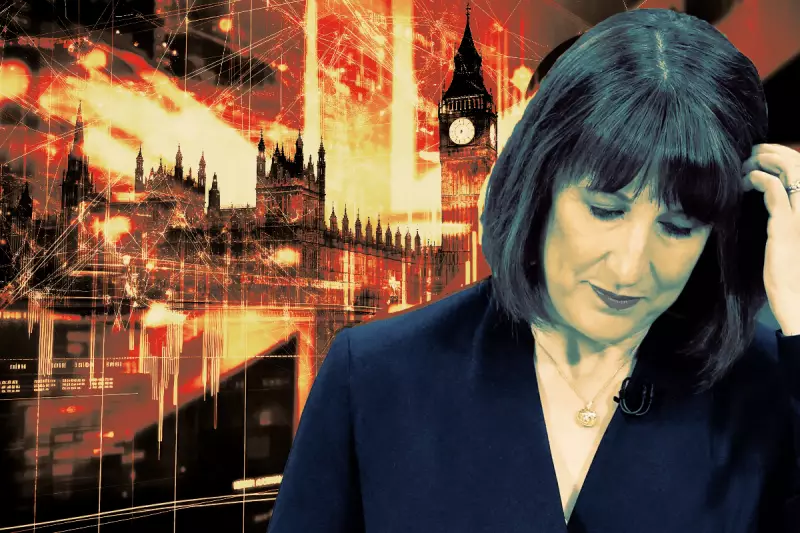
Chancellor Rachel Reeves is confronting a daunting £30bn hole in the UK's public finances just days before her crucial Autumn Budget announcement, with a new analysis warning of a potential 'dog's breakfast' of tax increases to bridge the gap.
The Scale of the Fiscal Challenge
The Institute of Economic Affairs (IEA) has revealed that the financial shortfall has widened significantly since the March 2025 forecasts. This is largely driven by spiralling public spending rather than external economic shocks. A substantial portion, roughly £20bn, stems from a long-overdue downgrade in productivity forecasts. The remaining £10bn results directly from government policy decisions, including scrapping a planned £5bn welfare savings package and spending favourable economic assumptions instead of banking them.
Official data underscores the severity of the situation. Borrowing hit £17.4bn in October, a figure £3bn higher than the Office for Budget Responsibility (OBR) had predicted. This has left the Chancellor £9.9bn worse off than projected in the spring. Furthermore, rising inflation has pushed up public sector pay, welfare spending, and debt interest, which is expected to exceed £100bn annually for the rest of the decade.

Potential Tax Hikes and Political Pressure
The IEA suggests the £30bn gap will likely be filled by a combination of broad-based income tax rises and a patchwork of smaller, targeted measures. Potential moves being considered include:
- Levying National Insurance on rental income.
- Closing capital gains tax loopholes.
- Implementing higher council tax on expensive properties.
- Introducing new taxes on partnerships.
- Raising 'sin taxes' on gambling and sugary drinks.
Adding to the fiscal squeeze, the Chancellor is also expected to extend the freeze on personal tax thresholds beyond 2028. This manoeuvre, known as fiscal drag, is projected to raise an extra £8-10bn by pulling more people into higher tax brackets as their nominal incomes rise.
This approach creates significant political tension. Sir Keir Starmer has refused to rule out income tax rises, despite Labour's manifesto pledge not to increase income tax, VAT, or National Insurance. Analysis by AJ Bell shows that a 1p rise in income tax would increase the annual bill for someone earning £35,000 from £4,486 to £4,710.
Economic Uncertainty and Business Anxiety
The looming Budget is creating palpable nervousness among businesses and households. A recent survey of 400 entrepreneurs found that a staggering 95 per cent feel the government fails to reward hard work. Official ONS data also highlights economic uncertainty as the top concern for firms.
Consumer confidence has slumped, adding further pressure on the retail sector ahead of the critical festive trading season. Many of the Chancellor's proposed measures are expected to be 'backloaded', meaning they would take effect towards the end of the forecast period. While this aims to provide a buffer against future shocks, it risks further undermining consumer and business confidence in the short term.
With the Autumn Budget scheduled for Wednesday, 26 November, markets, businesses, and households face a tense wait, hoping Chancellor Reeves can bring much-needed clarity to the public finances, even if the remedies prove painful.