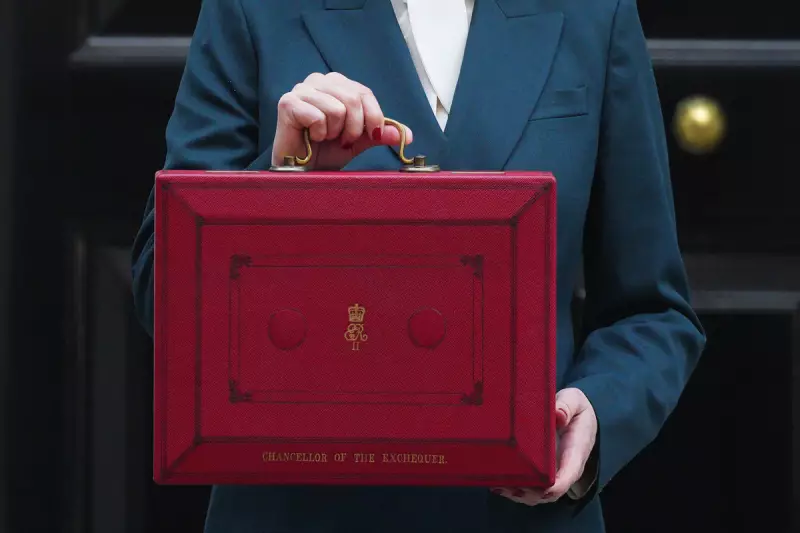
Chancellor Rachel Reeves has strongly denied allegations of misleading the British public about the state of the nation's finances ahead of Wednesday's crucial Budget announcement.
Defending Budget Decisions
The Chancellor found herself facing intense scrutiny following the Budget, particularly regarding tax increases and the freezing of income tax thresholds until 2031. Despite the controversy, Reeves maintains she was completely transparent about the need to secure additional funding.
In an interview with Sky News' Trevor Phillips, Reeves stated: "I was very upfront about the need to find more money." She emphasised that she had clearly warned about potential economic challenges, specifically mentioning the Office for Budget Responsibility's review of productivity.

The Chancellor revealed that a substantial £16 billion downgrade in tax receipts forced difficult decisions, necessitating the tax increases implemented in the Budget. She explained that everyone in the UK would need to contribute to protect essential public services.
Manifesto Commitments and Tax Changes
Reeves firmly defended her position on Labour's manifesto promises, asserting that the Budget measures did not breach their commitments. She highlighted that the manifesto specifically referred to tax rates rather than thresholds, allowing for the freezing of income tax bands without technically breaking their pledge not to raise income tax, national insurance, or VAT.
During her appearance on the BBC's Laura Kuenssberg programme, the Chancellor acknowledged: "We didn't break the manifesto. But... am I asking working people to pay a bit more? Yes, I am asking working people to pay a bit more."
However, economists and political opponents have challenged this interpretation. The extension of the income tax threshold freeze to 2031 creates what critics describe as an £8.3 billion 'stealth tax' that will have significant consequences for British taxpayers.
Impact on Households and Policy Changes
The threshold freeze is projected to drag 920,000 additional Britons into the 40% higher rate tax band, while 780,000 more people will begin paying the basic rate. Families with young children face an additional burden if their income exceeds £100,000, as they risk losing 30 hours of free childcare.
In a significant policy shift, Reeves confirmed the abolition of the two-child benefit cap from April 2026. This rule currently restricts universal credit and tax credits to a maximum of two children per household.
The Chancellor denied that this decision resulted from pressure from Labour backbenchers, stating the government was "choosing children." She explained: "This lifts more than half a million children out of poverty. The people I was thinking about were kids who I know in my constituency go to school hungry and go to bed in cold and damp homes."
Conservative leader Kemi Badenoch strongly criticised the move, describing it as "immoral" and warning that it places additional debt burdens on future generations. Badenoch told Trevor Phillips: "It is immoral to saddle the next generation and children who are not yet born with debt so that people alive today can be a little bit more comfortable."
The Conservative leader pledged that her party would reinstate the cap if returned to power, arguing that "only the Conservatives are saying this is getting out of hand."