Chancellor Defends Controversial Budget Measures
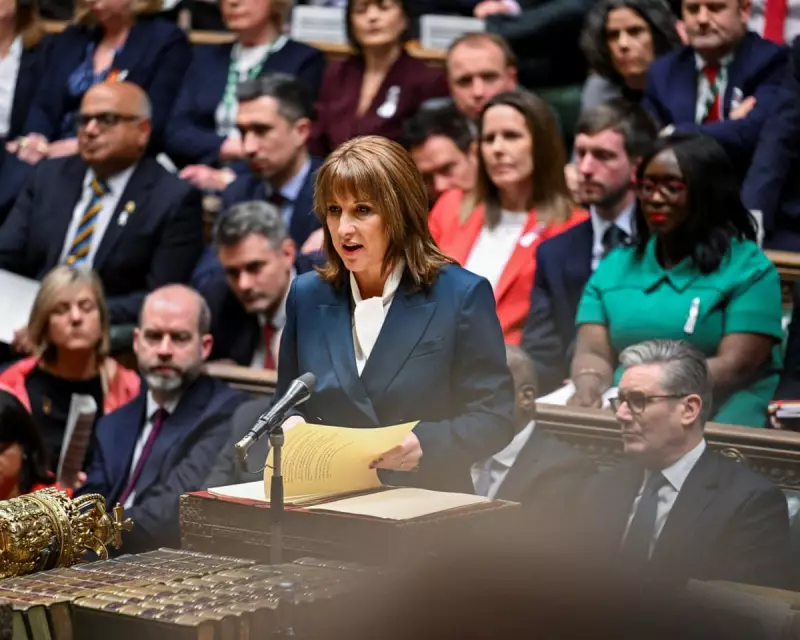
Chancellor Rachel Reeves has openly acknowledged that working people will need to contribute "a bit more" following her budget announcement, but insists she has minimised this impact through targeted tax increases on specific sectors.
The Chancellor conducted a series of radio interviews the day after presenting her statement to the Commons, vigorously defending her economic plan against mounting criticism.
Tax Threshold Freeze to Raise Billions
More than 1.7 million workers will either begin paying income tax for the first time or be pushed into higher tax brackets due to the extended three-year freeze on tax thresholds. This measure alone is projected to generate £12.4 billion for the Treasury by 2030-31.

Reeves firmly rejected suggestions that this constituted a breach of Labour's manifesto commitments, though she notably declined to rule out additional tax increases in next year's budget.
"I have to operate in the world as it is," Reeves told BBC Radio 4's Today programme, attributing the difficult decisions to global economic pressures and a productivity downgrade from the budget watchdog.
Alternative Revenue Sources and Growth Defence
The Chancellor outlined several alternative revenue streams designed to reduce the burden on ordinary workers:
- Increased taxes on gambling companies
- Higher taxes on properties valued over £2 million
- Additional tax requirements for landlords
- A new pay-per-mile tax system for electric vehicles
When confronted with criticism that her budget lacked substantial growth-boosting measures, Reeves pointed to recent investment announcements from major financial institutions. JPMorgan and Goldman Sachs have both confirmed expansion plans, with Goldman Sachs specifically increasing its presence in Birmingham.
"Lots of people have tried to write me off over the last 16 months. And you're not going to write my obituary today," Reeves declared during her Times Radio appearance. "There's plenty more that I'm going to do to grow our economy and make working people better off."
Benefit Cap Decision and Political Reactions
The Chancellor strongly defended her choice to scrap the two-child benefit cap, describing it as a "good investment" in children's futures. She revealed that in 60% of affected families, the parents are actually in work.
However, this decision attracted criticism from Conservative shadow chancellor Mel Stride, who argued that lifting the cap would "lead to 25,000 more people going on to benefits" and make welfare payments "more attractive."
Stride contrasted the government's approach with Conservative proposals, which would focus on cutting £23 billion from the welfare bill and eliminating stamp duty for primary residences.
Reeves expressed frustration with the Office for Budget Responsibility's assessment methods, particularly their failure to account for the growth potential of trade deals with the US, EU, and India, along with the planning and infrastructure bill.
The Chancellor remains determined to "defy" economic forecasts, citing the OBR's upgraded growth prediction from 1% to 1.5% this year as evidence of her effective economic management.