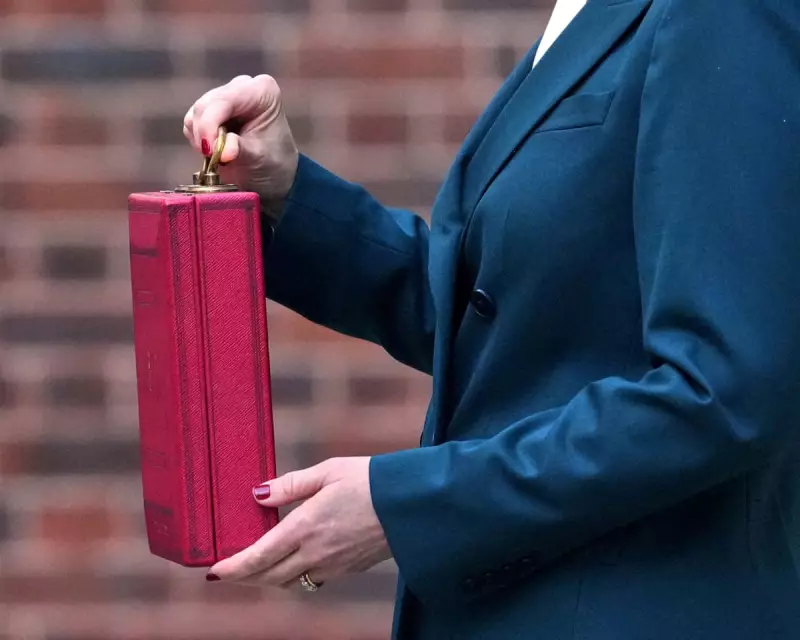
The political storm surrounding Chancellor Rachel Reeves's first budget has escalated from accusations of chaos to claims of outright deception. The core allegation from Conservative critics, led by Kemi Badenoch, is that Reeves misled the public to justify billions in tax rises, purportedly to fund a surge in welfare spending. A close examination of the figures, however, tells a different and more complex story.
The Clash Over the OBR Forecasts
The controversy ignited when the Office for Budget Responsibility took the unprecedented step of publishing forecasts shared with the Treasury during the budget preparation. These numbers appeared to contradict the chancellor's pre-budget warnings of profound economic gloom necessitating tough decisions.
Reeves had pointed to deteriorating OBR assessments, particularly on UK productivity, as the iron constraint forcing her hand. She presented herself in a stark pre-budget address as a chancellor with no room for manoeuvre, buffeted by forces beyond any government's control. Yet the OBR's own projections showed its outlook had actually improved slightly by late October, with the government's key fiscal rule—balancing day-to-day spending by 2030—deemed achievable, if by a narrow margin.

Where the Extra £26bn is Really Going
The central Tory claim—that the budget is a classic Labour move to tax strivers for the benefit of shirkers on 'benefits street'—collapses under scrutiny of the Treasury's own numbers. From April 2029, the budget will raise an additional £26bn per year in tax. The destination of this vast sum reveals the budget's true priorities.
More than half of the new revenue is not for spending at all. It is designed to create a fiscal buffer, insulating Reeves against future shocks and ensuring she comfortably meets her self-imposed borrowing rules. Around a quarter will fund government U-turns on previous policy decisions. A generous analysis suggests only about 17% is allocated to genuine new expenditure, such as the politically charged abolition of the two-child benefit cap, which costs a relatively modest £2.5bn.
A Budget for the Bond Markets, Not Benefits
The real audience for this budget, the analysis suggests, was not Westminster, vulnerable households, or even Labour backbenchers. It was the asset managers and hedge funds of the global bond market. Downing Street's rationale is rooted in hard economic reality: the UK pays the highest interest rates on its debt among G7 nations, a premium over even politically unstable France or heavily indebted Japan.
By demonstrating strict fiscal discipline and building a substantial buffer, Reeves aims to reassure these skittish investors, thereby creating space for the Bank of England to potentially cut interest rates. As one independent adviser noted, the chancellor has effectively "weaponised" the bond market as a tool of discipline against her own party and the electorate, justifying broken promises and painful votes.
What is strikingly absent is any bold statecraft to forge a new relationship with the markets or a tangible sense of delivering the 'change' promised to voters. Instead, the budget leaves the UK on a familiar trajectory set in the post-Brexit and Covid era, making minor adjustments to an exhausted economic model. The episode reveals a growing 'uniparty' consensus in Westminster, focused more on placating financial institutions and managing court politics than on representing a public feeling increasingly powerless over the nation's direction.