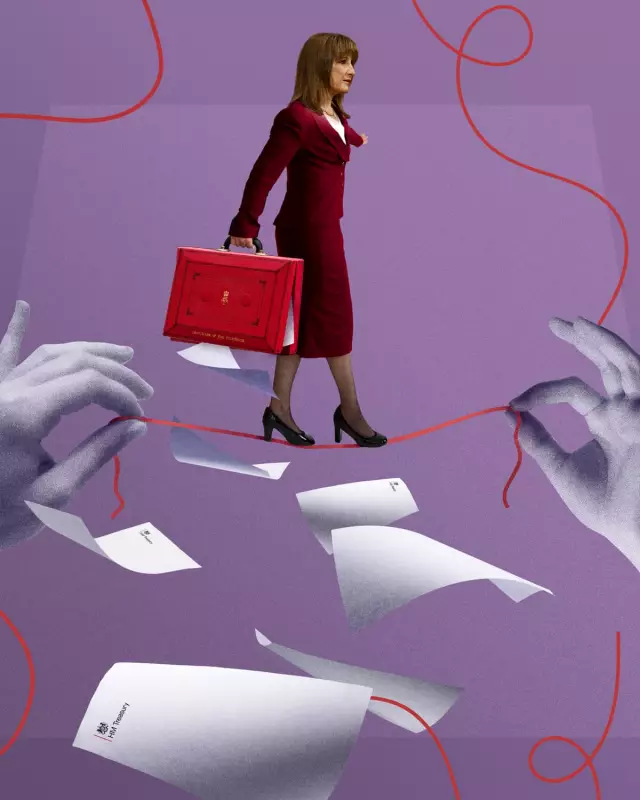
Chancellor Rachel Reeves finds herself navigating treacherous political waters even before delivering her crucial second budget, with the Treasury's preparations drawing uncomfortable comparisons to past fiscal disasters that have derailed previous governments.
The Ghost of Budgets Past
Every budget represents a high-stakes moment for any chancellor, but history shows how quickly they can unravel. Gordon Brown's 2007 abolition of the 10p tax rate, George Osborne's 2012 'omnishambles' budget that collapsed over pasty taxes, and Kwasi Kwarteng's catastrophic 2022 mini-budget that sent the Conservatives spiralling toward electoral defeat all serve as cautionary tales for the current Labour government.
Despite Reeves' reputation for calm, methodical work behind the scenes - a stark contrast to the chaotic scenes that surrounded Brown's budgets, where KitKat wrappers and speech drafts littered Number 11 - the external view of this budget's preparation has appeared anything but orderly.

Policy Chaos and U-turns
The run-up to next Wednesday's announcement has been marked by policy confusion, with numerous measures floated, denied, debated and ultimately abandoned. The most significant reversal came on the highly controversial plan to raise the basic rate of income tax, which would have marked the first such increase since 1975.
Instead, the chancellor has pivoted toward smaller revenue-raising measures, including extending the freeze on income tax thresholds - a policy she previously criticised in last year's budget speech as something that would "hurt working people."
When investors dumped government bonds following news of the income tax U-turn, fearing it indicated reduced commitment to balancing the books, Reeves' allies insisted the change resulted from better-than-expected wage growth improving Office for Budget Responsibility forecasts. However, sceptics within government circles question this explanation, with one source bluntly stating: "I think they just changed their minds."
Market Confidence and Political Survival
Reeves and her team had hoped that decisive action to shore up public finances on November 26 would win over sceptical bond markets, driving down borrowing costs while implementing cost-of-living measures like cutting VAT on domestic fuel bills. This strategy aimed to tackle inflation and pave the way for Bank of England interest rate cuts, potentially restoring economic optimism by 2026.
Jonathan Portes, a former government economist, suggests this outcome remains possible: "If consumers and markets think, 'She's made the best of a bad job, and I personally will not be hit as badly as some of the more excitable headlines suggested,' you could have a bounce."
However, weeks of damaging uncertainty have complicated efforts to convince both markets and voters that Reeves maintains control. If her fiscal "headroom" only increases to £15 billion from around £10 billion in the spring statement, it may fall short of market expectations, risking immediate market turbulence.
Systemic Challenges and Political Reckoning
The budget's troubles began in June when the chancellor learned the OBR planned to downgrade its productivity forecasts, leaving a £21 billion gap in her plans by September's Labour conference. The decision to prepare the ground for breaching manifesto commitments stemmed from fears that surprising markets with dramatically downgraded forecasts could "completely destroy the economy," according to a Treasury insider.
Liam Byrne, Labour chair of the business and trade select committee and former Treasury minister, highlights how the pre-budget uncertainty has inflicted economic damage: "What is paralysing them - and it is paralysis - is tax uncertainty."
Even former cabinet secretary Simon Case acknowledges that civil service officials had privately doubted Labour's ability to keep its tax pledge before taking power, knowing the true state of public finances awaiting them.

The relationship with the OBR has also grown increasingly fraught. While Reeves initially praised the watchdog and legislated to prevent major fiscal events without forecasts - avoiding a repeat of Liz Truss's disastrous approach - tensions have emerged over the timing of productivity downgrades and the watchdog's assessment of Labour's growth policies.
Jeremy Hunt, the Tory former chancellor who maintains semi-regular contact with Reeves, believes the personal futures of both prime minister and chancellor depend on the budget's success, stating: "Rachel Reeves has had a combination of bad luck and bad judgment."
John McDonnell, former shadow chancellor, captures the mood among Labour MPs: "Labour MPs are just desperate to avoid another disaster. We've had so many political mistakes. Everybody is hoping we don't go through it again at the budget."
As Case summarises, the stakes extend beyond individual political careers: "This budget is even higher stakes than that, because it raises the question of whether centre ground governments can answer the fundamental questions that are hampering the UK. And if they can't, voters will look elsewhere. It's a really pivotal moment."