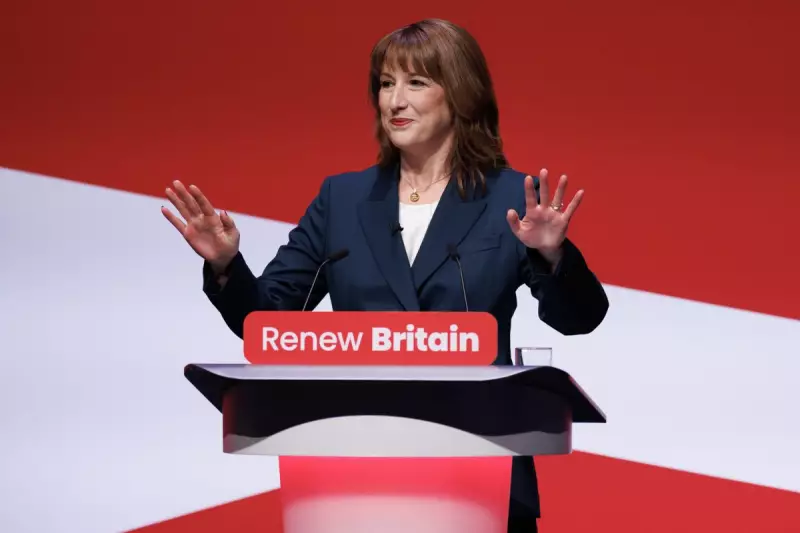
Chancellor Rachel Reeves is preparing to deliver her second Budget this Wednesday amid growing concerns about the UK's deteriorating public finances and stagnant economic growth.
Public Spending Crisis Deepens
New figures reveal Britain's public finances have reached an unsustainable state, with borrowing increasing by £17.4 billion in October alone. This worrying trend comes despite Reeves' previous promise that her substantial tax rises would be the last.
According to economic analyst Ewen Stewart, the situation is entirely self-inflicted. GDP growth per head has been negligible this decade, largely due to policies that strangle the private sector while lavishing funds on what Stewart describes as a "highly inefficient public sector".

The Chancellor faces an unenviable task on Wednesday, with expectations she'll need to find an additional £20-30 billion through further tax measures. However, experts warn this approach won't solve the underlying problems and may simply lead to further economic damage.
The Productivity Paradox
Public sector productivity presents a particularly alarming picture. Government statistics show it's now lower than in 1997, before the digital age had properly begun. This represents an extraordinary decline in efficiency despite technological advancements.
Spending has increased by almost eight percent year-on-year with no obvious benefit to show for it. The UK has effectively swapped productive private sector activity for unproductive public spending, creating what Stewart calls a "doom loop" of ever-higher taxes, increased regulation and no growth.
Energy policy exacerbates the problem, with electricity prices three times more expensive than in the US, rendering British industry increasingly uncompetitive on the global stage.
Breaking the Doom Loop
The Growth Commission has published radical proposals to stimulate the economy, calling for £105 billion of public spending cuts. While this sounds substantial, it represents just seven percent of total spending and only a third of the excess spending after inflation since 2020.
The Commission's plan involves recycling half the savings into reducing the deficit while directing the other half - approximately £50 billion - toward measures designed to rapidly grow the economy.
Key recommendations include abolishing stamp duty on property and shares, reverting to the pre-2024 non-dom regime, scrapping inheritance tax, and reforming capital allowances to encourage investment. The Commission believes these measures would be largely self-funding through increased economic activity.
The irony, as Stewart notes, is that while Reeves seeks to protect the least fortunate today, her policies may be compromising everyone's future. True protection for vulnerable groups and public services ultimately depends on creating an affluent and stable society - something current approaches seem unlikely to achieve.