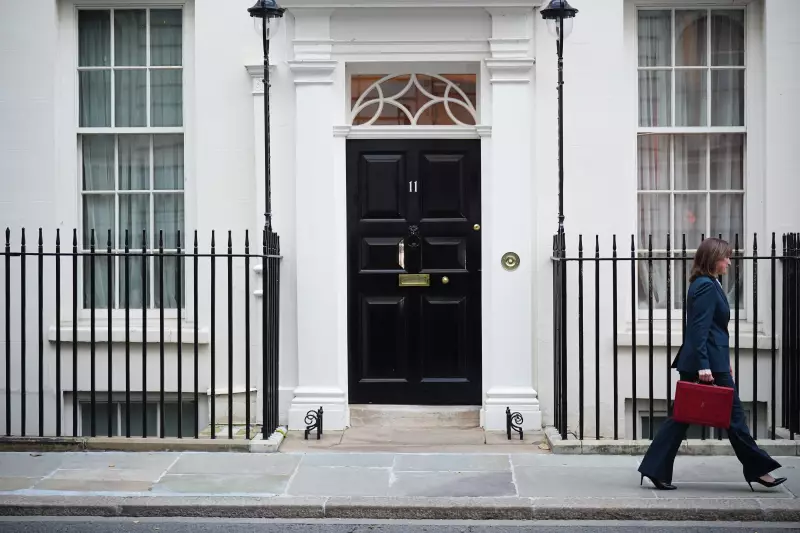
Chancellor Rachel Reeves has pushed Britain's tax burden to unprecedented levels in a dramatic Budget that will force nearly a million additional workers into paying the higher rate of income tax.
The Stealth Tax Squeeze
In measures announced on Wednesday 26 November 2025, the Chancellor extended the freeze on income tax thresholds, a move that Treasury watchdog the Office for Budget Responsibility (OBR) confirms will drag 920,000 more Britons into the 40% higher tax bracket. The policy represents what critics are calling a £8bn stealth tax that also pushes 780,000 additional people into paying at the basic rate.
The threshold freeze forms part of a broader package designed to raise approximately £26bn in additional government revenue by the end of the current parliament. Opposition parties and economic experts have immediately labelled the move as a clear breach of Labour's manifesto commitment not to increase taxes on working people.

Budget Day Chaos and Wider Tax Hikes
The Budget announcement was overshadowed by administrative chaos when the OBR accidentally published its complete fiscal assessment nearly an hour ahead of schedule. Despite the premature release, Reeves proceeded with what she described as necessary measures to address a £16bn productivity downgrade and £73bn in additional welfare spending projected over the coming five years.
Beyond the income tax threshold freeze, the Chancellor unveiled substantial tax increases targeting wealthy individuals, motorists and savers. The measures prompted immediate backlash from political opponents, with Tory leader Kemi Badenoch demanding Reeves' resignation for what she termed a "laundry list of excuses" and broken promises.
Reform UK's Nigel Farage went further, condemning the Budget as an "assault on aspiration" that penalises ambition and hard work.
Economic Warnings and Future Fiscal Risks
Leading economists have expressed significant concerns about the sustainability of Reeves' approach to public finances. The OBR calculated only a 59% probability of the Chancellor meeting her own fiscal rules, though this represents a marginal improvement from previous assessments.
Helen Miller of the Institute for Fiscal Studies criticised what she called "spend now, pay later" measures that demonstrate "no real appetite for using tax reform to boost growth".
David Rees, head of global economics at Schroders, one of the government's largest bondholders, warned: "We suspect it will not be long before the government is forced to come back with more fiscal consolidation."
Andrew Goodwin, chief UK economist at Oxford Economics, highlighted multiple credibility issues with the Budget package, citing the "backloaded nature of the measures, the uncertain impact on revenues of many of the tax-raising measures, a lack of spending restraint, and the absence of any growth measures".
City analysts and policy think tanks have suggested that tax increases scheduled around the time of the next General Election may prove politically unsustainable, with further tax hikes or spending cuts likely required in future budgets.
When questioned by journalists after the announcement, Reeves acknowledged the difficult circumstances, stating: "I can't write future Budgets, but if you are asking, 'is this a budget I wanted to deliver today?' I would have rather the circumstances were different."