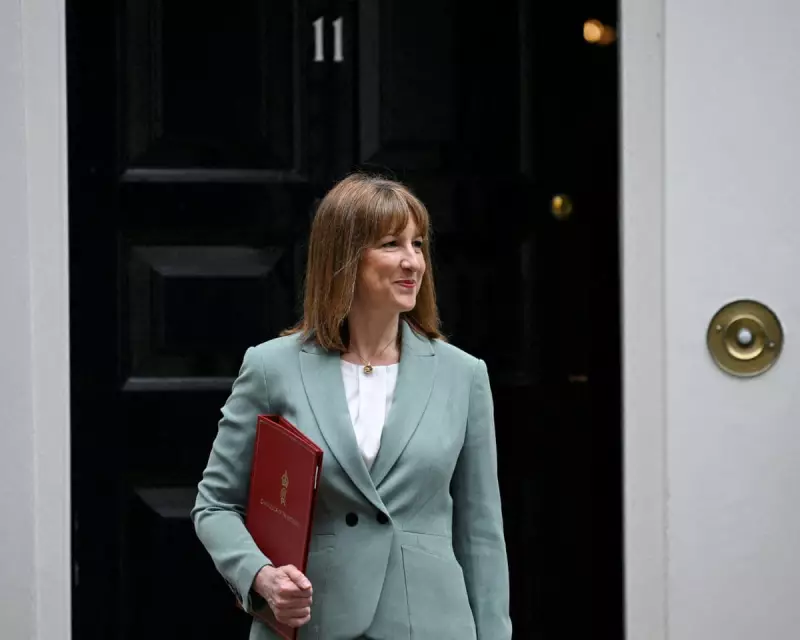
Chancellor Rachel Reeves finds herself in a political storm of her own making, with economists and commentators questioning the rigid fiscal framework she established upon taking office. The self-imposed rules have created what many are calling an unnecessary crisis, where even minor economic forecast revisions threaten to derail the government's financial plans.
The Self-Created Fiscal Straitjacket
Unlike previous chancellors who maintained flexibility in their economic management, Reeves designed her fiscal rules with minimal wriggle room. This has resulted in a situation where small changes in GDP projections or other economic indicators immediately trigger discussions about budgetary shortfalls and potential tax increases.
The irony, as noted by observers, is that these debates occur despite no fundamental changes in the actual economy. The constant chatter about financial holes and necessary austerity measures stems purely from the chancellor's chosen framework rather than economic reality.

Historical Precedent and Political Reality
The political danger for Labour is substantial. No chancellor has raised the basic rate of income tax since Denis Healey in 1975, demonstrating the electoral sensitivity of this particular levy. Approximately two-thirds of British voters oppose income tax increases, making any such move politically risky.
However, recent research by Persuasion UK reveals an interesting dynamic. The electoral penalty for raising income tax or national insurance appears smaller than the consequences of failing to deliver on public services, energy bills, and child poverty reduction. This is particularly relevant for Labour's 2024 voters, who prioritised rebuilding public services when granting the party its electoral mandate.
Alternative Approaches and Historical Solutions
Economist Tim Leunig has proposed replacing the current complex fiscal rules with a simple 250-word summary of Britain's economic position and the government's proposed measures. This approach would provide clarity without the restrictive rigidity of the current framework.
Another historical solution gaining attention is the 1932 approach of then-chancellor Neville Chamberlain, who successfully orchestrated a voluntary conversion of short-term gilts to longer-dated bonds at fixed rates. This manoeuvre reduced debt costs by 0.6% of GDP and freed up spending equivalent to £17 billion in today's terms.
The chancellor's current plan involves using approximately £3 billion of additional tax revenue to reverse the two-child benefit cap, a move that would lift around 350,000 children out of poverty. While commendable, critics argue more comprehensive action is needed given Britain's economic challenges.
With unemployment rising and investment remaining weak, the UK economy is operating below capacity. Many economists argue that if private sector actors won't stimulate growth, the state must step in to prevent economic stagnation.
The fundamental question remains whether Reeves will heed Denis Healey's famous advice to stop digging when in a hole, or whether she will continue with a fiscal framework that many believe is creating problems rather than solving them.