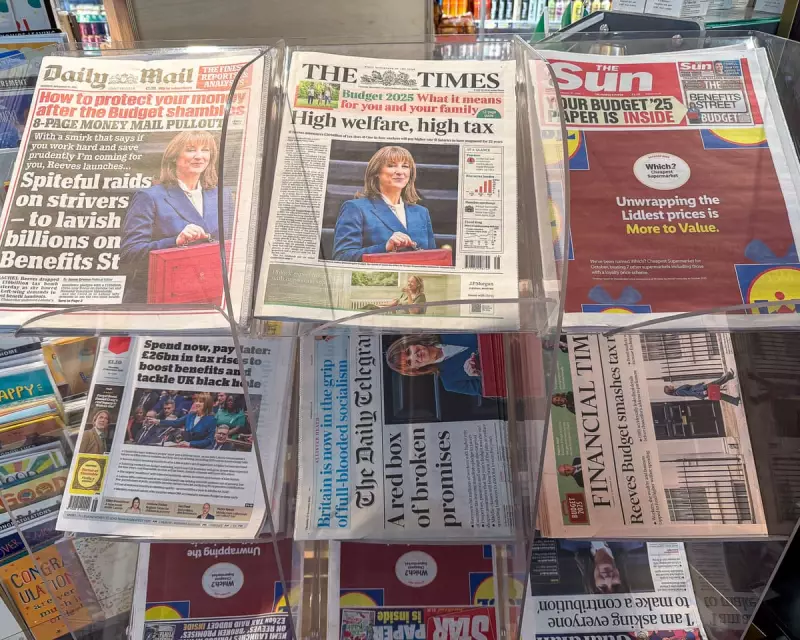
Chancellor Rachel Reeves' inaugural budget has drawn significant criticism from economic experts and political commentators who argue it represents missed opportunities for meaningful reform. Despite delivering some immediate relief to struggling families, the budget fails to address fundamental structural issues in the UK economy.
Short-Term Solutions Versus Long-Term Challenges
The budget, delivered on Wednesday, has been characterised as "jam today" that temporarily appeases both bond markets and Labour backbenchers. However, critics argue that over the longer term, the economic revival that businesses and households desperately need will require massive public spending on a scale not contemplated in Reeves' proposals.
Colin Hines, convener of the UK Green New Deal Group, emphasised that the government's political survival in the run-up to the next election will depend on funding a substantial programme of social and environmental jobs and infrastructure. This approach would require elected politicians to reclaim control of economic policy levers from independent bodies.

Missed Tax Reform Opportunities
One of the most significant criticisms centres on the budget's failure to address tax inequalities. Bernie Evans from Liverpool highlighted the missed opportunity to equalise capital gains tax (CGT) and income tax, a reform that even Margaret Thatcher's chancellor Nigel Lawson considered necessary back in 1988.
According to Tax Justice UK, aligning CGT with income tax rates could generate approximately £16.7 billion annually. Evans noted the inconsistency where wealthy workers in the City and other sectors can pay lower taxes than ordinary workers due to loopholes allowing them to be taxed at capital gains rates rather than income tax rates.
The budget also avoided implementing wealth taxes, windfall taxes on banks, and closing loopholes for limited liability partnerships. Instead, the freezing of income tax thresholds means that while high earners remain unaffected, thousands of teachers and nurses will effectively pay more tax.
Green Investment and Job Creation Potential
The Green New Deal Group proposed redirecting the tens of billions saved annually by UK residents in Isas, premium bonds and pensions into social and green transition projects. Such investment could fund a comprehensive jobs programme benefiting every constituency while addressing multiple national challenges.
A particularly promising initiative would involve dramatically increasing energy efficiency and decarbonising the country's 30 million homes. This ambitious programme would create widespread employment opportunities requiring diverse skill sets while simultaneously tackling climate objectives.
Interestingly, this approach could also help mitigate job threats from artificial intelligence. As Nobel prize winner Geoffrey Hinton observed, AI will struggle to excel at physical manipulation, making trades like plumbing a secure career choice in an automated future.
Political Implications and Public Response
The budget's predictable nature has disappointed many observers who expected bolder action from the new Labour government. Critics argue that while ending the two-child benefit cap may temporarily placate Labour MPs, it represents merely "buying the government some time" rather than delivering substantive change.
Some commentators suggest this budget could ultimately be remembered not for redistributing wealth from the well-off, but as one of the factors contributing to Labour's potential defeat in the 2029 election. The failure to demonstrate clear direction or the much-promised "change" could exacerbate Labour's already dire position in opinion polls.
As the government faces the prospect of electoral challenge from the far right, mere tinkering at the edges of economic policy appears increasingly inadequate. Both letter writers and economic analysts agree that more courageous and transformative approaches will be necessary to address Britain's deep-seated economic challenges.