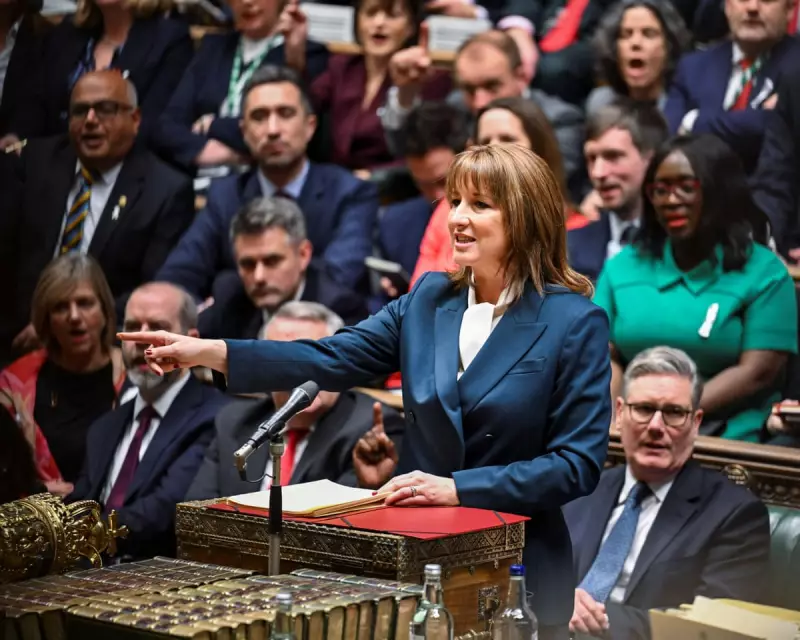
In a defining moment for the new government, Chancellor Rachel Reeves presented the first Labour budget to the House of Commons on 26 November. The fiscal plan marked a decisive break from what the party labels "14 years of failed Tory ideology," with the abolition of the two-child benefit cap as its centrepiece.
A New Direction for the Economy
Lucy Powell, the Deputy Leader of the Labour Party, stated that the budget clearly expresses Labour's core purpose and values. She outlined that the choices made signify a fundamental shift towards a fairer tax system, where targeting wealth will fund the fight against child poverty, improve public services, and ease the cost-of-living crisis.
Powell positioned this as the new central dividing line in British politics: "On the one side Labour, who want to change the economy so it benefits ordinary working people, and on the other, our political opponents, who support the status quo." She argued that the Conservative's record was one of failure, citing falling living standards, record child poverty, and a severe housing crisis.

Ending a 'Cruel Social Experiment'
The most significant announcement was the immediate lifting of the two-child benefit cap, a policy introduced by former Conservative Chancellor George Osborne. Powell branded the cap a "cruel social experiment" that had pushed an estimated 300,000 more children into poverty.
She provided a stark picture of the policy's real-world impact, describing children wearing cheap wellies as school shoes, going to bed hungry and cold, and families relying on food banks. Crucially, she noted that the majority of families affected have at least one parent in work, disproving the argument that the cap promoted fairness.
In her own constituency of Manchester Central, over 5,000 children are expected to be lifted out of poverty as a direct result of this change.
The Long-Term Plan for Renewal
The budget is framed as the first step in a broader, long-term plan for national renewal. The government acknowledges that one budget cannot rectify all the problems accumulated over 14 years.
The strategy involves tackling the root causes of poverty and high welfare spending, which the previous administration was accused of neglecting. Key pillars of this plan include:
- Building more social housing than any government in a generation.
- Increasing wages and introducing new workers' rights.
- Boosting investment in infrastructure and new industries.
- Reducing NHS waiting lists and the cost of childcare and energy.
Powell emphasised that confronting child poverty is a long-term economic investment, arguing that the cost to the economy of inaction far exceeds the £3bn required to lift the cap and extend free school meals.
The measures are being funded through what Labour terms a fair approach to taxation, including a new gambling levy, closing tax loopholes, and a so-called "mansion tax" on high-value properties.
This budget, delivered just months after the election, is presented as a clear statement that Labour intends to govern as it campaigned, setting a new agenda for a renewed Britain.