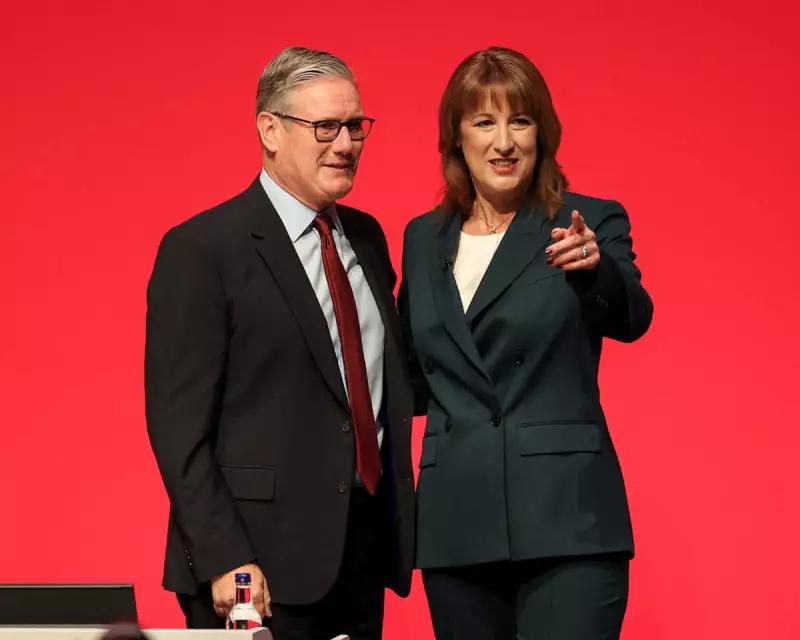
In a significant policy reversal, Chancellor Rachel Reeves and Prime Minister Keir Starmer have abandoned plans to increase income tax, opting instead for the traditional political approach of stealth taxation that has dominated British fiscal policy for decades.
The Great Tax Retreat
This week revealed that Labour has completely abandoned its brief consideration of increasing income tax rates, despite the party's earlier signals about the necessity of transparent tax reform. The dramatic U-turn comes less than two weeks after Reeves appeared ready to grasp what she called the "political nettle" of openly discussing Britain's tax challenges.
The Chancellor's second budget, scheduled for 26 November, is now expected to follow the well-worn path of her predecessors by raising revenue through less visible means rather than confronting the electorate with direct income tax increases.

Broken Promises and Political Reality
Just weeks ago, both Downing Street and the Treasury seemed aligned on a bold approach. Reeves had delivered speeches arguing that everyone should share responsibility for rebuilding public services after years of austerity, while Starmer emphasised putting "country first, party second" in his post-election messaging.
The income tax increase would have broken two significant barriers: it would have been the first rise since 1975 and would have violated Labour's manifesto commitment not to raise the "big three" taxes. However, the leadership appeared prepared to justify this breach by emphasising transparency and the need for a sustainable financial buffer.
This courage has now evaporated in the face of political pressure. Labour backbenchers warned that breaking manifesto promises would cost them their seats and potentially the next election, forcing the leadership to retreat to safer ground.
The Stealth Tax Tradition
The British preference for stealth taxation has deep roots, with every chancellor since Nigel Lawson in the 1980s largely following this approach. Stamp duty and capital gains tax have become preferred mechanisms for extracting revenue without the political pain of direct taxation.
As Phillip Inman notes in his analysis, this pattern dates back to Norman Lamont's early-1990s budgets, which relied on freezing income tax thresholds and other invisible measures to raise funds. Even Lamont's attempted visible tax increase - VAT on domestic fuel - was ultimately abandoned after backbench rebellions.
More recently, George Osborne's 2010 VAT increase from 17.5% to 20% provides the closest parallel to Reeves's current situation. Like Osborne, Reeves can cite global economic challenges and high debt levels as justification for breaking manifesto commitments, though she appears to be avoiding even this level of transparency.
Missed Opportunity for Reform
The retreat signals a broader failure to address Britain's structural tax problems. Proposals for council tax reform appear shelved in favour of "bolt-ons" to a discredited system. Income tax threshold freezes will disguise effective tax increases on workers, while any pension tax changes will likely add complexity to an already Byzantine system.
This represents a significant departure from the brief window where Starmer and Reeves seemed prepared to establish what economists describe as a more coherent and fairer tax system. The moment for fundamental reform appears to have passed, with political calculation triumphing over principle.
The outcome suggests that despite initial rhetoric about putting country before party, the current government has joined its predecessors in prioritising electoral survival over the difficult task of creating a transparent and equitable tax structure for 21st-century Britain.