Ethiopia has launched a pioneering project called Makatet, meaning 'inclusion' in Amharic, aimed at transforming its 1.1 million refugees into social and economic assets by providing improved access to education, healthcare, and employment. The initiative, unveiled at a ceremony in Addis Ababa, has been hailed by UN officials as a potential model for addressing the global migration crisis.
Sudan's War Spills into Ethiopia
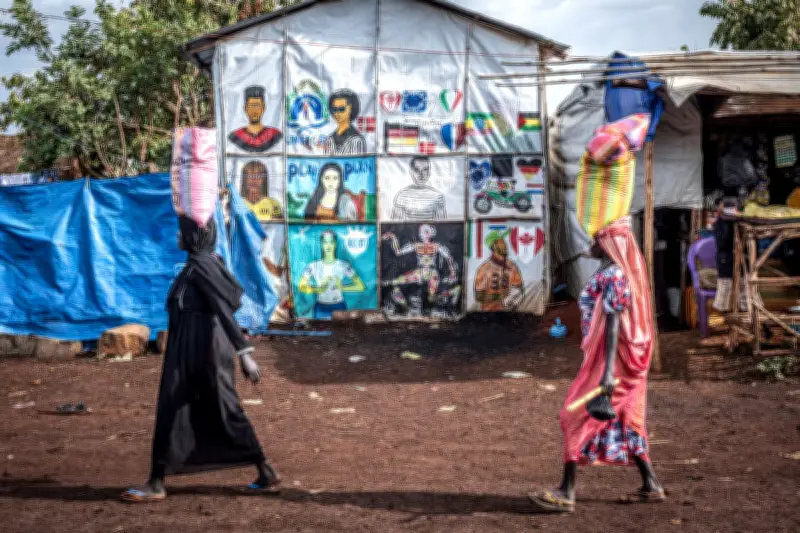
The urgency of the project is underscored by the escalating conflict in neighboring Sudan. The Rapid Support Forces (RSF) have established a vast training camp at an Ethiopian military base near Asosa, just 10 miles from the Ura refugee camp, which houses 14,500 Sudanese refugees. Refugees like Khadijah Ahmed, who fled Khartoum two and a half years ago, report that RSF members have threatened to follow them into Ethiopia. 'We are in a very dangerous situation,' she said, noting her sons sleep under their beds out of fear.
Rahmatalla Abdeen, 65, became the last known refugee to cross from Sudan into Ethiopia on May 17, after clinging to a moped for two days to evade the RSF. He was reunited with his wife and three daughters in Ura, but his eldest daughter Ruaa Idris struggles to continue her education, despite her determination to become a gynecologist.

Makatet: A New Approach to Refugee Integration
UN High Commissioner for Refugees Barham Salih, a former Iraqi president and refugee himself, advocates strongly for the Makatet project. 'We need to make the refugee population more self-reliant: you cannot keep people dependent on humanitarian assistance year after year,' he said. 'The west has to stop running from the politicised issue. Ethiopia is showing the way.'
Traditional humanitarian approaches are obsolete, according to Salih, with 70% of the 41.6 million refugees globally stranded for at least five years. Makatet aims to integrate refugees as taxpaying residents, offering an alternative to the 'fortress Europe' model. Analysts believe this could help solve 'humanity's migration issue.'
Risks of Regional Destabilization
However, Ethiopia itself teeters on the brink of potential calamity. Prime Minister Abiy Ahmed, who secured another election victory in June, faces risks of renewed civil war with Tigray, possible conflict with Eritrea, and destabilization from Sudan's war. Diplomats in Addis Ababa warn of a scenario where the Sudanese military allies with Tigray separatists, Eritrea, and Egypt against Ethiopia, potentially leading to mutually assured destruction.
At the Jewi refugee camp in Gambela, near South Sudan, at least 70,000 Nuer refugees face attacks from local communities; about 25 people have been killed foraging for food or firewood. Peter Keang, who fled South Sudan in 2023, said, 'I don't feel safe here. We were chased by drones even when crossing the river into Ethiopia.'
Entrepreneurial Spirit Amidst Hardship
Despite the dangers, refugees in Ura and Jewi show remarkable resilience. In Jewi, a soap business has produced 168,475 bars and earned £30,000. In Ura, Miriam Abdallah, 48, has built a perfume production line and dreams of opening a scent emporium in Europe. Sowa Belle, 36, plans to open a chain of eateries called Mama Sowa after demand for her kisra bread.
Yousif Babiker, a former Hilton housekeeping supervisor, clings to a name badge from Khartoum's gutted hotel and hopes his four children will find careers elsewhere through education and work opportunities.
A Challenge to the International System
Salih challenges the international community: 'We simply cannot look away while we see displacement piling on year after year. This is a moral problem, a human rights problem, a humanity problem.' He argues that solving the crisis requires shared responsibility, not shifting it.
As the world watches, Makatet's success could alter the trajectories of lives like Ruaa Idris's. She questions, 'What's the point of safety without living?' Her story encapsulates the urgent need for a new approach to the global refugee crisis.