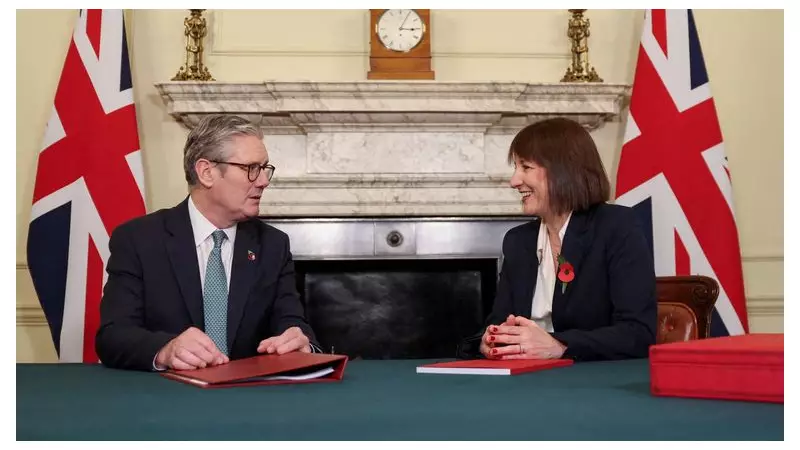
Prime Minister Keir Starmer is facing accusations of misleading the public over the rationale for last week's tax-raising budget, with a detailed analysis of the numbers suggesting a more nuanced story than the one presented by Downing Street. The central question remains: why did the government feel compelled to increase taxes?
The Prime Minister's Stated Reason: A £16bn Black Hole
At a news conference on Monday 1 December 2025, Sir Keir repeatedly pointed to a report from the Office for Budget Responsibility (OBR) as the primary driver for the budget's tough decisions. He explained that an OBR productivity review had identified £16bn less in projected revenues than previously anticipated. "That's a difficult starting point for any budget," the Prime Minister asserted, framing the tax rises as a necessary response to this external economic shock.
This figure became the cornerstone of the government's public defence. The implication was clear: the independent OBR's revised forecasts had forced the Chancellor's hand, leaving little alternative but to seek more revenue from taxpayers.

The Fiscal Reality: More Than Just a Productivity Hit
However, the full picture from the OBR's autumn forecasts is significantly more complex. While the one-off hit from weaker productivity growth was indeed £16bn, this was offset by other, more positive revisions to the economic outlook.
Higher than expected wage inflation, for instance, boosted the Treasury's projected tax take. When all these moving parts were accounted for, the net damage to the public finances was between £5bn and £6bn, not the £16bn cited by Starmer.
This net figure is crucial when measured against the government's own fiscal rule. In the previous budget, Chancellor Rachel Reeves had met her target—to have tax revenues exceed current spending, adjusted for the economic cycle—with £9.9bn of headroom. The OBR's latest forecasts, even with the productivity adjustment, did not erase this buffer. On paper, the government was not forced to raise taxes by the OBR's numbers alone.
The Real Drivers Behind the Tax Rises
So, if the OBR report did not mandate tax increases, what did? Analysis points to three key political decisions taken by the government over the summer and autumn.
Firstly, the administration U-turned on several planned welfare reforms. Secondly, it committed to axing the controversial two-child benefit cap. These policy shifts increased projected expenditure.
Thirdly, and perhaps most significantly, the Treasury decided it wanted substantially more breathing room against its fiscal rules. The goal appears to have been to increase its headroom from the previous £9.9bn to over £20bn. This desire for a larger safety net, combined with new spending commitments, created the fiscal gap that tax rises were designed to fill.
These are defensible political choices. However, critics argue that by focusing almost exclusively on the £16bn OBR productivity figure without contextualising the offsetting positive news or acknowledging these internal policy decisions, the Prime Minister presented a selective and potentially misleading account to the public and the cabinet.
The controversy raises fundamental questions about budgetary transparency and how governments explain difficult economic choices to the nation. The Chancellor and Prime Minister's decisions were logical within their policy framework, but they were active choices, not knee-jerk reactions to an independent forecast. The debate now centres on whether the public received a full and fair explanation of those choices.