Capital Gains Tax Discount Faces Major Overhaul in May Federal Budget
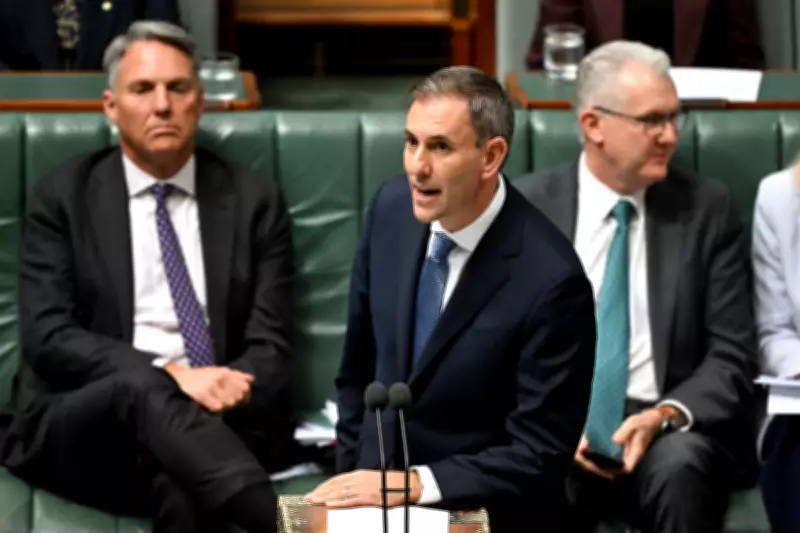
Treasurer Jim Chalmers is poised to announce substantial changes to the capital gains tax discount when he delivers the federal budget in May. This move follows a parliamentary inquiry that concluded the current settings, established during the Howard era, are exacerbating intergenerational inequality within Australia's housing market.
Parliamentary Inquiry Exposes Systemic Inequality
A Greens-led parliamentary inquiry released a damning report on Tuesday, stating that the 50% capital gains tax discount has systematically skewed housing ownership away from owner-occupiers and toward investors. The report emphasized that the benefits of this discount are distributed unequally, with significant implications for income, wealth, and intergenerational inequality across the nation.
The inquiry highlighted that alongside negative gearing rules, the discount has promoted housing primarily as an investment vehicle for wealthier Australians, often at the expense of first-time home buyers struggling to enter the market.

Proposed Reforms and Treasury Modelling
Treasury is currently modelling potential changes that could see the discount reduced to 33% specifically for housing investors, while maintaining the existing 50% rate for shares and other investment classes. This targeted approach aims to address housing affordability without broadly impacting other investment sectors.
Greens Treasury spokesperson Nick McKim pointed to alarming statistics in the report, noting that when the discount was introduced in 1999, 57% of 30 to 34-year-olds owned property. That figure has since plummeted to just 50%, illustrating the growing generational divide in home ownership.
"The discount means that if you go to work as a teacher, a bartender, or a software developer, you pay double the amount of tax than someone who received the same amount of money by taking advantage of soaring property prices through buying and selling investment properties," McKim stated. "It means that someone who speculates on housing pays a lower rate of tax than the carpenters, plumbers, and electricians who actually build the houses."
Political Reactions and Alternative Proposals
Coalition senators Andrew Bragg and Dave Sharma strongly opposed any changes, arguing that altering the capital gains tax discount would be a simplistic response that ignores the core issue of housing supply. "The real answer to housing affordability is more supply, not another Labor housing gimmick," they asserted in a joint statement.
Independent senator David Pocock suggested that Labor had "overlearned" the lessons from its 2016 and 2019 election defeats, when proposed changes to capital gains tax and negative gearing were rejected by voters. Pocock recommended removing the discount for properties purchased after July 1 this year, introducing a new 25% discount exclusively for new homes, and limiting negative gearing to a single investment property.
Broader Implications and Research Findings
Recent research from the Australian Council of Social Services revealed stark disparities in who benefits from the current discount. The five highest-earning electorates in Australia capture 22% of all capital gains tax discount expenditure, compared to just 1.6% for the bottom ten electorates.
Additionally, a tax white paper released by Sydney independent Allegra Spender this month advocated for reducing the capital gains tax discount to 30% as part of a comprehensive reform package that could facilitate significant cuts to income taxes.
Treasurer Chalmers confirmed he would be briefed on the inquiry's findings in the coming days, stressing that any final budget decisions would be made by the cabinet. "It will no doubt identify some issues which are familiar to us," Chalmers remarked. "But I'll read it, of course, I will. I've said that the government's policies haven't changed in this area. Any further steps will be a matter for the cabinet."
This potential overhaul represents one of the most significant tax reforms in recent years, with profound implications for Australia's housing market, investment landscape, and efforts to combat growing economic inequality.