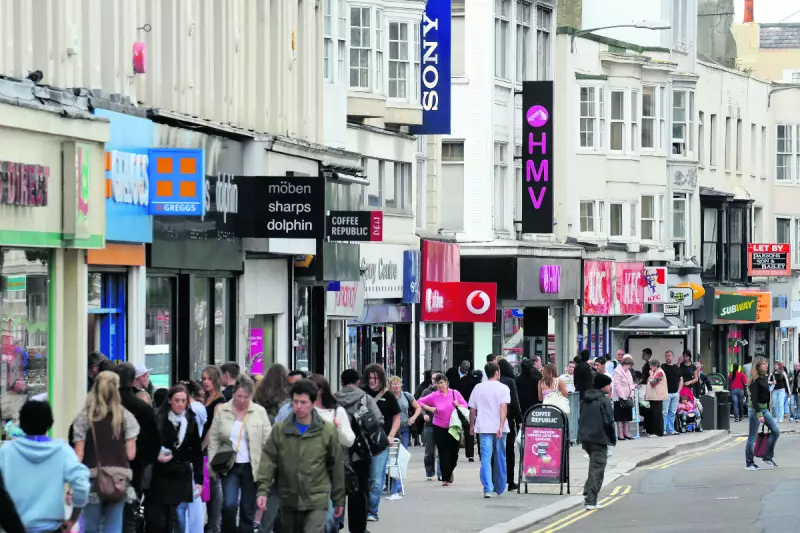
In a significant move for the UK's commercial landscape, Chancellor Rachel Reeves has used her second Budget to unveil long-awaited reforms to the business rates system. The core of the change involves shifting the tax burden, offering relief to smaller high street firms while imposing a new levy on larger properties, including those occupied by online giants.
What Are Business Rates and How Are They Changing?
Business rates are a tax on commercial properties such as shops, offices, pubs, and hotels. The amount owed is calculated by multiplying the property's rateable value—an estimate of its open-market annual rent—by a government-set multiplier. This value is reassessed every three years to account for inflation.
Chancellor Reeves announced a permanently lower business rates framework for retail, hospitality, and leisure (RHL) businesses. However, this support for the high street comes with a catch: the financial shortfall will be covered by a higher levy on large firms.

The existing RHL relief, which currently offers a 40 per cent discount on bills, will be reduced. From the next financial year, the smallest properties with a rateable value of up to £51,000 will receive a 20 per cent discount. Those with a rateable value between £51,000 and £500,000 will see their relief drop to 10 per cent.
Industry Reaction: A Mixed and Critical Response
The industry's response to the Budget announcement has been lukewarm at best, with many leaders arguing the measures do not go far enough to solve the structural issues with the tax.
Ros Morgan, chief executive of HOLBA, stated, "We welcome the Budget in parts, but it doesn’t fix the structural issue of business rates and instead offers a series of short-term sticking-plaster solutions."
Kate Nicholls, chair of UKHospitality, echoed this sentiment, expressing frustration that reform had not been delivered "in full." She highlighted that the reduced relief would do little to offset other rising costs, such as the increase to the minimum wage.
David Parker, head of business rates at Savills, provided a detailed analysis, noting that the sudden reduction in RHL relief had "taken everyone by surprise." However, he also saw a silver lining. The new legislation allows for an addition of 'up to' 20 per cent on the rates bills of any occupier of a property valued at £500,000 or more. The initial rate has been set at approximately 5.8 per cent, which Parker described as "good news for business" as it is less than a third of the potential maximum.
The Financial and Competitive Landscape
These changes are set against a backdrop of years of complaints from traditional retailers. They have long argued that business rates create an unfair playing field, burdening high street stores while online competitors primarily pay lower warehouse property taxes.
The Treasury's own figures project that business rates receipts will be £2.7bn higher in 2029-30 as a result of these reforms. Alongside the rates changes, Chancellor Reeves also promised a package of regulatory changes and support for pubs.
Despite the government's aim to target "online retail giants," David Parker critiqued the policy's fundamental design. "The narrative is for this burden to be borne by the 'online retail giants', whereas in reality it is any occupier of a property with a rateable value of £500,000 or more who has to pay," he explained, calling the concept of penalising large property occupiers "fundamentally flawed."
For now, the high street has been thrown a lifeline, but the long-term battle over a fair and sustainable commercial property tax system appears far from over.