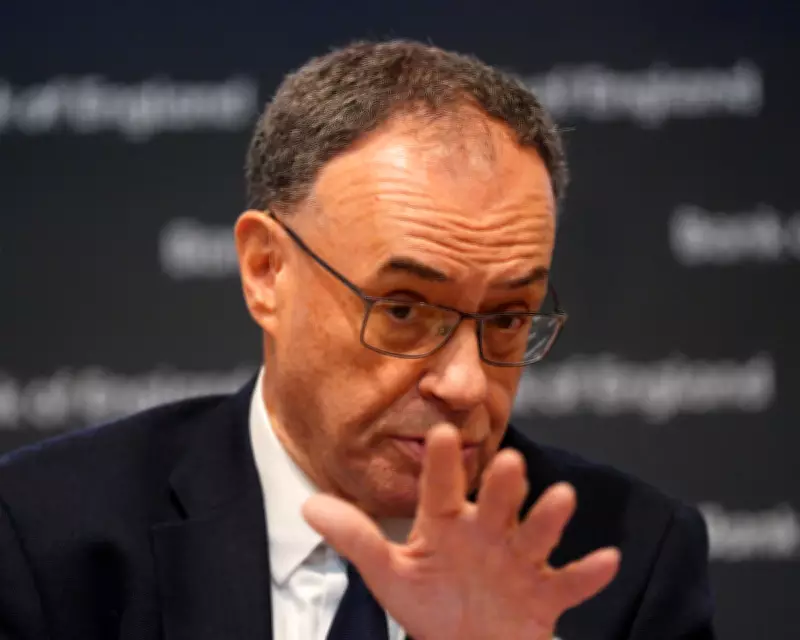
Bank of England Governor Andrew Bailey Casts Decisive Vote in Tight 5:4 Split to Hold Interest Rates
In a surprising move that has left many businesses and households disappointed, the Bank of England's Monetary Policy Committee (MPC) has voted to maintain interest rates at 3.75%. The decision came after a closely contested 5:4 split, with Governor Andrew Bailey wielding the casting vote to secure the outcome in favour of holding rates steady.
Economic Context: A Weakening Economy and the Case for a Cut
Under normal circumstances, with unemployment rising and inflation falling, the Bank of England would typically consider cutting the cost of borrowing to stimulate economic activity. The UK economy is currently faltering, adding further pressure for a reduction in interest rates to provide relief to both businesses and consumers.
Businesses rely on loans to invest in new equipment and expand operations, while households often need to remortgage to manage housing costs. The decision to hold rates means that financial pressures for these groups will persist, potentially hindering economic recovery.

Internal Dissent and Professor Alan Taylor's Frustration
Professor Alan Taylor, one of the nine members of the MPC, expressed clear frustration in a personal note attached to the Bank's main monetary policy report. He argued that the weakening of the economy has been evident for at least a year and that there was little evidence of persistent inflation to justify maintaining higher rates.
Taylor's outlook aligns with the Bank's revised assessment, which has abandoned previous concerns about a structural shift in the labour market that could lead to sustained wage growth. The report now predicts that wages will moderate to 3.25% by the end of the year as inflation continues to decline.
Inflation Outlook: A Dramatic Revision and European Alignment
The Bank of England has significantly overhauled its inflation forecast, predicting a one percentage point drop by April compared to its November estimate. This revision means that inflation is expected to reach the Bank's 2% target earlier than anticipated, bringing the UK in line with inflation rates in France, Germany, and the EU average.
Inflation in the UK rose slightly to 3.4% in December, up from 3.2% in November, marking the first increase in five months. However, the overall trend remains downward, with food and services inflation declining to levels seen in other European countries.
Chancellor Rachel Reeves' budget measures from November, including cuts to energy bills and a freeze on regulated rail fares, are credited with contributing to half of the post-November revision in inflation forecasts.
Economic Projections: Unemployment and Growth Forecasts Adjusted
The Bank's latest report presents a sobering outlook for the UK economy. The unemployment rate, which stood at 5.1% in December, is projected to peak at 5.3%. Economic growth for this year has been revised downward to 0.9%, from a previous estimate of 1.2% in November.
Looking further ahead, the Bank's experts anticipate that housing investment will be lower in 2026, and exports are also expected to decline, reflecting broader economic challenges.
Governor Bailey's Stance and the Path Forward
As the chief waverer on the committee, Governor Andrew Bailey commands significant influence. In explaining his decision to hold rates, Bailey acknowledged that the inflationary trend is weakening and that there is a strong case for a cut. However, he expressed a preference to wait and see how the situation develops.
From his statements, it appears highly likely that an interest rate cut will be considered at the next MPC meeting scheduled for 19 March. For many businesses and households facing financial strain, this potential relief cannot come soon enough, as they navigate the ongoing economic uncertainties.