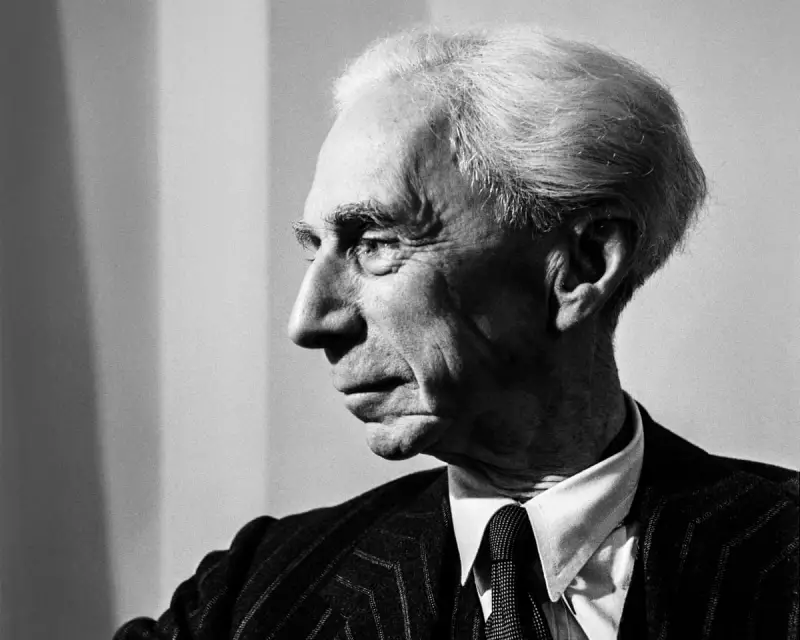
In a striking intervention, an academic has invoked the wisdom of philosopher Bertrand Russell to critique the economic forecasts dominating UK political discourse. Professor Costas Milas of the University of Liverpool argues that the intense focus on medium-term fiscal headroom is built on foundations as uncertain as the abstract mathematics Russell once described.
The Theatre of Fiscal Forecasting
This follows a Guardian editorial from 1 December, which highlighted the significant uncertainties involved in producing five-year forecasts for the gap between government taxes and spending. While financial markets often react positively to announcements of large fiscal headroom, Professor Milas suggests they overlook a fundamental truth about such predictions.
He draws a direct parallel to the words of Bertrand Russell, who once defined mathematics as "the subject in which we never know what we are talking about, nor whether what we are saying is true." The professor contends this sceptical view applies equally to the precise calculations of future fiscal headroom that economists and politicians are currently obsessed with.

A Polarising Policy Debate
Elsewhere in the letters, the contentious issue of the two-child benefit limit sparked divided opinion. Correspondence revealed a clear split: one camp believes the policy should never have been scrapped, while the opposing view holds that it should have been abolished a year ago. This division underscores the immense challenge facing the Chancellor of the Exchequer in navigating such socially and economically sensitive policies.
From Crosswords to Place Names
Readers also turned their attention to lighter, yet equally pressing, matters. One correspondent from Edinburgh questioned whether the introduction of a cat with a 'Paddington stare' in the print edition's crossword section was responsible for their recent puzzling struggles, pondering a decline in cognitive ability.
Meanwhile, a letter from Durham proposed the County Durham village of No Place for a list of inaptly named UK locations, humorously questioning whether road signs to it should be left blank.
Defining 'Rage Bait'
Finally, a linguistic critique emerged from Lancashire regarding Oxford University Press's choice of 'rage bait' as its word of the year for 2023. The reader pointedly expected the esteemed institution to know that the term is conventionally written as two separate words, not one.
These diverse letters, spanning high economic philosophy to everyday quirks, showcase the broad spectrum of issues engaging the British public as the year draws to a close.