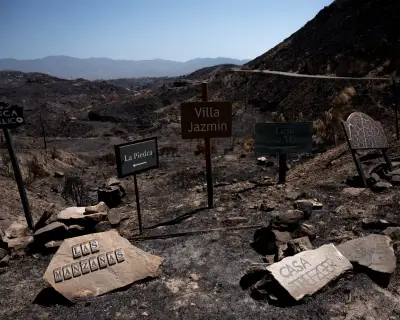
Specialist asbestos removal teams were deployed to Black Mountain School in Canberra on Monday to extract contaminated play sand, sparking a nationwide safety alert about children's sensory products.
Border Force Tightens Import Controls
The Australian Border Force has announced it will now classify coloured sand products designed for children's sensory play as high-risk items requiring proof they are asbestos-free before entering the country. This significant policy shift comes after multiple product recalls from major retailers including Officeworks, Target and Kmart.
Border officials confirmed that suppliers previously faced no obligation to test these products at any point in the supply chain because they were considered low-risk. This meant the contaminated sand entered Australia without mandatory asbestos testing before export or upon arrival.

Widespread School Disruption
The contamination scare triggered widespread school closures across multiple states and territories. More than 70 public schools in the Australian Capital Territory closed completely on Monday for emergency cleaning operations.
While New South Wales and Victorian schools remained open, institutions confirmed to have used the affected products notified parents directly. The ACT government reported that dozens of schools would reopen on Tuesday, with approximately 16 operating partially and about 25 remaining closed entirely.
The disruption extended beyond public schools, with nine Catholic schools in Tasmania either closing or partially closing their facilities. Several schools in New Zealand also took precautionary measures and closed their doors.
Health Experts Assess Risk Levels
Despite the concerning discovery, health authorities have provided some reassurance. The Australian Competition and Consumer Commission confirmed that respirable asbestos had not been detected in any tested samples, meaning the products are unlikely to release asbestos fibres fine enough to be inhaled.
Professor Fraser Brims, a consultant respiratory physician at Sir Charles Gairdner Hospital and director at Curtin University Medical School, supported this assessment. "Any exposure to asbestos and all of its forms is definitely undesirable, but there is a really important message that the risk of developing asbestos-related diseases is dose-related," Brims explained.
He emphasised that the risk to children remains "unmeasurably low" due to the very low exposure levels involved. The professor noted that different states made individual decisions about school closures based on their own interpretations of safety and risk assessment.
Education unions are working closely with employers across non-government schools to implement appropriate risk-mitigation measures. The Independent Education Union's Victoria Tasmania branch confirmed it was coordinating safety responses, while the Australian Education Union declined to comment on the developing situation.
Asbestos has been banned in Australia since 2003 and cannot be imported except under very limited circumstances. The border force considers mandatory testing of lower-risk goods inefficient and costly to industry, explaining why the play sand products previously escaped rigorous screening.