
Discussions are reportedly under way regarding which former European heavyweights should represent the European Union in potential peace talks with Russia. Names such as Angela Merkel, Mario Draghi, and Sauli Niinistö, the former president of Finland, have emerged as possible envoys. While these discussions lack substance, as no imminent negotiations are in sight, they highlight a broader truth about the Ukraine war and Europe's evolving role.
Abstract European Planning
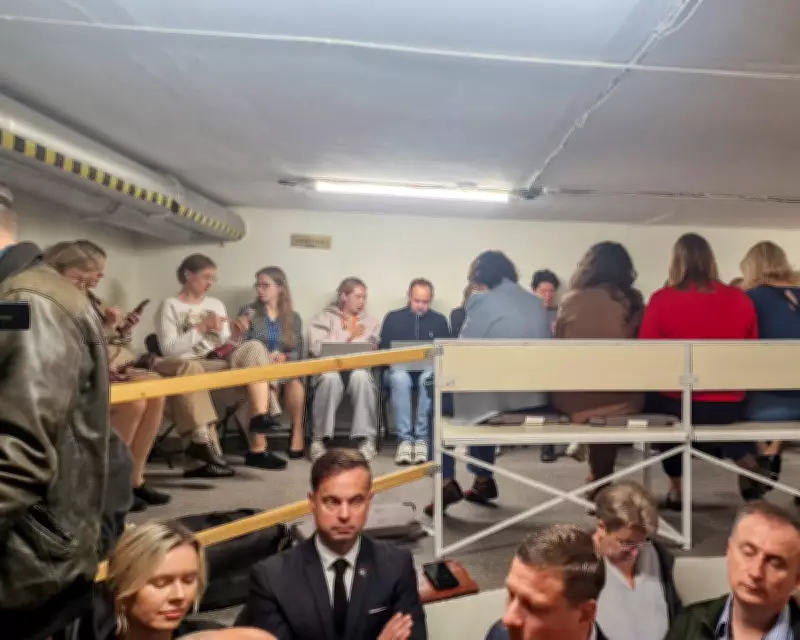
Like many previous European conversations about Ukraine, this one has an abstract quality. Europe previously planned to deploy a "reassurance force" to Ukraine in the event of a Donald Trump-mediated ceasefire. A possible maritime initiative in the Strait of Hormuz, contingent on a deal between the US, Israel, and Iran, is also in the works. None of these plans have been implemented because the scenarios on which they are based have not materialized. Similarly, there is no imminent negotiation with Russia to which an envoy could be dispatched. The war in Ukraine continues unabated, as underscored by Russia's recent bombardment of Kyiv using its hypersonic "Oreshnik" ballistic missile, capable of carrying nuclear warheads. Meanwhile, as Lithuanians rushed to shelters after a drone alert, it is clear that a wider hybrid war between Russia and Europe is already underway.
Ukrainian Confidence Amidst Challenges
Despite the grim reality, a sense of grounded confidence pervades Ukraine. During a recent visit to Kyiv, I observed a mood that has not been present since late 2022. Ukrainians have endured another devastating winter, during which Russia destroyed much of their energy infrastructure, leaving millions in freezing conditions for months. They anticipate another horrendous winter ahead, with fears that Moscow may target water supply infrastructure. Ukrainians have internalized the betrayal by the United States, as President Trump openly sides with Putin. They accept that US military support, which has diminished since Trump's return to office, is unlikely to return. They also assume that the temporary suspension of sanctions on Russian oil will become permanent. Ukrainians do not believe the war will end soon; most think it will continue as long as Putin remains in power. Nor do they believe they can retake significant occupied territories under current circumstances, as the last major gains occurred in September 2022.
Russia's Slowdown and Ukraine's Advances
Yet Ukrainians also observe that Russia's advance is slowing, almost grinding to a halt, while Russian casualties rise by 20,000 to 30,000 or more each month. Cracks in the Russian economy are increasingly visible, as it has become a war economy where almost every other industrial sector has shrunk or disappeared. This does not mean Putin will stop; in fact, vast resources continue to pour into Russia's war machine, particularly missile and drone production. However, this boosts Ukrainians' confidence in their ability to resist. Remarkable advances in Ukraine's defense industry, especially drone technology, have reduced dependence on foreign support. Four years ago, Ukraine relied entirely on military aid from abroad; today, about 60% of military capabilities used by Ukrainian forces are produced domestically. European defense companies are increasingly seeking partnerships with Ukrainian counterparts. President Volodymyr Zelenskyy's trip to the Gulf during the Iran war underscores that interest in Ukrainian defense expertise extends beyond Europe.
Europe's Growing Role
Ukrainians are now confident that European governments will not abandon them, a sentiment that has grown after the ousting of Viktor Orbán, who had become Putin's mouthpiece in Brussels. This confidence is not based on faith in European goodwill or solidarity; in fact, Kyiv is frustrated with the slow pace of EU membership. A recent proposal by Friedrich Merz for Ukraine to have non-voting "associate membership" was poorly received, with Zelenskyy responding scathingly. Nevertheless, Ukrainians sense that Europeans will support them based on a hardheaded assessment of European self-interest. This is borne out by the approval of a €90 billion package for Ukraine over the next two years, backed by the EU budget. As the US steps back, Europeans have stepped up. The talk of a European envoy, while empty, reveals a stark truth: in the Ukraine war, the US no longer holds the cards. Trump surrendered them by betraying Kyiv and the rest of Europe. But together, Ukraine and Europe have leverage, and they are beginning to see it.




