
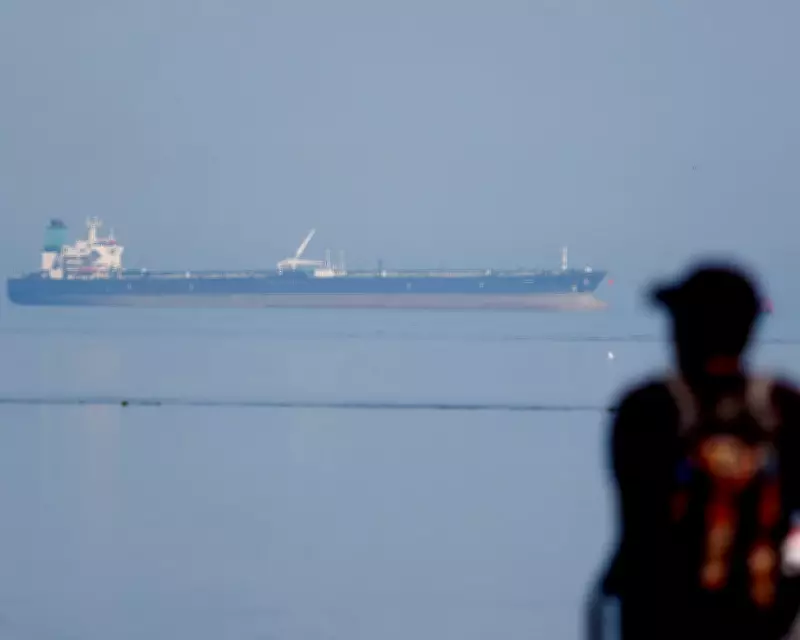
Britain has announced it will allow imports of diesel and jet fuel made from Russian crude oil, provided the fuel is refined in third-party countries. The new rules, which take effect on Wednesday, mark a significant widening of the sanctions cordon around Russia, as critics argue it enables the Kremlin to continue earning revenue from oil sales to fund the war in Ukraine.
Sanctions Loophole
Russian crude oil is shipped to countries such as India and Turkey, where it is refined into fuel products that are then re-exported as their own. This practice has complicated sanctions enforcement, as the origin of the crude is obscured. The British government stated that the exemption will be of indefinite duration, though it will be reviewed periodically and can be amended or revoked.
EU Reaction
An EU official criticized the latest US waiver on Russian oil sanctions, announced by Treasury Secretary Scott Bessent. Valdis Dombrovskis, the EU economics commissioner, said: “From the EU point of view, we do not think that this is a time to ease pressure on Russia. In fact, Russia is the one which is gaining from the war and the increase in fossil fuel prices.” He noted that the US waiver, initially meant to last only 30 days, has now been extended for a second time.
In addition to the fuel exemption, Britain issued a licence for the maritime transport of liquefied natural gas from Russia’s Sakhalin-2 and Yamal projects, along with related services such as shipping, financing, and brokering, under Russia sanctions rules. This licence runs until 1 January 2027.
Russia Threatens Latvia
The US warned Russia against attacking Latvia after the Kremlin’s UN ambassador threatened “retaliation” over alleged Ukrainian drone launches. Baltic countries denied claims by Vasily Nebenzya that Ukraine planned to launch drones from their territories. A Romanian F-16 NATO jet shot down a drone over Estonia on Tuesday, believed to be a Ukrainian drone diverted by Russian electronic jamming.
Russia’s SVR foreign intelligence service claimed Ukraine planned drone attacks against Russia from Latvia, Lithuania, and Estonia. Nebenzya threatened Latvia, saying “the membership of NATO will not protect you from retaliation.” US Ambassador Tammy Bruce responded: “There is no place for threats against a council member. The United States keeps all of its NATO commitments.”
Latvian President Edgars Rinkēvičs stated: “Russia is lying about Latvia allowing any country to use Latvian airspace and territory to launch attacks against Russia or any other country.” Officials from Estonia and Lithuania also denied such plans.
Funeral for Young Victims
A funeral was held in Kyiv for sisters Liubava Yakovlieva, 12, and Vira Yakovlieva, 17, who were killed when a Russian missile struck their apartment building on 14 May. Twenty-four people died in the attack. Their mother, Tetiana, was the sole surviving family member; their father, Yevhen, was killed on the frontline three years ago.
Presiding priest Efrem Khomiak said: “This is an unnatural order of things, when parents bury their children. This funeral, this grief, this tragedy, it is not only your family’s. It belongs to all of Ukraine. Because we are all bound together in this war.”
Recent Attacks
Ukrainian forces struck a Russian refinery and an oil pumping station over the past 48 hours, according to Ukraine’s general staff. Russia attacked Ukraine with 209 drones overnight, killing five civilians and wounding 24. Five people were injured in Dnipro after a Russian strike, said regional governor Oleksandr Hanzha. Industrial areas around Nevinnomyssk in Russia’s Stavropol region were under drone attack on Wednesday morning, said governor Vladimir Vladimirov. The area is home to Nevinnomyssky Azot, a large chemical plant previously targeted by Ukrainian drones.




