
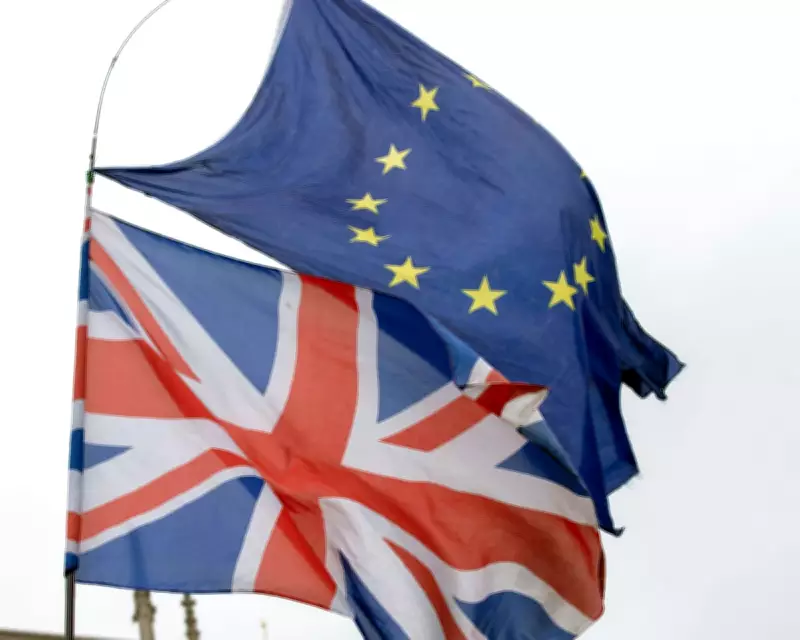
The UK government proposed the creation of a single market for goods with the European Union as part of an ambitious effort to reintegrate British trade into Europe, the Guardian has learned. Michael Ellam, the Cabinet Office's top official on EU relations, presented the idea during recent visits to Brussels. However, EU officials rejected the proposal, instead suggesting a customs union or economic alignment through the European Economic Area (EEA).
Labour's Red Lines
These alternatives are incompatible with Prime Minister Keir Starmer's red lines. Starmer stated in 2024 that the UK would not rejoin the EU, the single market, or the customs union in his lifetime. The EEA, a single market of 30 mostly EU countries, would also require accepting free movement of people, another Labour red line. UK government sources denied that the EU had definitively rejected the single market for goods, describing it as one of several options under discussion before a summit tentatively scheduled for July 13.
Summit Agenda
Both sides hope to announce several agreements at the summit, including a veterinary agreement to ease trade in food, drink, and animal products, an accord linking emissions trading schemes (ETS), and a breakthrough on a youth mobility programme. These three deals were promised at the last EU-UK summit in 2025. However, Labour's efforts face similar obstacles that Theresa May encountered with her Chequers plan in 2018, which sought a common rulebook for goods without free movement of people.
EU Concerns
EU officials worry that a special deal for the UK could serve as an attractive model for anti-EU populists in member states. For instance, a special arrangement might embolden a Eurosceptic candidate in France's 2027 presidential elections to argue for reduced adherence to single market rules. Other countries might question their contributions to the EU budget if the UK receives preferential treatment. An EU diplomat emphasized that the EU's approach is based on its interests, warning that treating a non-member better than a member could trigger internal debates on the fundamentals of EU cooperation.
UK Government Stance
Chancellor Rachel Reeves, in her Mais lecture, stated there is a strategic imperative for deeper integration between the UK and EU, citing the need for greater economic resilience. UK government sources noted that while the EU has been nervous about Labour's red lines, Brussels has opened talks on access to the single market for food, agricultural products, and electricity. A Cabinet Office spokesperson confirmed that the next UK-EU summit will be held this summer, with a final date to be announced. The UK is negotiating an ambitious package, including a food and drink sanitary and phytosanitary (SPS) deal and an emissions trading deal, expected to add up to £9 billion annually to the UK economy by 2040.
Other Negotiations
Cabinet Office minister Nick Thomas-Symonds told reporters in Brussels last month that the UK wants deals with the EU on steel and electric cars to protect British industry from imminent changes in EU rules. The government also seeks deeper defence cooperation; Prime Minister Starmer announced earlier this month that he would like the UK to enter talks to join the EU's €90 billion loan for Ukraine, enabling British firms to benefit from defence contracts. A European Commission spokesperson declined to comment on the single market proposal, noting ongoing work on the SPS agreement, ETS linkage, and youth experience scheme, as well as defence industrial cooperation, innovation funds, and efforts to curb irregular migration.
Political Context
Following the rebuff, EU officials do not expect significant progress on defining a future agenda before the Makerfield byelection in June, where Labour faces a tough challenge from the anti-EU Reform party. The Labour candidate, Andy Burnham, expected to stand to replace Starmer as prime minister, has ruled out returning the UK to the EU and promised a relentless domestic focus. In a speech earlier this month, Starmer said his government would be defined by putting Britain at the heart of Europe and called for an ambitious youth experience scheme. However, negotiations remain stalled, with the EU rejecting UK proposals for a cap on numbers and a requirement that EU students pay higher tuition fees.
EU-Mexico Trade Deal
Separately, the EU and Mexico signed a long-stalled free trade agreement on Friday to decrease dependence on the US and insulate themselves from Donald Trump's tariffs. The accord expands a 2000 trade deal that covered only industrial goods, adding services, government procurement, digital trade, investment, and farm produce. Mexican President Claudia Sheinbaum, European Commission President Ursula von der Leyen, and European Council President António Costa signed the deal in Mexico City, their first summit in over a decade. Costa described the agreement as a geopolitical statement, while Sheinbaum highlighted opportunities for expanded trade in pharmaceuticals, agriculture, technology, and electric mobility.




